The War
Sudan has been at war for over a year. Many still have not recovered and returned ‘home’ from the last waves of violence, and the country was just finally beginning to let out its breath and hope for a time of peace. But instead, the peaceful civilian government they hoped for a year ago is only a broken dream now. The capital city of Khartoum is a smoking, shattered ruin. Much of the country has been ravaged by war as two military factions fight for control over the hollow husk of a country they have left in their wake.
Millions of people have been displaced from their homes and fled to different parts of the country or to other countries entirely. Again and again the mass casualties from these clashes are civilians caught in crossfire. People can’t access necessities like medicine, food, basic health care, or clean water because soldiers raid or destroy what little is available. Roads aren’t safe and gas and transportation prices are unthinkable because the military routinely seizes goods and demands bribes for passage along the normal supply routes.
Schools and orphanages have been bombed. City blocks and villages alike have been burned to the ground in places. People flee their homes when they are so desperate escaping on foot is their best option, only to lose family members along the way to military factions that bomb and burn civilian targets for no other reason than to spread fear and destroy resources.
Systematic rape is an expected weapon of war to control and terrorize both the men who can’t protect their families and the women who lose their social standing and the last scraps of morale they had to hold their broken families together. Sieges and road blocks create artificial famine to demoralize and destabilize any who would resist military forces. And under the cover of this horrific war, the sparks of genocide have already started to rage into wildfire. Whole swathes of the country are now depopulated of certain Darfurian tribes; they have fled because they’re convinced that life in a refugee camp is better than continuing to watch the military target and murder their people by the hundreds.
The Stories
These horrors—genocide, famine, inescapable trauma, displacement, and war—are so far outside our experience they’re hard to understand. Something that evil, that abominable, is hard enough to wrap our minds around, especially when we can’t put a face to it. So I want to give you stories. I want to give you some ‘faces’ to this war so that you can understand a small part of it.
I’m no reporter. I’m not writing to propose a solution or help you choose a side. I can’t give you the facts and figures of the war in Sudan. But I can share stories. Sudanese who have survived these atrocities are my friends. Their stories weigh heavy in my heart, because through their experiences I have begun to understand the war. I hope that by sharing some of their stories, you can begin to understand too.
May we together be driven to our knees in prayer.
I won’t share these friends’ names, but perhaps that’s just as well. Their stories mirror so many others I have heard that, without names, at least one of these stories could apply to almost any given person who has been uprooted in Sudan. Be warned, these stories are difficult. But they’re worth knowing. These people are worth knowing and caring about.
I’ll share one story in this post, and three others in the following one. Each story will illustrate some aspect of what Sudanese face: displacement, genocide, war, and trauma. To help as you hear these heavy stories, I’ll share some of the scripture and prayer points that have helped me process them with lament, hope, or truth that does not waver in the face of the suffering of this world.
Displacement: The Sisters
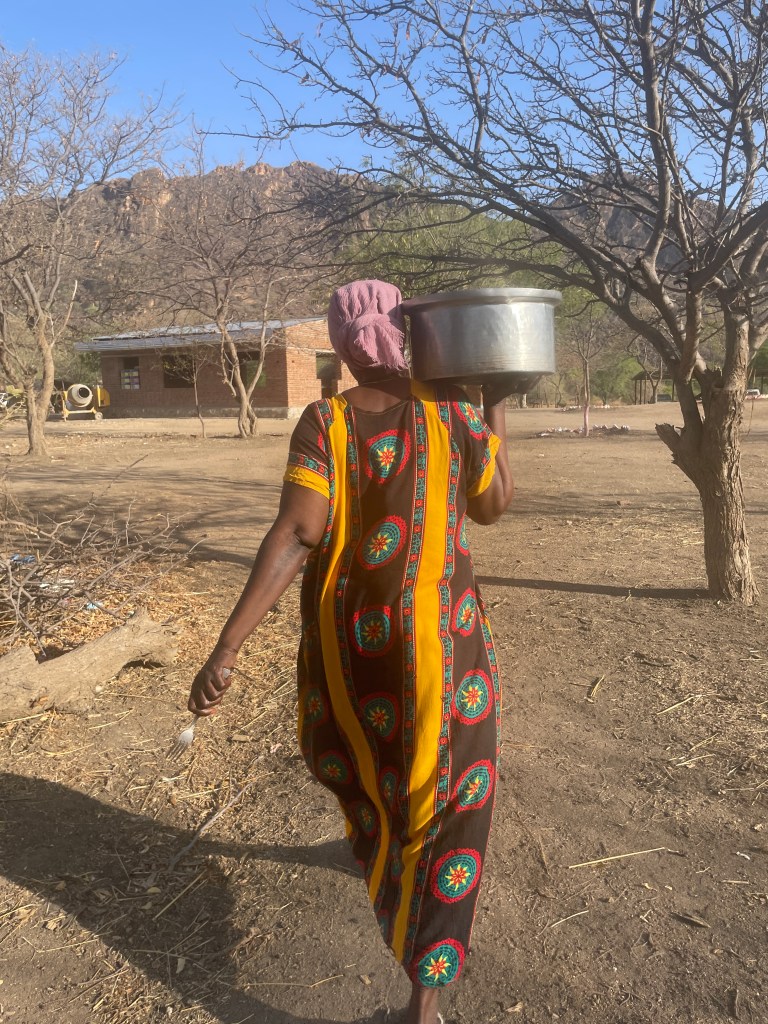
These two women had been like sisters since childhood. They called each other by childhood nicknames, teasing back and forth good-naturedly about being old or crying like a baby while cutting onions. They had fled from the war back to the small village where they had grown up. Their jobs in the city were gone, so they took whatever work they could to make ends meet and support their families. They rarely spoke of their husbands, who were dead or no longer took part in the family. The women worked long hours and never complained.
When I first met them they often talked about returning ‘home’ when the war settled down. They held out hope, and their contented joy came only from a deep faith that sustained them through their unimaginable losses of family members, future, and livelihood. They talked easily about crossing desert mountain ranges on foot as they fled. They shared grim jokes about the deadly scorpions and snakes they faced along the way. Their stories about bombed out buildings they took shelter in left a more haunted look behind their eyes. One of the few signs of trauma they couldn’t hold back betrayed the difficulties they had lived through: when you meet one of the women after a long time away, she breaks down into shaking sobs. For so many friends and family members, she never knew which goodbye would be the last one, and who wouldn’t survive until she could see them again.
These ‘sisters’ are in a multi-stage displacement. First fleeing their city home with their children, they came back to the place of their birth, or their tribal homeland. Here, they could find work, speak the language, and rely on a network of relatives to help cushion their displacement when they arrived with little more than the clothes on their back.
As the war dragged on though, they began to see that going back wouldn’t be an option anytime soon. In at least one of their cases, there was no ‘home’ to go back to. Their village home they were in now was never meant to be more than a stopover, and they were beginning to see they needed a better long-term option.
After the war passed the one-year mark, the women started to talk of traveling elsewhere. One’s daughter needed somewhere with a university so she could study and hope for a job to make her future. The whole family would have to move with her, so they could work better jobs to afford to put her through school. As the war further dried up resources in their village home, the other woman needed more stable work just to support her family, and she hoped for a more consistent school for her younger children. Both women are contemplating a move to different countries now—with unfamiliar languages and cultures—for a better life for their children. They live in the uncertainty of not knowing when or if things will change back ‘home.’ They have decided it’s less risky for their family to move somewhere completely foreign than to wait with hope for an increasingly hopeless war to resolve. So they wait and hope for money to travel. And I like many of their other friends don’t know when or if I’ll see them again after they move.
Jeremiah 29:1-14; Hebrews 11:13-16
We often forget the context of the famous verse, “For I know the plans I have for you… plans to prosper you and not to harm you, plans to give you hope and a future.” Jeremiah wrote it in a prophetic letter to Israelites who were displaced from their homeland and had no idea when they’d return home or what to do in the meantime. God told the people to settle where they landed, to build and grow and marry and have families. If they worked to help the city flourish, they would flourish too—even as a displaced people inside the city. God promised the Israelites that one day he would bring them back home to their land. That same promise may not apply in the same way to displaced Sudanese, but we can hold to the promise that God plans to give them hope and a future. If Sudanese seek God like this passage promises, they will find him. And he may not bring them home in this lifetime, but they have a promise of a heavenly city that will be more a home to them than any place on earth could ever be.
Pray for those displaced within Sudan.
- Pray for God to provide for their daily needs like food and medical attention.
- Pray also for their temporary new homes to provide some respite from the terror of war.
- Ask God to give them family or friends to support them and help them to adjust after all they have experienced.
- Ask God to give them wisdom to decide how long and where they should stay.
Pray for those displaced outside of Sudan.
- As they live among foreign cultures and different languages they can feel very isolated and alone. Pray for God to give them friends and neighbors who love them well and help them settle in their new homes.
- Ask God to give them work that can support their families and build up their communities.
- Pray for all of these displaced to know God’s peace, and to feel that he has been with them and guided their journeys to places of safety.
 — By Miss Cellanea
One thought on “War Stories part 1”
Comments are closed.