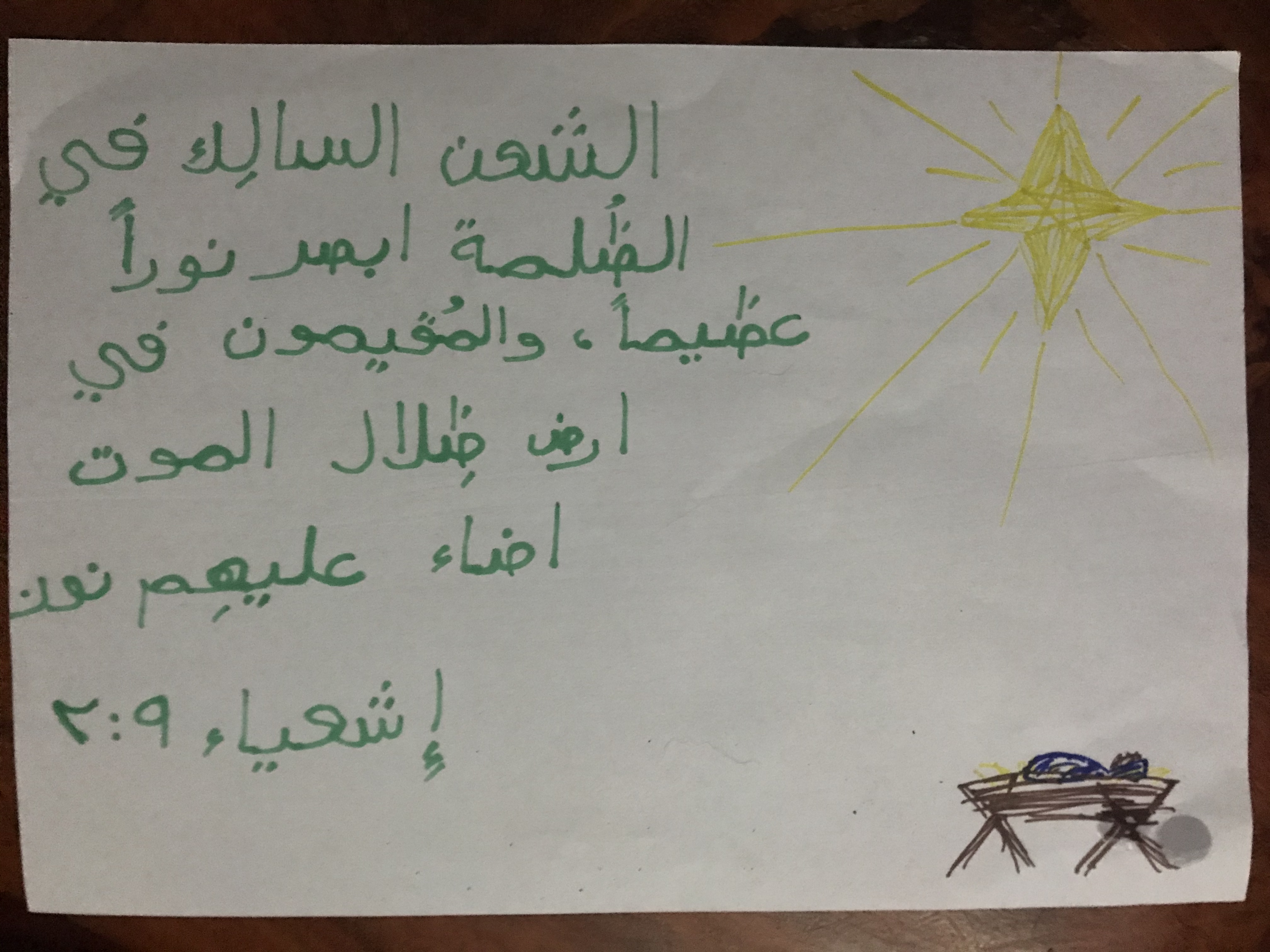
The Accuser and The Advocate

“Give yourself some grace!”

“Be kind to yourself!”

“Have more realistic expectations—be gentler on yourself.”

“Cut yourself some slack!”

“Stop being so judgmental of yourself.”

If I’m honest, those phrases make me cringe. They feel like hollow platitudes someone says to make you feel better when you’ve failed. They’re a consolation prize that says, “You messed up, but you can’t fix it. So just try to feel better about yourself since you can’t change anything now.”

Maybe those thoughts are unique to me, and maybe I’m harsher on myself than most people are, but from what I’ve gathered, lots of us deal with our own inner-critic. It’s the voice in our head that tells us we aren’t good enough, that we can’t learn from our mistakes, that we’re deeply broken enough it makes us unfit or unworthy or unwelcome.

From a secular perspective, we’d call this problem low self-esteem. We recognize it can be crippling, so we feed ourselves feel-better messages about our worth as a human and our general goodness at heart. “Girl, wash your face.” “You are a QUEEN.” “You deserve to be happy.” “You are your own worst critic!”

From a scriptural perspective, we just call it plain sin. Of course we’re broken; we’re sinners, even if we’ve been redeemed. We don’t deserve grace. Our sin deserves to be called out and punished. And until we’ve been sanctified and glorified in heaven, we can reliably count on our own sin to cause us to fail again and again.

But that’s not the WHOLE story of Scripture. Of course, we have inherent worth and value because we’ve been made in the image of God. And of course Jesus conferred value on our lives when he gave his to save ours. But the Bible teaches much more holistically that even though all the above things about sin are true, if we see our sin and failures as an insuperable barrier in our relationship with God or to spiritual growth, we give too much credit. Or, more to the point, we credit Satan with the win if we think God sees our sin first when he looks at us.


Recently trauma has loomed large in my own life. The stress of pandemic and national lockdown has uncovered buried traumas for many local friends and acquaintances, especially for refugees. Several people I’m close to—local, expat, and international friends—are working through their own traumas. And some of my own past trauma has been shaken loose by an accumulation of stressors and triggering reminders. Heck, the whole world is struggling right now. If you’re reading this, you’ve probably had more or different stress this year than you’ve had in a long time. It’s not unlikely that you’re struggling to get a handle on some trauma of your own.

For many of us, these traumas and their recent resurfacing have tipped us farther away from a place of mental health. Especially where abuse or sexual trauma were concerned, we tend to lean into self-blame, harsh judgment, or setting high standards for ourselves that are impossible to meet. Our inner-critic plays on loud-speaker in our minds, sometimes drowning out even rational defenses. Maybe since our brain can’t cope with what happened, we try to blame ourselves when we experience sin so evil and destructive it seems to defy explanation. We’re just trying to make sense of the broken world around us, so we ask ourselves, “DID I do something to cause this sin against me?” Or, even worse, we skip the question and jump straight to, “I should have known better.”

That assumption, and all of its brothers, are destructive: I should have planned better; why didn’t I see this coming; this is all my fault; I caused this; I should have listened; I am too naïve; why am I still so immature; I wasn’t praying enough; I should have worked harder; if only I hadn’t…; if I had just done…

The TRUTH of the matter is the Bible doesn’t leave room for ANY of these accusations. Sure, we should let the Holy Spirit convict us of our sin. But a proper response to that is repentance, forgiveness, and praise for our redemption. Nowhere does scripture teach us that self-judgment or self-accusation for our sin is productive or God-honoring. In fact, 2 Corinthians 7:10 says, “Godly sorrow brings repentance that leads to salvation and leaves no regret, but worldly sorrow brings death.” You know what that whole list of accusations brings? Regret. And a morbid sorrow. Blaming ourselves in these ways—either for sins we committed or for sins committed against us—fills us with a living death instead of the abundant life the Lord intends for us.


Scripture is VERY clear that, if we follow God as our Lord, we have an unquestionable standing before him, and no accusations against us hold up. No matter how broken or dirty or at-fault we feel, we have a place in the heavenly throne room. We’re invited to approach God’s throne boldly.

In Zephaniah, the Lord gives the prophet a message to tell his people how they will suffer. He foretells judgment and devastation that will be a consequence of the people’s own sin but also of the sins of their leaders and ancestors. In the midst of describing justice and punishment that is surely due, among the threats and warnings of suffering to come, the Lord comforts his people with some of the tenderest words in the whole Bible.

“The Lord your God is with you, the Mighty Warrior who saves. He will take great delight in you; in his love he will no longer rebuke you, but will rejoice over you with singing.”

No matter how broken or full of blame we feel, the Lord is kind to see and treat us in these ways if we are his. He is our mighty protector. He saves us from disaster. He is delighted with us. He loves us deeply. He is so full of joy when he considers us that he bursts into song! Eternal God, ever-present in the always-now, sat with his people the Israelites BOTH in their time of suffering and in their time of redemption. He saw them in the depths of trauma they felt from the consequences of their own sin AND in trauma they felt from others’ sin against them, and he consoled them. We aren’t the Israelites, but we are God’s people if we follow him as Lord. And since his character never changes, we know his care for his loved ones remains the same, whether it is directed at us or at the Israelites.

He told them that despite their sin, he saw them as precious. As worth protecting. As worth saving. As delightful. As worthy of love. As a muse to inspire singing. He saw them this way before their trauma, after their trauma, and in their trauma. When we can see nothing good in ourselves and focus only on judgment we think we deserve, God sees these good things in us instead of the blame we heap on ourselves. But perhaps we aren’t the only one working to shovel to bury ourselves in accusations. Maybe it’s more sinister than that.

In Zechariah 3, another prophet describes the throne room of God himself, as seen in a vision. The high priest Joshua stands before the Lord, dressed in filthy clothes that make him unclean and unfit to be in the Lord’s presence. But he does not stand alone. To his right stands Satan, the Accuser. And the Angel of the Lord is also there (some understand him to be Jesus). Satan accuses the man, but the Lord will hear none of it. He rebukes the Devil and silences him. Before everyone present, the Lord claims Joshua as his own. He rebukes Satan and says he has chosen Joshua, and saved him from destruction. Then the Lord takes away the man’s clothes that display his sin and mark he does not belong. The Lord gives him new, clean clothes to give him a sense of dignity and belonging—things he did not deserve, but that the Lord gave graciously.

Perhaps Satan had grounds to accuse the man in Zechariah’s vision, but the Lord would hear none of it. Instead, God listened to the angel and cleansed and gave the man a place in the throne room despite his sin. In case we are tempted to dismiss these ideas from Zechariah and Zephaniah as only an Old Testament theme that doesn’t follow to the New, listen to John’s words.

The name “Satan” itself means accuser. This is a fitting depiction of Satan’s actions in the Old Testament. The first chapter of Job presents a vivid picture of The Accuser appearing before the Lord to report, as if this were his habit. Zechariah also describes Satan in the Lord’s throne room, waiting by to accuse Joshua. These and other passages build a picture of Satan as a character in a courtroom, the formal accuser.  

But when Jesus comes, he promises another character to stand beside us in the courtroom. As John recounts Jesus’ encouraging words to the disciples in the upper room just before his death, he tells us much about the Holy Spirit and the role he will play after Jesus’ resurrection. In John 14:16 Jesus says, “And I will ask the Father, and he will give you another advocate to be with you forever—the Spirit of Truth.” The word Jesus uses to describe the Holy Spirit there is a legal one. It refers to legal counsel, but also to someone in the courtroom who would formally stand up against the accuser and defend or advocate for the person on trial. Even here, before his death and the means of our justification, Jesus promises that the Spirit will stand with us and advocate for us before the Lord, against The Accuser.

Jesus models this again clearly in the story of the woman caught in adultery (John 8:2-11). She is dragged into the temple and humiliated, put on display in front of all the Jews and religious leaders gathered there. She is singled out alone—the man she must have been caught with was not brought along and accused in the same way. As the religious leaders repeatedly ask Jesus to condemn the woman for her sin, he repeatedly ignores or refuses their questions. In perhaps what was embarrassment or indignation on the woman’s behalf, Jesus awkwardly doodles in the dirt while her accusers wait. Finally Jesus tells them if there is anyone sinless among them, throw the first stone and begin to execute her punishment.

As everyone slowly goes on their way, the woman is left with the only sinless one among the crowd, at her feet, playing in the dirt. The only one with the right to condemn and punish her stands up not to take her life, but to address her with dignity, as a human. He protected her from fatal judgment. He advocated for her and stood his ground even when his own reputation and life were at stake because the religious leaders were trying to find fault and accuse him. “Where have they all gone?” he asks. “Has no one condemned you? Then neither do I.” He frees her to leave that place and her sin behind, to live in the freedom of repentance and forgiveness. Jesus had every right to accuse her, but instead chose to offer his wordless, calming presence as an embodiment of grace. He stood by her, included in the halo of her shame, when all looked to her to condemn and judge. And instead of accusing and serving fatal justice, Jesus freed her from the dragging weight of her sin and accusations.


So what do we learn from all of these passages about accusation—merited or unmerited? Simply this: God desires grace and forgiveness for us. He does not hunger to bury us under the weight of vindictive accusation. The running dialogue of crippling judgment in our heads is not from him if it leads to regret or a deadly weight or anything other than joyful repentance. So if the inner-critic, the voice in our heads, judges us more harshly than Jesus does, we hear nothing but the voice of The Accuser himself. And the only appropriate response is what Jesus said when Peter rebuked him: “Get behind me, Satan. You are a stumbling block to me… ”

So friends, believers, whether you’re dealing with an overly judgmental trauma brain, or wounded thought processes that bite at you from stress, or unhealthy mental patterns that come from anxiety and depression, or just your average level of self-criticism, dig into these scriptures for yourselves. DON’T give yourself some grace, because it’s not yours to give. But remember the grace the Lord offers you, even knowing full-well the depths of your sin or your innocence in the situation you’re concerned about. He is a just God and he doesn’t blindly dismiss the things you judge yourself for. He is a gracious and loving God, full of compassionate mercy. He dismisses the accusations leveled against you because your sin has no hold on you—it has already been paid for and punished through Jesus’ work on the cross. Nothing you or Satan accuse you of should weigh you down, because Jesus stands before you and the Spirit advocates for you in the great cosmic courtroom. Listen for the voice of the Advocate through your prayers, rather than the jarring voice of The Accuser. God has already silenced him and his accusations, so you have privilege to ignore him as well.

Habakkuk Storied

Sometimes the words in our Bibles become stale. I don’t mean that the words lose any power; I mean that we become so familiar with the cadences and phrases they lose some of their freshness for us.

Recently as I was studying justice, lament, faith, and abiding in the presence of God through difficult circumstances, I landed in Habakkuk. This short Old Testament book deals deeply with each of those topics. To ‘freshen up’ the words for myself, I went through the book phrase by phrase to soak in the meaning and re-word the Scripture as if I were preparing to learn it well enough to share Habakkuk’s call and response with the Lord as it was meant to be heard and shared originally. Below you’ll find my manuscript for a ‘storied’ version of Habakkuk, with no content changed from the Biblical narrative and only small phrasal changes. I hope you enjoy a fresh look at this incredibly timely book of the Bible. Try reading it aloud to yourself to give the text some extra life.


The prophet Habakkuk received this burden:

Habakkuk: God, how long do I have to call for help and you refuse to listen?

I yell for help: “Violence!” but you don’t save?

Why do you turn my head and force me to watch injustice?

Why do you let sin pass?

Ruin and hurt are in my face: there is too much fighting and division.

Because of it, the law is impotent and frozen, and right never wins.

The evil rope up and surround the good so that right and fair become crooked.

God: Watch the world and be completely shocked.

I’ll do something in your time you wouldn’t believe if I told you.

I’m grooming the Babylonians — merciless, rude, and unpredictable —

to burn through the earth and make foreign homes their own.

They fill people with terror, make their own rules, and make a name for themselves.

Their horses are faster than cheetahs and more fearless than wolves at nightfall.

They come at top speeds from farther than the eye can see.

They swoop down like a hawk to the kill, focused only on death.

Their armies oppress like a desert wind, catching hostages like dust.

They lecture kings and humiliate leaders.

They laugh tat fortresses and move the earth itself to conquer them.

They barrel through like wind with no obstacles, convicted men who deify their own power.

Habakkuk: Lord, haven’t you been around forever?

My God, my perfect God, we can’t die.

You elected them to carry out retribution.

Steady and Unchanging One, you picked them to punish.

Your gaze is too pure to look on evil.

Why do you let them betray?

Why do you sit quietly by while evil people eat up others better than themselves?

You make people like fish in a barrel, like fish with no leader, no one in charge.

The evil enemy catches all of them in traps,

lures all of them in, nets them with ease. 

So he is giddy with delight, and he worships his net.

He offers it food and rituals because his net lets him live like a king and feast like one too.

You’re going to let him keep pillaging the sea — wiping out empires ruthlessly?

I will be at my station on the watchtower of the defensive wall.

I’ll look for his answer, and for how I should reply to these concerns.

Then the Lord replied:

God: You’re going to want to write this down, plain for all to see and hear.

This message is ready for the right time — it’s about the End, and this one will prove true.

Even if it’s a long time coming, wait for it.

It is certain to be on time.

Look at him, all big-headed—he wants crooked things,

But a good man will live by faith—

Alcohol is a traitor to him. He is proud and never sits still.

He’s as hungry as the grave and like death, he’s a bottomless pit.

He gathers all the nations and steals from all the people to make prisoners of them.

Won’t all these people want retribution, and mock him with humiliating sarcasm:

“Look out, if you hoard loot and get rich manipulating people!

How long will you keep this up? Won’t the people—who you owe—rise up?

Won’t you shiver when they wake up?

Then it’ll be your turn to be the victim, 

because you have looted many countries.

And the people you overlooked will loot you.

The blood you spilled was from people.

You have flattened fields and cities, along with their people.”

“Look out, if you build your kingdom on foundations of slavery and injustice,

To try and build it high out of reach,

so you can dodge the claws of destruction!

You planned to destroy many people,

so you shamed your home and gave up your right to life.

The stones in these walls will testify against you,

 and the wooden beams will affirm them.”

“Look out, if spilled blood has built your city, and crime founds your town.

Hasn’t the Lord said peoples’ work just feeds the fire,

and the countries wear themselves out for nothing?

Regardless, the full earth will know the glory of the Lord,

like the oceans know water.”

“Look out, if you push drinks on your friends,

refilling till they’re drunk so you can feed your hungry eyes with their naked bodies.

You will be full of shame instead of triumph.

Take your turn! Drink and be naked!

The Lord’s strong hand brings the cup to you, and disgrace will cover up your power.

Your violence to Lebanon will sweep you away,

and your slaughter of animals will haunt you.

Because you have drained human blood—

you destroyed fields and cities still full of people.”

“What is an idol worth, since it is only carved by man?

What about a figurine that only reinforces lies?

Whoever makes them trusts the work of her own hands.

She makes mute godlets. 

Look out, if you try to make wood come to life

Or to make stone wake up.

Can it lead you?

It’s covered in gold and silver—it doesn’t breathe!

But the Lord is alive and well in his holy temple.

Let the whole earth fall silent for him!”

The prophet Habakkuk’s prayer:

Habakkuk: Lord, I have heard the stories they tell about you.

Your work has me stock still with amazement.

Do these things again in our time!

Let people these days know your works!

Remember to show mercy in your retribution.

God comes in holiness from the south as of old.

His throne-glory spreads over the skies

and his court-fanfare sounds from all the earth.

His radiance like sunrise gleams from his hand where he hides his power.

Plague makes a way for him, and disease carries his train.

When he stands, he shakes the earth.

Under his gaze the nations tremble.

The time-strong mountains crumble,

and the time-worn hills fall in on themselves.

He has eternal work.

Ethiopia’s tents are disarrayed, and Midian’s homes are distressed.

Lord, were you angry at the rivers?

Did the streams provoke your rage?

Was your wrath toward the sea when you rode with triumphal horses and chariots?

You unwrap your bow and call for endless arrows.

You carve the earth with rivers and mountains writhe under your glance.

Rushing water roars by and raises waves high.

The sun and moon in the sky are paralyzed

as your arrows glint and fly, and as your spear flashes lightning.

You march through the earth with rage and your wrath culls the nations.

But you sought out your people to deliver them.

You rescued your chosen one.

You trampled the leader of the wicked land and stripped him of everything—head to toe.

You crushed his head with his spear when his warriors made their move to scatter us.

They gloated as they prepared to prey on the weak in hiding.

Your horses disturbed the sea and frothed the wide waters.

I heard the stories and my heart pounded.

The words made my lips tremble.

My bones rotted hollow and my legs quivered.

But I will patiently wait for the day of disaster to crash over our invaders.

If the fig tree doesn’t even bud, and the grape vines hang empty,

If the olive harvest fails and the farms lie bare,

If the barns shelter no sheep and the cow stalls are vacant,

STILL the Lord is my joy:

I rejoice in my Savior.

My strength comes from the powerfully ruling Lord.

He gives me stable footing like the deer

And prepares me to climb the summit.

The Years the Locusts have Eaten

animal antenna biology close up
Photo by Egor Kamelev on Pexels.com

Our oldest living grandparents have never seen anything like this. The alcoholics can’t drink it away or numb it. It’s making history and parents imagine what they’ll tell their children or their children’s children in days to come. A new dread has overtaken the land—so unknown that people feel powerless in its wake. The grief for all that’s been lost is so painful it feels like a virgin widow mourning her husband instead of enjoying her wedding night. Our pockets are so empty there is nothing to put in the church’s offering plate. The store shelves and market stands are empty. Our joy feels withered, like fruit on the vine in drought.

Worldwide 21st century pandemic, or the first chapter of Joel? Both.

The Old Testament prophecies of Joel are easy to overlook. It’s a short, 3-chapter book in the minor prophets about a locust plague that decimated the land and its people. It’s very apocalyptic and, honestly, hard to relate to—that is, unless you’ve lived through a global calamity yourself.


Reading Joel in the shadow of international tragedy was a unique experience. The first half chapter summarized above left me wide-eyed with shock. This ancient text came alive now that I shared a similar experience with its original audience. The first chapter goes on to describe religious leaders in open anguish before their people, and fasting and repentance because no one knows why calamity has struck except for our sin. The food sources are dried up. The land and its people and animals all go hungry and are left parched. There’s a fair bit of aimless wandering, widespread suffering, and storehouses and gathering places left empty and in ruins.

All of those experiences sound so familiar. No matter how much bread we bake or research we read, we can’t ignore that we still don’t understand what is happening around our world, nor how to stop it or minimize the damage. Our economies are crashing. Our marketplaces have empty shelves too. Our religious leaders desperately try to point us back to God, but the places of worship lie empty. Here in Uganda I’ve seen the empty market stalls. The land isn’t suffering here, as under a drought, but the livestock are thinner and sicker as limited resources have been given to people instead of land and animals.

Joel closes chapter 1 speaking about fire that has devoured the fields. We joke about our world being on fire. We have seen protests and riots, because the world has slowed down its spin enough for us to step back and notice our oppressive systems. Violent and opportunistic crime is on the rise as people become more desperate with hunger and poverty. People starve in slums and refugee camps. Treatable diseases are overlooked and untreated more than ever as our hospitals fill with pandemic victims. Global mental health is in crisis. Dictatorial governments have seized even more power. Marginalized people who already lived on the edge struggle for plain survival. Our world IS on fire.

A theme from the first chapter of Joel rings true for us too: large-scale disaster overlooks nothing and no one. The land in Joel’s day was ravaged by drought, famine, and locusts. But it wasn’t just the food that was affected—young and old, wealthy and poor, people and animals, land and water—all suffered. Even though our pandemic has been a global health disaster, it has hit our economies, governments, communities, and every other sphere of society, with crippling force. Every sector has taken a beating. All the destruction and brokenness has left our literal and metaphorical fields dried, shriveled, and unprotected: just waiting for fire to blaze through and pile calamity upon calamity. Catastrophe reminds us how little control we actually have.

But chapter 2.

The second chapter of Joel reminds us that the Lord is in complete control. Yes, he sends the locusts. Yes, he is holy and just and must punish sin. But he is also merciful and good.


The chapter opens with a nightmarish horror scene. Alarm bells ring and trumpets sound to announce an invading army, but the army is locusts. They black out the sun and moon and break over the mountaintops like a grisly dawn. The land that was lush like Eden before them is a barren desert waste behind them. They move and sound like an untamed wildfire crackling and leaping, like soldiers whose formation is not broken by obstacles, enemies, or defense walls. They pour over and through everything and the earth quakes beneath them.

These images depict the utter helplessness Joel’s people felt in the face of their plague. Nothing could stop the onslaught, and nothing was spared in its path. The locusts even crept into homes through windows, like thieves in the night, violating any sense of privacy or security the people felt. There was no refuge.

But then comes the great parenthesis of Joel. Between talks of plague, judgment, and devastation, the Lord gives an offering of mercy: “Even now, return to me with all your heart…,” “tear your heart and not your garments.” Why? Why should the people trust to the mercy of a God who has only measured out judgment? Because of the ancient name of God, the name he gave to Moses in the burning bush as he was sent to deliver God’s people from slavery.

Return to the Lord your God

for he is gracious and compassionate,

slow to anger and abounding in love,

and he relents from sending calamity.

Who knows? He may turn and have pity

And leave behind a blessing…

Joel tells us that this wrathful God shows grace and compassion. His anger is slow, but his love overflows. He can cancel calamity. And if you return to him, he may himself turn and deliver blessing instead of punishment. Joel tells the people to gather, young and old. No one is exempt. Help along the tottering elders. Bring in the nursing babies. Interrupt the honeymooners. Weep openly as a people. Repent of your sin and pray for the Lord to spare his people, not to prevent their shame, but the Lord’s. Beg him to relent so that the world will know the Lord’s character and his unchanging love for his people.

Then, Joel says, the Lord will reply with abundance. Food will once again be plentiful in the land. The people and the whole land and its animals can rejoice. The rain returns. The storehouses and places of harvest are full.

Unlike Joel’s people, we are not under the Old Testament covenant promises. Our plague is not necessarily covenant punishment. But the book’s prophecy is filled with God’s truths nonetheless. We too have faced nightmarish scenarios as Coronavirus has overtaken the land. We feel helpless and desperate. We don’t know how to halt it, or how to stop up the holes in our defenses. Our homes don’t even feel safe after we were locked inside them and our privacy and security there feels violated.

Our situation is not the same, but the Lord’s character IS. He is still gracious and compassionate. He is still merciful. Our lives, too, have been interrupted and changed. But just like Joel promised, ‘normal’ can return and we can live in abundance. Disaster has made us desperate, and in our desperation we have new reason to turn to the Lord.

It is here in narrative that the Lord says something startling: “I will repay you for the years the locusts have eaten.” What does he mean? How can you repay devastation, lost life, trauma? He quickly answers with a beautiful passage that gives me chills. Peter quotes it at Pentecost.

And afterward, I will pour out my Spirit on all people. Your sons and daughters will prophesy, your old men will dream dreams, your young men will see visions. Even on my servants, both men and women, I will pour out my Spirit in those days. I will show wonders in the heavens and on the earth… And everyone who calls on the name of the Lord will be saved; for on Mount Zion and in Jerusalem there will be deliverance, as the Lord has said, among the survivors whom the Lord calls.

Wow. Will the Lord repay in material abundance after a calamity? Perhaps. But he promises an even greater repayment for the trauma we have endured. If we repent, if we use this calamitous interruption to dig into our own hearts and submit them to the Lord, he will repay us with his Spirit.

The years the locusts have eaten—the difficult days we have experienced—will be repaid. Many of us have found a deeper relationship with God during this time of confusion and tragedy. Our life is enriched for the time we have spent with the Lord. We can use the interruption and the unquestionable grief and fear to drive us deeper into our need for Him and his constantly present Spirit with us.

Not only that, but this is a time of new pioneering for our churches. As they have closed and services have moved online or into homes, we have sifted our ‘religious practices.’ What church traditions are actually life-giving to us? Which ones prop up unnecessary cultural habits we can do without and still have abundant life with the Spirit of God? We have seen and felt the Spirit moving amongst God’s people as we have worshipped at home or with our own instruments together with our families and small communities. This is a time of refreshing and renewal—a time of God pouring out his Spirit abundantly on his people who seek him and repent of the hidden sins these times have forced us to face.

Yes, the Lord sent the locust plague to Joel’s people, and yes, he sent the Covid plague to us. The third chapter promises judgment on the Lord’s enemies just as the first two chapters promise it for his own people. He abhors the sins of selling people or trading them for goods. He is disgusted when defenseless people are abused and taken advantage of. The Lord prepares for war on his enemies and will scythe down even the most powerful among them like grass in a field. Where wickedness is ripe, the Lord is ready to cut it down.

But that does not mean he is not merciful. God is just and cannot abide sin, but he delights to show grace. When he does, the world stage will know of his unconditional, redeeming love to people who rely on him to save them. Unlike with the locust plague, God promises this time during judgment that he will dwell with his people and be their place of refuge. He is sovereign over the disasters of the world. But he is also sovereign over their outcomes. The Lord delivers us. He fills us with his Spirit. He gives us life abundant after calamity. He offers hope. He repays the years the locusts have eaten.

Root of Bitterness

baobab.jpg
One day I want to experience a baobab tree. It’s on my bucket list. I want to stare at it in wonder, touch it, and probably hug it. I’ll get lost imagining what ages of the earth it’s lived through, and what movements of mankind it has seen. Yep. Call me a tree-hugger.

The book, “The Little Prince” nurtured my fascination with baobab trees. This short, remarkably deep children’s book is about a boy who lives on his own, tiny planet. Every morning the boy washes and dresses, then tends to his planet. He determines the sprouting roses from the baobab shoots and uproots the dangerous trees. The little prince explains:

A baobab is something you will never, never be able to get rid of if you attend to it too late. It spreads over the entire planet. It bores clear through it with its roots. And if the planet is too small, and the baobabs are too many, they split it in pieces.


That same image of crushing, constricting roots comes to mind when I read in Hebrews 12 about a bitter root that can grow up among the people of God to bring trouble and defilement.

Hebrews 10 gears up with a discussion on perseverance in the face of suffering. It outlines how, because of Christ’s sacrifice and redeeming work on our behalf, we can endure suffering with the body of believers at our side. Together we can stand our ground because we share a faith in the unshakeable Faithful One.

Chapter 11 follows with an incredible tapestry of stories to demonstrate this kind of faith. Believer after believer was considered faithful because they were sure of what they hoped for and certain of things not yet seen. The author says that this kind of faith is necessary to please God. Faith is what draws us to him because it means we believe two things: “that [God] exists and that he rewards those who earnestly seek him.” In shorter words, faith is the belief that God exists and that he is good.

These stories demonstrate that faith is strongest when it endures uncertainty and lack of evidence that God does exist or that he is working good when we can’t see it. According to this chapter, faith is being certain of what we do not see (that God exists), and sure of what we hope for (that God is good). The Bible characters in this chapter show with their lives that faith means knowing God’s good plan is often bigger than you can see or understand, but believing it anyway. 

Chapter 12 shifts from describing the faith of believers who went through suffering to a discussion on how the Lord disciplines us through that suffering. “Endure hardship as discipline,” the author says, because “God is treating you as sons.” We are told this discipline will be painful, but that it produces a harvest of righteousness and peace.

The discipline of a loving parent takes a moment of disobedience, hardship, or suffering, and turns it for their child’s good. True discipline is the gift of a teaching moment, used to build good character out of bad circumstances. God does the same for us because he delights to call us his sons and daughters. Because of this, we can understand any suffering that we endure in faith as discipline for our good.

If we keep in mind the truths that God exists and he is good, that his plan is perfect but bigger than our ability to understand, we weather suffering well. This is what the author means when he or she writes, “See to it that no one misses the grace of God and that no bitter root grows up to cause trouble and defile many.” If we miss God’s grace—if faith does not guide us to see our suffering as loving discipline—we grow a root of bitterness instead of the harvest of righteousness the chapter promises.

This shortsightedness springs from a lack of faith in God’s good plans, and it grows in us a crushing root of bitterness that slowly tears us and our fellow believers apart. But as the author has already explained, faith is the perfect antidote for this poisonous root of bitterness. The chapter goes on to hold up Esau as an example of bitterness, because he gave into his appetites and gave away his inheritance for a single bowl of food.

When we focus on our appetites and desires, instant gratification becomes our goal. Like Esau, we want to alleviate temporary suffering with something the world has to offer. If we focus on the heaviness of our suffering instead of the grace God gives to discipline us through it to a better end, we give up our inheritance like Esau. We no longer receive discipline as a son because we have cast aside faith in God’s far-sighted plan in favor of short-lived satisfaction. This vain effort to avoid the suffering God has given us will always leave us unsatisfied. And so grows the root of bitterness in place of what could have been a harvest of righteousness and peace.


In the story of Ruth, we meet a woman who defines herself by her bitterness. After fleeing her country because of a famine, Naomi lives as a refugee in Moab. While there, her sons marry local women, but Naomi can’t catch a break. Before long she has watched not just her husband, but both of her sons die.

Her life is emptiness. She left her homeland when it was empty of food. She was soon emptied of her family members one by one. She decides to try her luck by returning home and tells her daughters-in-law to remain in their land and let her go on alone. When they protest, she tells them her womb is empty because her bed is empty and she could never give them another husband. One daughter-in-law, Ruth, stubbornly remains with Naomi. But when the two reach Naomi’s home, she tells the eager neighbors not to call her by her old name.

“Don’t call me Naomi,” she told them, “Call me Mara, because the Almighty has made my life very bitter. I went away full, but the Lord has brought me back empty. Why call me Naomi? The Lord has afflicted me; the Almighty has brought misfortune upon me.”

Naomi sees the brokenness and emptiness in her life and blames it on the Lord. She chooses a new name that means ‘bitter’ and gives witness to the whole town that she blames the Lord for her suffering.

But now listen to the story told another way.

The Lord had a sovereign plan for Naomi and her family line. Instead of letting them starve and die in a season of scarcity, the Lord prompts them to leave for greener pastures. While in this foreign land, the Lord grows Naomi’s family with two daughters-in-law, one of whom is very devoted and compassionate. Through continued adversity, Naomi and Ruth’s bond grows so much that when given the opportunity, Ruth decides to leave the only land, people, language, and religion she has ever known to throw in her lot with Naomi.

God prepared a relative to marry Ruth, continue the family line, and care for Naomi as she ages. Even as Naomi proclaims her bitterness at the Lord’s treatment of her, the land around her was ripening for harvest: “So Naomi returned from Moab accompanied by Ruth the Moabitess, her daughter-in-law, arriving in Bethlehem as the barley harvest was beginning.”

God showed grace and filled Naomi’s life even as she chose to focus on the emptiness. He filled her home with food and her heart with hope, even as greater fulfillment awaited her. By the end of the story, the Lord has filled Ruth and Naomi’s home with a man, Ruth’s womb with a son, and then Naomi’s lap with a grandchild.

The same bitter root Hebrews mentions grew in Naomi’s heart. Her name means ‘pleasant,’ but she was anything besides pleasant to be around as bitterness took root in her heart. By the end of the story, she has learned faith. She learned to trust the Lord’s goodness in her life so she can set aside her bitterness and have faith in a greater plan she cannot see. Uprooting her bitterness was less about a change in situation (her husband and sons were still dead, and no happy ending for Ruth could change that), and more about a change in perspective. By the end of the story she chose to focus on the Lord’s goodness rather than her misfortune, and it relieved her of her bitterness. She did not miss God’s grace in her suffering.


Yet another Old Testament story illustrates this point. In a stark contrast to his brother Esau—the example of the bitterness Hebrews warns against—Jacob dealt with adverse situations quite differently. In Genesis 32 he found himself preparing for a confrontation with a vengeful brother, and afraid for his life. He sent a caravan of all his worldly possessions and family members on ahead and decided to spend the night alone. But the Lord came to him and they wrestled all night. On top of his emotional anguish, he was in physical pain from a dislocated hip, and exhausted from grappling with an opponent too powerful for him.

Jacob doesn’t give up or complain. He doesn’t focus on his own appetites or desires like hungry Esau did when face with lentil stew. If Jacob had chosen to focus on his own suffering, he would have just given up, especially when the man asked for an end to the tussle at daybreak. Instead, Jacob refuses to let go until the Lord blesses him.

Jacob knew so little about God at this point in his life, but he learned experientially about the Lord’s power, goodness, and grace from this encounter. He refused to give up the conflict until he had been blessed, and so instead of choosing to respond to suffering with bitterness, he responds with endurance until he achieves the goal. The Lord blesses him and gives him a new name, “Israel,” which means ‘struggles with God,’


Like Jacob, like Naomi, like Esau, our lives are all kinds of messy right now. We struggle with depression, with lockdown, with fears or anxieties about Covid-19. Our lives have been disrupted. We’ve been locked inside. We’ve faced separation from friends and family and our church body. Maybe we’ve lost jobs or just moved or our lives have changed so much because of the pandemic we don’t know which way is up or even what ‘normal’ we could return to anymore.

On top of that, we grieve and protest injustice in the States. We face disillusionment and feelings of defeat as we fight an uphill battle against broken systems. We’re heartbroken to face the realities that these broken systems created by sinful humans exist not just in our government but in our communities and churches and workplaces, no matter where we live in the world. We are exhausted. Our bodies feel the physical toll of stress. We struggle to find hope, and maybe faith in the unseen is that much more difficult as we feel surrounded and soaked in suffering.

In the face of these afflictions we have two options.

Like Esau, we can choose to live by our appetites, miss the grace of God, and try to satiate our hunger or pain with a quick fix without thought to the future. But if we seek to satisfy our needs with anything less than eternal, we will always hunger and thirst again. If we choose like Esau to focus exclusively on our immediate suffering, we can only increase our frustration as temporal solutions fail again and again and again. As we watch the world and its offerings fail to satisfy us, we can only become bitter. The root grows in us and constricts our soul, crushes our spirit, and breaks our heart.

Or, like Jacob, we can persevere. The struggle and suffering we experience now has the reward of blessing on the other end, if we persevere. The blessing is becoming the new man Paul talks about in Colossians, with a new name John promises in Revelation. If we choose endurance and faith over bitterness, like Jacob, we can know the face of God more clearly for having grappled in his presence, and we are changed. The difficulties we’ve experienced and will continue to experience are not only uncomfortable and painful. There are very real rewards on the other side of the suffering. Like Jacob, we can ask the Lord for blessing to come out of our struggle, and He has already demonstrated that he can and will honor such requests. God gives the blessing freely, but the price we must pay is endurance. We must endure even with all the fear, pain, suffering, exhaustion, and ignorance of God the struggle reveals in us.

Naomi’s story shows us there is still hope if we have already given in to bitterness. If we realign our perspective and choose to focus on the Lord’s goodness instead of our emptiness, he will fill us with his presence, the greatest gift of all.

Let us with the saints choose faith in the Lord’s goodness over short-sighted bitterness. Our confidence will be rewarded and when we have persevered, we will receive the promise. By God’s grace and our certainty in his faithfulness, we will not be those who shrink back and are destroyed, but those who believe and are saved.

What Does the Bible Say about Oppression, Racism, and Racial Justice?: A Bible Study Resource List

The Bible is very political. But not in the way some might mean when they say that word. Scripture understands and overrides our politics. It challenges them and should shape them. Scripture teaches us what the Kingdom of God should be like here on earth as we wait for all things to be made new, as we groan with creation. We redeem the time by maturing in Christlikeness, pointing our neighbors toward God, and proclaiming and working toward healing to the broken world around us.

Scripture doesn’t take sides like we want it to. It consistently defies our attempts to assign it to one party or another, to use it to back a political platform, to twist it and cut it into tiny pieces to be used in arguments to validate our own opinions. The commander of the Lord’s army said it best in Joshua 5:13-14:

“… a man was standing before him with his drawn sword in his hand. And Joshua went to him and said to him, ‘Are you for us, or for our adversaries?’ And he said, ‘No, but I am the commander of the army of the Lord.”

So is Scripture on my side in an argument? Does the Bible justify my war or political cause? Do the Lord’s armies fight for me or my country? The simple, emphatic answer is, “NO.” The Lord is on his own side, and we pick whether or not we join him in our political decisions, our social actions, the systems we build, the communities we create.

The Lord may not side with our agendas, but he cares deeply about and works on the side of justice. As we seek to act justly, to love mercy, and to walk humbly before our God, his Scripture should renew our minds. It should replace the broken pieces of our culture and worldview with Kingdom Culture.


There is a lot to be said in our current moment of history in the United States. Words fly thick and fast in personal conversations, social media posts, blogs, and articles. I have nothing new to offer. But I do think in stories. And these stories have greatly shaped the way I understand social justice, riots, power dynamics, privilege, violence, protest, civil disobedience, oppression, racism, and righteous anger and outrage. My hope is that you take this list of stories as a resource, and use them for your own devotional and prayer time. Sit in them. Let them make you uncomfortable and challenge your ideas. If we approach God’s word correctly, it will cut us to the heart and can remake what we think of the political and social context we find ourselves in. Let the focus not be my words, but only on the Lord’s words renewing your mind and heart.

Father, may these stories help us to remove the logs in our own eye. May we see the consistencies and themes of how your Word speaks against oppression and injustice. May we humbly approach your Word, willing to be undone by it. May the scales fall from our eyes so we are no longer blind to the horrific sins we commit and how deeply they grieve you. May we seek restoration finally in you as we repent, confess, and turn our lives over to you in obedient submission to your character of perfect justice and goodness. Amen.


Hagar and Ishmael: Genesis 16, 21:8-20. In this story, after Abram, a patriarch of our faith, knocked up his wife’s servant, the family decides they don’t want her or her baby around. In a disgusting statement, Abram says to his wife, “your servant is in your power, do to her as you please.” They mistreat Hagar so much that she flees into the wilderness. When she thought no one saw or heard her, the Lord calls out. He promises her a family line. He says he has heard her affliction. Hagar is the first person in the Bible to call God by a name that signifies a personal relationship with him. She names him “The God who Sees” because she had seen the one who saw her. And she later names her son “God Hears.” This story teaches us much about who God sides with, who he cares for, and how he treats people abused by those in power.

Joseph falsely accused and imprisoned: Genesis 37, 39-50. Joseph was sold and enslaved in a foreign land to a master of a different ethnicity. He worked hard and God gave him favor in the household, but as a slave no one believed him when he was falsely accused of a crime. After years of working hard in prison, we see again that the Lord gave him favor with the authorities over him. The Lord rescued Joseph and delivered him from the position of an enslaved prisoner and elevated him to the second-in-command over the country. The Lord continued to give Joseph favor in this foreign government and he eventually held their lives in his hand as he graciously rationed them through a famine. He used the position of power the Lord gave him to provide a safe home for his family. In this story God is the one who gives Joseph favor and influence, which he uses both as a slave and a prisoner and as ruler of the land. Joseph uses his power to save lives and provide for the hungry and the foreigner, and God is with him.

Moses and the Exodus from Egypt: Exodus 1-13. The Israelites were oppressed and lived as slaves in Egypt. God heard their cries and planned to deliver them. Moses grew up in a position of power in the king’s household, but as an adopted son of a different ethnicity. He tried to address the injustice on his own and murdered a slave-driver before fleeing to the desert. There the Lord met Moses and told him of the plan to save his people. Through appropriate political channels, Moses and Aaron asked for freedom but were only further oppressed. The king hardened his heart, the Lord sent plagues to disrupt his power and government, and finally he deemed the Israelites more of a nuisance and let them leave for their own country. Again in this story, God hears people who suffer, and he makes a way to keep his promise and deliver them.

Moses and Miriam lead in worship: Exodus 15:1-21. In one of the earliest examples of worship music, we find God’s people praising the Lord as their salvation and their rescuer. But deep in the heart of this early example of worship, God’s people praise him for his wrath against their oppressors. They praise God for the death of their enemies. This story can teach us a lot about what topics are appropriate in our praise, and what God’s people first learned about his character as slaves who had been set free.

Miriam complains about Moses’ dark-skinned wife: Numbers 12. In this power struggle, siblings Miriam and Aaron wish to be as important as Moses, for the Lord to use them and speak through them in the same ways. To achieve this goal, they complain about Moses’ wife of a different ethnicity. As a Cushite, Zipporah’s skin would have been very dark, and the Israelites would have been a few shades lighter. In this story we hear Moses described as the meekest man on earth. Unwilling to confront his siblings and defend himself, the Lord defends Moses instead. After rebuking the siblings, the Lord punishes Miriam in kind, making her skin the object of ridicule. God strikes Miriam with a skin disease that turns her white as snow, a white the brothers look at in horror and beg God to remove, a whiteness associated with disease and decay, with sin and corruption, a twisted parody of the ambition Miriam expressed over and above her dark-skinned sister-in-law. In some strong language, God says about Miriam, “Even if her father had only spit in her face, wouldn’t she be shamed for 7 days?” He agrees to heal her after Moses begs. This story teaches us how disgusting our power-mongering is to the Lord, and how he despises our desires to elevate ourselves over someone different from us.

The Ephraimite Genocide: Judges 12:1-7. In a prime example of tribalism, the people of the nation refuse to help each other in battle. After the enemy is defeated, the tribes turn on each other. On the basis of their dialect or accent, Ephraimites were profiled and caught at border crossings and slaughtered. 42,000 Ephraimites were killed in this genocide, at the hands of a corrupt judge who should have led the people in godliness. This story is one of many examples in the book of Judges of the Israelites’ sinfulness and corruption. A brother tribe was systematically murdered in an act of ‘state-sponsored’ genocide.

The deaths of Jezebel and Ahab: 1 Kings 22, 2 Kings 9. This king and queen of Israel were incredibly corrupt. They used their position for selfish gain and feeding their own vices. Ahab imprisons or kills prophets who speak against him, and he pridefully thinks he can outrun the death the Lord promises him. But the Lord’s words come true, and after he dies, dogs lick up his blood and prostitutes bathe in the pool where it was spilled. His queen Jezebel fares little better. Three men (whom she had castrated to serve her) throw her out of a tower window. Her body is left there only for a few moments, trampled by horses, and eaten by dogs. This story teaches us about God’s sense of justice and punishment. The idea of poetic justice is born in us as a reflection of our Maker. This story and many others build up a biblical understanding that only God can execute righteous judgment. By taking that responsibility from our hands, he doesn’t set justice aside, he takes the responsibility for himself as the perfect judge.

Daniel and the three friends in exile: Daniel 1. Daniel and his three friends were taken captive from their homeland to a foreign country. Placed in a systematic education meant to overwrite their culture, language, heritage, and even their own names, Daniel and his friends peacefully and creatively resist these forms of oppression. God gives Daniel favor with the authorities and after a trial run, the four friends are able to keep to their own cultural dietary restrictions. This story teaches us about peaceful resistance, and what it can look like to resist other forms of oppression besides religious persecution.

The fiery furnace: Daniel 3. Daniel has been promoted and separated from his friends, but when the king takes away their religious freedoms and forces them to worship an idol, they peacefully but visibly resist. The three friends refuse to worship, even when given a second chance. They tell the king their God is able to rescue them from his punishment, but even if He does not, they will not submit and worship as the king wishes. They go willingly into the furnace without a word from God, but he meets them in the fire and saves them so that the whole kingdom will know and worship him. This story models civil disobedience for the sake of religious liberty.

Daniel in the lion’s den: Daniel 6. With a new king on the throne, Daniel is still in a position of authority but has no rapport with the new conquerors. Rivals set a trap for him so he will be condemned to hungry lions if he prays to God. When Daniel knows this new law has been signed, he carries on with his public and visible prayers, just as he did before the decree. Again, God gives Daniel favor in the eyes of the new king who wishes to save Daniel’s life but cannot. God miraculously rescues Daniel and again the whole kingdom learns of God’s might and power. This story deals with a complicated political scenario of denied religious liberties, entrapment, peaceful resistance, a public show of civil disobedience, and Daniel’s refusal to bend his morals to ease his situation.

Daniel serves the kings: Daniel 2, 4-6. Daniel serves under a handful of kings and two different conquering powers. Even as they oppress him and refuse him freedoms, Daniel serves them with integrity and honestly recounts the Lord’s words to them, even when it puts him in danger. God gives him favor and uses him as a redeeming influence in these governments. Without his firm stances about the freedom to worship God, Daniel and the other Israelites may have been more persecuted than they were. These stories deal with the complicated issues of how to serve in and under oppressive and unrighteous governments, even if the government is foreign and you are a captive.

God uses Esther to rescue her people: Esther. Esther and her uncle Mordecai were captives just after Daniel, under the same government. The king ‘fired’ his queen and conducted a kingdom-wide search for virgins (sex slaves) to add to his harem so he can choose a queen. Esther was chosen and kept her Hebrew identity a secret. The Lord gave her and Mordecai favor with the government as they lived with integrity, respected people those around them, and saved the king’s life once. When a political rival whispers fear-mongering racism in the king’s ear, the two of them decree a day of state sponsored looting and genocide against the Jews. All the Jews fast and pray, and some demonstrate their grief by wearing sackcloth and ashes in public places. Esther uses her privilege and influence, risking her life, to beg the king’s mercy. In a cautious and calculated move, she reveals the plot and her own identity as a Jew. The king executes the political rival on the gallows he meant for Mordecai, and the Jews are saved. The king elevates Mordecai to his rival’s position and allows him to write a decree for the Jews to battle their attackers on the declared genocide day. They fight back and loot their enemies, keeping none of the goods for themselves.

This book is FULL of commentary on how the Lord’s people can respond under oppression and how the Lord views power dynamics and punishes people who abuse their power. This book shows God’s deep value for all life—lives of sinners and righteous, different ethnicities, wealthy and poor, powerful and meek. You can spend weeks digging into this rich book to challenge your own understanding of privilege, voice, power, oppression, protest, looting, civil disobedience, violet resistance, and slavery.

Nehemiah’s prayer: Nehemiah 1. Nehemiah was an Israelite in exile. When he heard of the brokenness of his homeland, he mourned, fasted, and prayed. His prayer is startling to many of us today, because he confessed the sins of his people, his nation, and his ancestors as his own. This story teaches us about Nehemiah’s character as a leader and rebuilder of broken things. He acknowledged his past and the past of his people so that they could move forward in obedience and dedication to the Lord, fully confessing, repairing, and leaving their sin behind them.

Sackcloth and ashes, torn clothes and dust: Esther 4:3, Job 2:11-13, Daniel 9:3, Matthew 11:21, Isaiah 58:5, Jeremiah 6:26, Jonah 3:6. This is less of a story than a theme of Scripture. God’s people many times wear rough sackcloth clothes and put ashes on their heads. They did it for many reasons: repentance, prayer, fasting, demonstrations, mourning. This theme of Scripture teaches us that sometimes God’s people express corporate emotions or spiritual state outwardly. They mourn together, confess and repent together, signify to their oppressors that they stand together (Esther). Sometimes bandwagon demonstrations may feel forced or disingenuous to us. But time and again God’s people—from peasants to prophets to kings—express solidarity, brokenness, and their utter dependence on the Lord for change by dressing alike and breaking social conventions by standing out in uncomfortable ways.

Mary’s Song: Luke 1:46-56. Mary learns she is pregnant with the Messiah, and after her cousin Elizabeth greets her prophetically she sings a song of praise. In this tender moment of worship, Mary, a young, impoverished, ethnically oppressed, pregnant unmarried woman, sings to her Lord on topics most would call ‘social justice.’ She recognizes her lowly place and how the Lord has chosen to exalt her as his servant. This brief praise song teaches us about how deeply connected the Messiah’s salvation and the healing of broken communities are—the Kingdom includes both.

The Woman at the Well: John 4:1-42. In this story Jesus breaks social barriers to spend time alone with a woman in a public space. Not just any woman, but one his own people would have ignored or worse based on her ethnicity. Even her own society had marginalized her. She was at the bottom of the privilege ladder. But Jesus engages her kindly and personally. He confers value on her as a witness to and preacher of the gospel. He looks past the stigmas society had put on her and sees the woman as valuable and important in his Kingdom. He even gets a bit cheeky with her, when he opens by demanding water from her, as she would have expected from a man like him, but then instead offering her living water and abundant life. This story teaches us to value people and understand their cultural, ethnic, and personal background, but to see their true value as a person made in the image of God.

The Sermon on the Mount: Matthew 5-7. This teaching is the charter for the Kingdom of God. It clarifies Kingdom values and describes what our life should be like as followers of Jesus. There is so much meat to this teaching, and so much is counter-intuitive even to mature believers. But in part Jesus encourages retaliatory love, revolutionary obedience, generous justice, and shocking patterns of integrity and dignity as we live our lives as children of God. Famously Jesus improves upon ‘eye for an eye’ justice by telling listeners to turn the other cheek, to give up the shirt off their back to someone who wrongfully sues, to go the extra mile, to love their enemies, and to share with those in need quietly without thought of reward. Without context we’ve forgotten the revolutionary aspect of these commands.

But Jesus’ teaching here restores dignity to oppressed peoples. A second slap on a second cheek forced a Roman to follow a backhand with an open palm slap, treating the Hebrew as an equal rather than a slave. Responding to a wrongful law suit by giving up your last article of clothing brought public shame on the litigator and was a demonstration of the deep way this action dehumanized and stole the dignity of the Hebrew. Going the extra mile was beyond the distance Romans were legally allowed to force Hebrews to carry their loads. It would have been an act of resistance, of taking initiative, of choosing to act beyond the forced action. Peaceful resistance like this would have given oppressors pause and forced them to consider if the person they abused was actually a human too, with the same thoughts and feelings and dignity.

The Bleeding Woman: Luke 8:40-56/Mark 5:21-43/Matthew 9:18-34. In this story a woman who truly lived on the margins of society approached Jesus. She recognized him for Who he was, but because her culture had repeatedly communicated to her how ‘little she was worth’, she came to Jesus afraid and trembling. She’d lived as a woman unclean, bearing chronic pain, socially stigmatized, used to ducking through crowds, impoverished, weak, sick, shunned. Jesus cared about her and her story, and he gave away the attention focused on him to her when he told her to speak in the middle of the crowd. He gave her a voice, and then he called her “Daughter” and signified to everyone around that her relationship to her Lord made her important. This story teaches us about leveraging privilege to acknowledge those without, and giving away our voice and platform to people who have none of their own.

The good Samaritan: Luke 10:25-37. This parable is a zinger. But unfortunately many of us have heard it so many times we are numb to the sting of its application. When Jesus speaks about loving our neighbor, a man asks him who his neighbor is. Jesus tells the story of an innocent man beaten and left for dead. A priest passes the man and chooses the far side of the road rather than aiding the man in need. A Levite responds the same way. And then a Samaritan, the Jews’ despised brother tribes, saves the man. The Samaritan saved his life, tended his wounds, and paid for his lodging.

To best understand what this story teaches us, we should imagine ourselves as the innocent, helpless, beaten man. Ask yourself who makes you scoff loudest and say, “THEY would never help me. Count on it.” If that man, woman, liberal, conservative, transgendered, gay, foreign, ethnic, Muslim, hippie, whoever it was—person—helped you, how could you ever repay that deed of kindness, that debt of your life? This parable teaches us to rewrite our own narratives by cultivating personal relationships, as neighbors, with the people most unlike us and most unlikely to agree with us.

Cast the first stone: John 8:1-12. In this story a mob gathers to condemn and carry out a public execution. The woman in question was caught in adultery, but she was alone in the dirt, cowering before the stones of her angry accusers. She was dragged there to make a scene and send a statement. Even though she was a sinner and Jesus could judge her, he respected her dignity and gave her the chance at redemption and forgiveness. The man she was with was nowhere to be found. Instead Jesus stood up in the crowd to advocate for her, and to point out the sin and punishment all the crowd-members deserved themselves. It is impossible to read this story today without reading the recent murders of George Floyd, Breonna Taylor, and Ahmaud Arbery in between the lines, to notice the similarities and differences. This story teaches us that we are all of us sinners. We have no right to take the life of another because we deserve punishment and death ourselves but for our Lord’s mercy. Only our Perfect Judge has the right to deal out life and death, and as he demonstrates in this story, he often chooses mercy, forgiveness, and redemption over death and punishment. 

Parable of the Vineyard Workers: Matthew 20:1-16. Jesus tells this parable about a vineyard owner who hires day-workers. To those hired earliest in the morning, he promises a day’s wage. He hires many throughout the day, and some are only hired an hour before the work ends. At the end of the day he pays all a full day’s wage, and the earliest workers grumble. The man says it is his choice to pay as he wishes, and that he does no wrong in giving the early workers the day’s wage they agreed upon. This story teaches us that perhaps we don’t understand the Lord’s idea of justice and fairness as well as we think we do. It explains that the Lord’s justice has more to do with mercy, grace, and generosity than we realize. His idea of fairness if different from our own. This parable can help us think through affirmative action, economic disparity, fair wage, migrant workers, generosity, business principles, and just plain kindness.

Jesus Protests at the Temple: Matthew 21:12-17/Mark 11:15-18/John 2:13-22/Luke 19:45-48. This short account happens in the week immediately before Jesus’ death. Political and religious tensions are high, and Jesus has warned his disciples he will be assassinated soon. Jesus has been recognized by many as the Messiah, and he comes into his own as he enters the temple, the Holy High Priest himself, the King of Kings, and the Eternal Prophet. Enraged at the commerce taking place in the courtyard where non-Jews could gather, Jesus chases out the merchants and customers. He makes his own whip and drives out the people and livestock. He turned over their tables, dumped out and confused their money, and upset the chairs they sat in. He blockaded the temple and refused to allow anyone to pass carrying merchandise. He was angered and said that his house (the Temple) should be a house of prayer, not a den of robbers. Some would call Jesus’ extreme actions ‘looting,’ but it should be made clear that Jesus neither stole nor profited from what he did here. This story is so complicated and interesting. It should shape our understanding of righteous anger, zeal, and outrage at the things that outrage God. It gives us the opportunity to talk about protest, looting, and physical violence. This is the only time Jesus ever raises a hand against anyone.

This story gives us a chance to evaluate what circumstances justify taking action like Jesus took in the story. We should also consider that Jesus called the merchants robbers. What were they robbing, and from whom? The answers seem to be deeper than just monetary or material robbery. If we let this Scripture cut us to the heart, we should consider how we conduct our businesses and whether or not we rob people of opportunities, employment, spiritual growth, and the chance to know the Lord.

Parable of the Talents: Matthew 25:14-30/Luke 19:11-27. Most of us know this story well: a man leaves on a journey and entrusts his money to three servants—5 talents to one, 2 to another, and 1 to the last. When he later returns, he asks them to account for their talents (worth 20 years’ wages apiece). The first two servants deliver the man twice what he originally entrusted them with. The third had hidden his talent away and delivers it up, dirty from being buried in the ground, hidden away and useless. The man rewards and honors the first two servants, but takes the money from the third and condemns him to death. This story can be interpreted to mean so many things, but it is essentially about stewarding, and how the Kingdom of God calls us to be accountable for the resources we have.

The parable teaches us to invest our money, time, energy, effort, skills, etc. for Kingdom purposes, yes. But it’s more than that. We are to steward our knowledge of the gospel well, investing it, mentoring, and reaping returns. Might I also suggest we look at this parable from the lens of privilege? If we are born with social and cultural privilege because of our gender or the color of our skin or the economic class of our parents, we must use it to multiply the voices and platforms of those around us, to share an even footing with our Kingdom brothers and sisters. The worst thing we can do is hide that privilege in the ground because we are ashamed of it or fearful that we might make mistakes with it.

Incarcerated in Philippi: Acts 16:16-40. This story finds Paul and Silas in a jail in Philippi for a crime they did not commit. After they cast out a demon, the men were falsely accused, harassed by a mob, and beaten before they were thrown in jail. They sing in chains through the night. The Lord miraculously frees them, and they lead their jailer to repentance and faith in the Lord. The next morning, after all these events, they calmly remind the jailer’s superiors that as Roman citizens they have rights and cannot be imprisoned and punished without a proper trial and condemnation. Paul and Silas are then set free and continue on in their mission work. This story teaches us about how to consider our rights during religious persecution, how to leverage the liberties we do have, but to hold them loosely and submit them all to Kingdom purposes. We should be aware of our political and cultural rights, but ready to advocate them or set them aside to take opportunities to build the Kingdom.  

Riot in Ephesus: Acts 19:21-41. In this story, believers live out their faith in the community and there are economic repercussions. The idol-makers of the town organize a mob, sow lies, and become violent. They gather in a central point of the city and riot against the Christians. Paul is prevented from addressing the crowd or even going out to them. The people are confused about what they want or what has happened, but are so agitated it takes hours to calm and disperse them. This story helps us consider the difference between a protest and a riot, and cautions against assuming rational motives of a large gathered crowd.

Paul urges a master to free a slave: Philemon. Paul wrote this letter to Philemon, a fellow believer, to urge him to set free his servant/slave, Onesimus. Paul wrote from prison, where he met Onesimus—a runaway slave who had become a believer. Paul thanks and praises Philemon for his work for the gospel and his faith. Then Paul praises Onesimus, whom he had mentored in the faith. Paul asks Philemon to accept this letter Onesimus is delivering to him, and to begin to see and treat Onesimus as brother instead of a bondservant. Paul asks Philemon to treat Onesimus as he would treat Paul himself, and he expresses confidence Philemon will do this and more.

This letter teaches us so much about confronting sin, especially oppressive sin, in our believing brothers and sisters. Paul treats Philemon with respect and thanks him for his faithfulness, but does not shy away from confronting the way Philemon relates to another man as if he were a slave. We learn from this letter that we cannot force conviction on someone, or compel them to change their sin behaviors. But if we respect them as a brother or sister in the Lord, we should call them into greater Christlikeness as we humbly challenge them to repent of sin. We learn that this difficult conversation occurred in the context of a greater friendship and hospitality, as Paul asks to stay at Philemon’s house soon. Change in this case comes through relational conversations. And Paul hopefully expects change in Philemon based on his confidence in the man’s obedience to the Spirit. Paul simply asks Philemon to honor and receive Onesimus as if he were the same as Paul—Paul humanizes Onesimus for Philemon so he will understand the former slave is no less important than his friend and mentor Paul in the rankings of the Kingdom of God.

********These are just a handful of stories from Scripture that address violence and oppression, war and slavery, privilege and power, protest and resistance. My prayer is that they dig deep in us as we submit ourselves to the Lord in obedience and do the hard work of building Kingdom communities. May we reflect and pursue the justice of our Maker, and may we live our days honoring God by acting justly, loving mercy, and walking humbly before our God.


For Esther. For Khalila. For Hikmat. For Pastor White. For Leah. For Mandi. For Regina. For Grace. For Gina. For my Stara Zagora kids.

This post is dedicated to my BIPOC brothers and sisters who have opened my eyes to the realities they experience, and the fresh ways they understand Scripture in light of those experiences. Thank you for gently and patiently teaching me. Thank you for trusting me with your experiences. Thank you for inviting me in to share the rich ways you live in obedience while honoring your spiritual heritage. Whether you knew it or not, your character and manifestation of the Image of God has shaped me more into an image-bearer of Christ as well.

Elijah’s Self-Quarantine

Isolation has been hard these days. It’s easy to play the comparison game as other countries begin lifting their restrictions: easy to feel forgotten and alone, to weep. But the Lord doesn’t leave us there.

1 Kings 18 -19
Elijah has one of the greatest spiritual highs of his life. He and the false prophets have a throw-down on top of a mountain, and after they dance and wail and cut themselves for hours waiting for their idol to respond, Elijah calmly steps up to bat. After some smack talk, he repairs God’s altar. He floats the wood and sacrifice in water, and he prays serenely for God to accept the sacrifice and show the people who is the real God in Israel.
And wouldn’t ya know it, fire blasts down from heaven and incinerates not just the offering, but the altar too.
The people turn to God. Elijah takes care of the false prophets. He prays for rain and breaks a drought in the name of the Lord. AND he has the nerve to taunt the king: “better get in out of here before the rain catches up with you.”
Seems like a nice ending to the story. Tie it up with a bow. Except the story doesn’t end there. In spite of the phenomenal faith Elijah demonstrated, he runs and hides when his life is threatened. He sits melodramatically under a tree and asks the Lord to kill him, “for I am no better than my fathers.” He thinks at the end of the day he’s accomplished nothing for and with the Lord.
In his misery, he slept. An angel woke him twice to eat, and then sent him to be alone with God.
The Lord asks Elijah why he is there. He answers with a response he must’ve been turning over and over in his mind, savoring the unfairness of it: I’ve done my duty to you, Lord, but the people always turn away from you and kill your prophets—I’m the only one left and they want my life too!
The Lord doesn’t answer in the way Elijah expected. From the mouth of a cave he watches a powerful wind tear through the mountain, an earthquake shake it to its roots, and a fire singe the stones. But the Lord was not in these displays of power. When Elijah hears a low whisper he knows to cover his face and enter the awesome presence of his God. Again he repeats his complaint, with calculated memorization.
Again the Lord answers perhaps not as Elijah expected. He sends Elijah on with instructions, and at the end he says, “I will leave 7,000 of my people who haven’t bowed their knees or kissed the idols.”

Isolation has been hard these days. No matter how high and strong my faith can feel, the smallest difficulty can bring my spirit crashing down again to self-pity, doubt, and depression. It’s easy to play the comparison game as other countries or even cities begin lifting their restrictions: easy to feel forgotten and alone, to weep melodramatically under a tree. But the Lord doesn’t leave us there.
He sustains us with rest and nourishment. He leads us into his presence. When we complain he reminds us of who he is, and that his still, small voice is always near at hand if we will listen. And as if that weren’t  enough, he often reminds us that we *aren’t* in fact, alone. For Elijah it was 7,000 faithful God-followers. We aren’t as isolated as we think. God has not only preserved and sustained his people, but he has allowed them to flourish in the harshest of circumstances, to bloom under the weight of persecution or trauma or hardship.

Moral of the story? Sometimes you need to sit yourself in timeout, take a nap, and have a snack and a juice box. And when you feel better, go into the Lord’s presence. Stand in awe of his power. Hear his low whisper in your heart. And recognize that your troubles are not unique to you. We have brothers and sisters out there fighting the same fight, struggling with the same discouragement and isolation, wondering just the same if the things they’ve done with and for the Lord have made any difference. But take heart: the Lord has preserved thousands by your side, flourishing under the same adversity.

Alone with Death

I am by no means the first to compare our Covid quarantine to Noah’s time spent on the ark, but I find it particularly encouraging and insightful. Maybe that’s just because it reminds me that our situation—locked up at home—could be so much worse.

Can you imagine what it was like for Noah? Genesis tells us that after he loaded up all 8 people in his family, at least 2 of every kind of animal, and 14 of quite a few of them, they shut themselves up in the ark. And they waited. For a year and half a month.

For over a year Noah was on that ark. He only saw his family members. He only heard the repetitive noises of snuffling, chewing, flies buzzing, and water lapping against the sides of the boat, maybe rain drumming on the roof or timbers creaking. He only smelled manure, sweat, decaying hay, and musty wood.

But that wasn’t all Noah was alone with. Death must have been heavy on his mind. Alone with his thoughts, how many faces of neighbors and friends did he remember as the floods swept the earth? How did he cope with the smell of rotting flesh coming from outside the ark? Every time he closed his eyes, did he see grisly images like dismembered limbs floating on the flood waters? Were the sounds of shrieks and cries for help burned into his memory as he listened to people scramble for safety outside the ark? Did some of them even try to hang on to the outside of the ark, scraping their nails along its sides or pounding on its wooden beams begging to be let in?


Our isolation differs from Noah’s in many ways, but we too are shut up alone or in close quarters with our families. Our time is also set to the repetitive accompaniment of noises we’ve become all too familiar with. Maybe it’s loud chewing or pencils tapping, a dog door flicking open and shut, or a neighbor’s power tools.

Alone with our thoughts, many of us have also come face to face with death just as Noah did. The news on our phones or televisions bombard us with images of masks and over-capacity hospitals. We read charts that forecast death. We dwell on thoughts of our loved ones at high risk or who have already been exposed to the virus. Their faces are always on our mind. The separation we sit in so uncomfortably stokes our worry for vulnerable neighbors and friends. Maybe we can send or bring them groceries, or maybe our lockdown is so strict we can only call on the phone or fret and pray. But like Noah, we have been alone with death. We have faced its implications and considered our own mortality. Our world has been shaken, and we recognize the fragility of our systems, our way of life, our families, and even our own bodies.

Just like Noah’s must have, our stamina ebbs and flows. Some days we tackle a new hobby or DIY task. And some days we lay in bed perhaps too long or stare too blankly at a wall we’ve become intimately familiar with.

Noah must have dealt with all the sudden mood swings from daring hope for an end of his ordeal, to dashed optimism when the birds returned with nowhere to rest their feet. We feel the same repetitive sharp sting of rising hope and deflated optimism as we watch the news and hope for lightening travel restrictions, or openings of our favorite parks or restaurants. Some days the smallest things break our morale, like a hug we can’t give on someone’s birthday, a baby gift we can’t deliver, or a broken WIFI connection that keeps us from worshipping together with our church families.

An entire year later, Noah stepped out onto firm ground again. Maybe he panicked as he felt the earth wobble under his feet, before he realized the motion only came from his legs, used to bracing against the pitch and roll of a ship. Maybe he looked around with tears in his eyes, rejoicing at the flowers and trees and new life he saw. Or maybe his tears came from stepping out onto a barren, death-soaked landscape, wondering what his new life would look like on this unfamiliar terrain.

Many of us are beginning to see signs. They aren’t the movements of birds like they were for Noah, but instead we see new life as people venture back out. Maybe we see families on a walk, businesses opening back up, news reports of lifting restrictions, lines diving downward on graphs of the disease, pets in the park. As things begin to change and we consider leaving our ark, what awaits us outside? There is renewed life, of course, but many things have changed and may never be the same again.

Noah’s first act upon this new ground was to worship. Amidst all the death, new life, confusion, and trauma, Noah worshipped God and acknowledged him as our Creator, worthy of our praise. The Lord was pleased with Noah’s faith, and he promised never again to destroy the earth and all that is in it. To mark this promise, God set a rainbow in the sky. It was to remind Noah and all his descendants for all of time that never again will such death sweep the earth. We can look up at the rainbow today and remember that after sorrow and trauma comes vibrant color, beauty, and the reminder that despite all we have suffered and seen, the Creator still holds to his word.


7119D99D-1007-48CE-A536-4F2DEFD92AB9
Not long ago I walked across my yard yet again, and a friend called out to look up in the sky. A halo rainbow ringed around the sun, what some might call, ironically enough, a corona rainbow.


The Lord is in control even of these uncertain times, and as everything around us changes, he remains the same—steady and unmoving. As we consider what life will be like on the far side of this global pandemic, let us first make time to worship as Noah did, and to remember the kindness of our God and his mercy marked in the colors of the rainbow.


Let us also consider the kind of person we want to be when we step out of quarantine. The story of Noah isn’t the only one in the Bible we can draw wisdom from for these strange days of ours.

Though it seems an unlikely story, Jacob and Rachel can teach us a bit about our isolation too. Jacob fled from his family in fear for his life, and he met with God in a vision along the way. His life was upended, and he didn’t yet know if this God would provide for him and keep him safe. When he finally reached his uncle’s house, he was in a foreign land with family who may not have even spoken his language. The first time he saw Rachel leading the flocks to water to drink, he helped her with the animals before he kissed her and wept in front of everyone. Whatever his motives, Jacob loved her.

He agreed to work seven years for his uncle in order the pay the bride price and marry Rachel. When his uncle tricked him and swapped Rachel for her sister Leah on the wedding night, Jacob agreed to work an additional 7 years for Rachel. He was so deeply in love with her that the story says all those years—working for a scheming uncle, being mistreated, spending blistering day and bitter night outside with livestock—all those years felt like nothing to him. They seemed like only a few days because of his deep love for Rachel.

Our quarantine time won’t last for years like Jacob’s work for his uncle did. But like Jacob led a slower-paced life caring for animals and never straying far from home, many of us have led slower, calmer lives during quarantine. The change of pace has given me more time to worship, to pray, to be in the Word. If I have accomplished nothing else, I hope this sweet time with the Lord has drawn me closer to him. If I do nothing “meaningful” besides spend time in the Lord’s presence, the long days and lack of schedule, the frustrations and cabin fever, all of them will have been worth that prize. What a blessing it would be to end this time so in love with the Lord that we could say it only felt like a few short days to us. What a sweet thing it would be to remember the many days as few, because of the deeper relationship we won by the end of them.

As nice as that sounds though, it’s not easy to put ‘get closer to the Lord’ on our to-do lists, or to block off our schedule for it between lunch and afternoon nap time. So how do we measure our productivity during this time? Through checklists and DIY projects? By the number of new recipes we’ve tried or garden plots we’ve planted? Do we quantify our productivity by counting our minutes on zoom and FaceTime calls? Is it a magic number of trips to the grocery store wrapped in masks and a haze of hand sanitizer? None of those are bad activities. Many of them are fruitful and edifying. But they shouldn’t be our main goal or the way we tick off our days.

So do we go broad and measure our quarantine ‘success’ in vague terms like “faithfulness” and “obedience?” We can quantify that just about as easily as we can count the number of times we’ve fantasized about having a prison break to get out of the house, or how often we’ve imagining what it must be like not to have to cook for our families all day every day.

It’s fair to say each of our quarantine times will look different. And that’s okay! Faithfulness and obedience should be our priorities, but we must prayerfully seek the Lord. He will lay tasks on our heart to occupy our time and serve him under these unusual circumstances. Paul wrote letters from jail to his mentees and churches he’d planted. Noah just kept alive his family and an entire zoo. Joseph counted the days in prison and tried to remember the Lord was with him even when he’d been forgotten by everyone else. John had psychedelic visions about the end of days from his exile (doesn’t THAT feel a little too real). Each had a different purpose through their time of forced stillness, just as we will.

But perhaps our pattern should come from Jesus. When he chose to spend 40 days in the wilderness, he didn’t keep many records of what he did with his time. We don’t know much about it besides how he finished. He was full of God’s word. He had it memorized and cherished deep in his heart. He was deeply immersed in the presence of the Father. He’d spent so much time in prayer that he knew the Father’s mind and his purposes. And he knew his vulnerabilities. He knew the temptations he would face, and he knew how to respond to them. Jesus came out of his time in the wilderness prayed up and prepared for full time ministry.

How have you spent your “wilderness” time? Are you more full of God’s word than when you started? Have you spent so much time with the Father that you know him more deeply and fully? Have your eyes been opened to your own sin, and do you know your vulnerabilities and habitual temptations more honestly for having stared them in the face?

As we consider our lives after quarantine, as we prepare to leave our homes and return to work if we can, we must ask ourselves simple questions: Am I closer to the Lord than when I began? Have I spent more time in prayer than I would have otherwise? Do I know more of God’s word than I did before? Have I noticed God’s work in my life and thanked him for it? If the answer to any of these questions is ‘no,’ you don’t have to be ashamed. Just take small steps to pray more often, or to set aside time to read your Bible. Simple as that.


By the end of this, no matter how much sourdough or banana bread we’ve made, do we recognize what truly sustains us? Can we say with Jesus that “man cannot live by bread alone, but on every word that comes from the mouth of God?”

Can we say we have learned, like Martha with her to-do list, not to be “worried and upset about many things, but few things are needed—or indeed only one. Mary has chosen what is better, [to sit at the Lord’s feet and listen] and it will not be taken away from her.”

Can we respond like Noah and offer a sacrifice of praise as we remember the Lord’s promise never to destroy the earth again?

Can we say of our times, with Joseph, “you meant evil against me but God meant it for good?”

Can we say as Jacob said about Rachel, that the years seem to us but a few days because of our love for the Lord?

Can we say like Paul, after renewing old relationships, “I have not stopped giving thanks for you, remembering you in my prayers” or “I thank my God every time I remember you. In all my prayers for you, I always pray with joy…”?

And finally can we say we have redeemed the time? Are we ready to respond, like John, “come, Lord Jesus”?

Wagon Wheel

167111B5-EFD3-4C95-A47B-1F3C7CC2161B

I have a wagon wheel tattooed on my leg. It’s a pretty permanent reminder of impermanence. I like to take pictures of it whenever I travel somewhere new, to keep a chronicle of all the places I’ve ‘parked my wagon wheels.’ But its meaning is so much deeper than that.

A few years ago I lived and worked with the Roma people in Bulgaria. Known and stereotyped for their nomadic, ‘caravan’ lifestyle, this community taught me a lot about transience. I learned what it is to make a home wherever you are, to not depend so much on a place and its things as on your people. I experienced life embraced by a ‘clan’ and accepted as family even though the difference in my culture and skin tone were as obvious as night and day. I felt all the hard goodbyes without a promised ‘see you next time,’ and all the joyful reunions and relationships that picked up right where they left off, no matter how much time had elapsed.

My ‘gypsy’ years taught me a lot about expat life. I live in a country that doesn’t match my passport, so I’m an expatriate, and I experience all the joys and sorrows, trials and triumphs attendant to this special lifestyle.

Being an expat means I know things can turn on a dime. Life can change drastically in a matter of hours or days, and you have to roll with the punches. It means I say a lot of goodbyes. It means I have built lots of rich relationships. It means I have friends in lots of different corners of the world. It means sometimes the people closest to my heart actually live the farthest away from me. It means having a go-bag in my closet. It means trying to monitor a sometimes overwhelmingly foreign culture for a few signs of ‘different’ that mean something isn’t right. It means being misunderstood and misunderstanding. It means stuttering along in the language of a friend. It sometimes means being utterly, nakedly, vulnerable and dependent upon the kindness of strangers and new friends. It means I build family fast and bond deeply but sometimes I hate myself for it because goodbyes are awful. It means opening my home to strangers because I know what it means to be welcomed in as one myself. It means a rollercoaster of emotions and changes. It makes for a wild ride.

This worldwide pandemic going on right now has really made the impermanence of expat life stand out harshly. In the past week alone I’ve felt the border crossings lock tight shut around me. I’ve helped friends, neighbors, coworkers pack to leave the country at the drop of a hat. After much anguish and many changed plans, they got out of the country on one of the last possible flights. I’ve stocked up my house in case social upheaval keeps me indoors. Unnatural crowd sizes made my skin prickle. I’ve fielded texts and calls from friends and acquaintances leaving that I didn’t even get to say goodbye to. I’ve kept a wary eye on emails from the embassy. I’ve played ridiculous games in the market shopping with friends to create some sense of lightness and normalcy. I’ve munched on a mendazi in town while counting heads to make sure I was spatially aware of my people… just in case. I’ve cried hard and laughed hard. I’ve stress baked until it seems like every surface in my house is dusted with flour. I’ve belted out my emotions singing along with “I’m just too good at goodbyes” and “all by myself” and “big wheel keep on turnin'” along with plenty of hymns and worship music as well.

This expat life can be an extra source of stress at times when everywhere in the world has more than enough stress to go around. But the flip side of that coin is that this life has taught me and better prepared me for such a time as this.

Coronavirus didn’t do much to remind me of the impermanence of life and home and relationships. I carry that thought always at the back of my mind and tattooed on my leg. I didn’t need a worldwide pandemic to firmly plant in my heart the truth that our home in this world is never promised, but that we deeply long for a permanent one with our Creator. In times of trouble my mind and heart already ask with Moses, “teach us to number our days, that we may gain a heart of wisdom.” My life carries a base level of urgency already because I know not to take the days for granted and to make the most of relationships and opportunities here and now. As volatile as life is right now, and as much as my whole world changes sometimes by the hour, I have the immovable hope and assurance that my real home doesn’t change. My heavenly home waits for me just the same, and the parts of my life given to build up that kingdom will not go to waste—no matter what happens in the world around me.

Another huge comfort is knowing that God is not surprised by times such as these. No matter where you are trapped or stranded or locked down, God is there with you. When God appeared to Ezekiel and the Hebrew exiles, he chose to show himself as a wheel. Wherever we may be, and however far from home and family it feels, God reminds us that he is an ever-present, traveling God. He sees us. He knows us. And without moving himself, he is with us wherever we go. He was there before us and he’ll be there behind us. And that is a great comfort to this expat heart.

As I looked at the living creatures, I saw a wheel on the ground beside each creature with its four faces. This was the appearance and structure of the wheels: They sparkled like topaz, and all four looked alike. Each appeared to be made like a wheel intersecting a wheel. As they moved, they would go in any one of the four directions the creatures faced; the wheels did not change direction as the creatures went. Their rims were high and awesome, and all four rims were full of eyes all around.

When the living creatures moved, the wheels beside them moved; and when the living creatures rose from the ground, the wheels also rose. Wherever the spirit would go, they would go, and the wheels would rise along with them, because the spirit of the living creatures was in the wheels. When the creatures moved, they also moved; when the creatures stood still, they also stood still; and when the creatures rose from the ground, the wheels rose along with them, because the spirit of the living creatures was in the wheels.

The Panic of Pandemic and the Peace that Passes all Understanding

The world is out of control right now. Thousands of deaths, uncounted infections, countries closing borders, travel bans, quarantine, economic downturn, runs on grocery stores. Some of the world’s most treasured cities look like ghost towns. “Coronavirus refugee” has entered our vocabulary as people caught traveling can’t return home, or those who have the means flee their homes willingly. Schools and religious institutions shut their doors or find creative ways to meet.

For the first time in living memory, our world faces a truly global pandemic.

It’s interesting to consider what “plague” has looked like in different eras of history. All of the sudden our minds are thrown back to the Black Death, the Spanish Flu, and other diseases without name or medical diagnosis that have shaken our civilizations. We remember stories of Christians tending the sick at risk of their own health. We call up dark images like the plague doctors in their beaked masks and compare them to the yellow hazmat suits and breathing masks of our modern imagination. We consider the suspicion neighbors and friends must have harbored toward one another as soon as a black cross was spotted on someone’s door, and we compare it to the sideways glances we see when someone coughs too loudly.

These human experiences are not unique to our generation and Coronavirus. Plague, pestilence, pandemics… they always conjure up panic and suspicion like some sort of black magic. They make us suspect even the air we breathed freely only the day before.

Pandemics pull back the curtain and expose humanity for what we really are, and what we find there can be both vile and hopeful—at once uplifting and depressing. We see the ugly faces of poverty and brokenness and all the harm they cause in our communities. But we also see the good neighbors who bring groceries to vulnerable community members. We see panic and greed at their worst, but we also see altruism shining like a light in the darkness. Widespread diseases shake our illusion of control and remind us how small we are in this universe after all. They deeply unsettle us, destroy our routines, and cause us to question unshakable assumptions about our safety, health, and security. But in trying times we are further exposed as the creatures we are, made in the image of God. We see sacrificial care, unconditional love, creative ingenuity, and unwavering compassion. These qualities can only come from a good Creator and his reflection in us.


Watching the Coronavirus pandemic unfold from my home here in Uganda has felt at times like an out-of-body experience. Our country as yet has no documented cases. But border security is tightening. Many travelers from infected countries are quarantined upon entry. People change their cultural habits to better protect themselves, their families, and neighbors at high risk of contracting the virus. The many cultures surrounding me that deeply value formal greetings have adjusted to elbow or fist bump greetings instead of the traditional handshakes. Hand washing stations—even ones as simple as a bucket with a tap—have popped up outside of markets and businesses. People gather in smaller groups to minimize social interaction.

But some things have not changed. Some aspects of life carry on unaffected. Our Sudanese brothers and sisters pray every Sunday in every church for three things: peace, the Church, and the sick. Many of them are refugees, and even the ones who aren’t still live in a culture with much fewer illusions about controlling illness and death or powerful governments. This Sunday I stood with bowed head, listening to the smooth Arabic words tumbling on as we prayed. When we prayed for peace, we asked the Lord to bring peace to warring countries, and to protect innocent people in volatile areas. when we prayed for the Church, we asked God to strengthen our brothers and sisters in areas where they can’t meet because of the virus, and for our Father to shine light and hope through us to the hurting world around us. And as we prayed for the sick, we asked the Lord, like always, to have mercy on those with malaria, with typhoid, with diabetes and malnutrition. Nothing else changed except we calmly added coronavirus to the list. The faith of refugees—in a God who withstands war and disease and famine and drought unchanged—cannot be shaken by any sickness, however new or unknown it may be.

Other things remain the same too. We keep our jugs, jerry cans, and tanks full of water, because dry season or collapsing infrastructure could both stop our water just the same. We live largely non-electrified lives, and the simplicity saves us the stress of wondering when the power will be cut or worrying about charging appliances and devices that don’t add much value to our lives in the long run. We keep basic medications in our house and live on simple medical know-how already because good doctors are hours away, coronavirus or no.

But some things have changed. The president of the country just asked for a month of precautionary measures: meet in small groups, close schools, worship in homes instead of churches, don’t hang around in markets more than necessary. New border regulations have stranded teammates out of country. Expat friends working with different organizations can be here one day and gone the next because their passport country demanded them back home, or their employer ended their contract, or all foreign personnel are evacuated as a precaution.

Most recently I got an email from my company asking me to consider the future. IF the virus comes, and IF I contract it, what scenarios am I comfortable resigning myself to? If medical evacuation isn’t an option and in-country medical care can’t meet my needs, am I content to stay with that knowledge? Would I prefer to relocate to an undesignated location with better health care for an unspecified amount of time? Those emails made the virus on its global stage suddenly very personal and immediate. I was forced to consider what measures I would take and plans I would make. I had to consider the what-ifs of the virus making it into Uganda. I considered what good I could do if I chose to stay or go. I considered my refugee friends who are immunocompromised and have no option of evacuating to save themselves or their loved ones.

In the end, my decision was to stay. It was a decision knowing I stayed with empty hands and not much to offer my neighbors and friends if or when the virus does come. It was a decision to stay and commit to quarantine or sickness, to limiting my social interaction and ministry, to grief and lament, to solitude and solidarity, whatever may come.


As I prayed through that decision I played and sang through precious words of faith from my hymnal, words like, “His word shall not fail you — He promised / Believe him and all will be well / Then go to a world that is dying / His perfect salvation to tell!” and “Whenever clouds arise / when songs give place to sighing / and hope within me dies / I draw the closer to him / from care he sets me free / his eye is on the sparrow / And I know he watches me.” I found peace and comfort in the Lord’s presence and in obedience to him founded on faith in his unchanging character. My imperfect faith in a perfect God is the only thing that can bring my heart to sing in worship, “Oh when I come to die, / Oh when I come to die / Oh when I come to die / give me Jesus. / Give me Jesus, / Give me Jesus! / You may have all this world, / Give me Jesus.”

But these words of worship come from a faith founded in an immovable God. He is not surprised by any virus or pandemic we may experience, and the death, the sorrow, and the fear that come with it do not take away one iota of his love and compassion for us. He is still the God that heard King David’s cry for mercy and stopped the Israelite plague at the threshing floor of Araunah (1 Samuel 24). He is still the God that passed over Israelite homes and showed his unmerited mercy by sparing their firstborn children. He is still the God who stopped a plague in the Israelite camp when he was worshipped between the living and the dead (Numbers 16).

He is still the God of Habakkuk: “His splendor was like the sunrise; rays flashed from his hand, where his power was hidden. Plague went before him; pestilence followed his steps. He stood, and shook the earth; he looked, and made the nations tremble.” And we can answer both the blessings and the trials God brings with Habakkuk, “Yet I will wait patiently for the day of calamity to come on the nation invading us. Though the fig tree does not bud and there are no grapes the vines, though the olive crop fails and the fields produce no food, though there are no sheep in the pen and no cattle in the stalls, yet I will rejoice in the Lord, I will be joyful in God my Savior.”

He is the same God who has led his people through the plagues of history, and we follow him still through this one. He passed over the Israelites and spared their firstborn. He offered himself as the perfect passover lamb to keep at bay the plagues of sin and death we fully deserve. As we come to Easter may we remember that sacrifice in a new light. And as we contemplate an Easter and Holy week shared only from our homes and separated from our church families, may we remember the small band of disciples who met together in an upstairs room. They were small in number because of persecution instead of plague, but their fear was the same. And Jesus’ answer to them just as well answers us: “‘Peace be with you! As the Father has sent me, I am sending you.’ And with that he breathed on them and said, ‘Receive the Holy Spirit.'” In these uncertain and fearful times, we carry in us the Spirit of God himself to comfort and to calm, and to propel us out into a world in need of the hope we share.

A Uniquely African Advent

IMG_7952
“The people walking in darkness have seen a great light; on those living in the land of deep darkness a light has dawned.” — Isaiah 9:2

Christ followers around the world celebrate advent because it teaches us to wait. As we wait for Christmas and imagine what it must have been like to live before our savior was born, we understand that the Christian does not wait passively. We hope. We prepare. We lament. We pray. We continue in daily faithfulness.

And this waiting—this numbering our days—teaches us holy habits. This season of anticipation for our savior’s birth trains our spiritual muscle memory to wait for our savior’s second coming in the same way.


This Christmas season has been a different one for me. I’ve spent Christmas overseas before: once for a brief visit in Cambodia and twice while I lived in Bulgaria. But my hot-climate Christmas was quickly followed by a return to the States and a wintry celebration back home with family. And my Bulgarian Christmases still surrounded me with snow, Christmas trees, carols, hot cocoa, and sweaters.

Christmas this year is on the equator, and the thriving palm tree just outside the front door dwarfs the fake Christmas tree just inside it. The only Christmas carols I’ve heard are the ones I played myself on the piano or from Spotify. I knew properly celebrating Christmas would take an extra effort when things feel so different, so I over-decorated and picked advent Bible readings to add to my normal quiet times. Little did I know how much my African context and regular readings in Kings would prepare my heart for advent all on their own.


I interact with refugees every day. Their heartbreaking situations are often normalized and mundane for me, but the heaviness slowly wears on you. It bows your back and puts a damper on your spirit. We talk about the hope of Christmas. I’ve shared my favorite Christmas verse from Isaiah about how a people walking in darkness will see a great light. But the reality is that I live in a land of lament among a people greatly acquainted with suffering. They carry with them an infectious ache for healing and a world made new. Deep in their spirits they yearn for great tidings of comfort and joy, and peace on earth to all mankind. Their longing for advent—for the savior’s coming—is not artificial or put on in any way.


Early in December I read 2 Kings chapter 7, which is a story from the siege of Israel. With Syrians at the gate and the last of the food gone days ago, the people were desperate. They ate donkeys’ heads, doves’ dung, even their own children. In that hopeless hour, God gave the people a sign to remind them he was with them: the next morning not only would the city have food staples they hadn’t seen in days, this food would sell for fractions of its normal price.

Sure enough, two outcasts with nothing to lose left the city that night to seek out the enemy camp. What they found was a ghost town. Provisions scattered, tents left standing, not a soul to be found. The Lord had frightened off the enemies with sounds of heavenly chariots. The men who found the camp gorged themselves on food and hid valuables they found free for the taking. But in the midst of their delirious joy, one had the presence of mind to say to the other, “What we’re doing is not right. This is a day of good news and we are keeping it to ourselves. If we wait until daylight, punishment will overtake us. Let’s go at once and report this to the royal palace.”

Those lines hit me like sack of flour. I decorate and celebrate Christmas in the midst of great darkness. I have good news! Great news of a savior born and a lost world saved, of comfort and joy, of hope for all mankind. Am I keeping it to myself? When the sun dawns and our savior comes back the second time, will I have shared this life-saving hope with the same conviction and urgency the men from the story shared their happy news with a starving people?

The truth is, refugees understand the waiting of advent, just like the men from the story did. They know what it feels like to wait for hope to come, straining their eyes to see from when or where help will arrive. They feel the world-weariness of the Israelites waiting for their savior, the Messiah, the Son of God.


An Arabic Christmas song I learned this year is about Emmanuel, God with us. We know our slow and haunting song, “O Come, O Come, Emmanuel,” and its words remind us of the pain and suffering God’s people endured while they waited, and the monumental task it was to keep their faith and hope alive in the prophecies God gave them to hold on to. But this Arabic song beautifully turns that idea to our African context.

Beautiful news on the earth,

It was the day He was born!

The Son of God, Emmanuel, the Lord’s redemption.

The sound of drums!

And angels cheering in the heavens!

And we below, full of need,

We wait for it…

The new covenant!


The song slowly builds and reminds us; now that our God has come, he will not leave us til the end. It expresses the ache with which we wait, the ache for the new covenant, for our God to be WITH us.

I have felt that ache this Christmas season. I’ve been reading 1 and 2 Kings, through seemingly endless cycles of kings who “did evil in the sight of the Lord” and “led Israel astray” or “caused Israel to sin.” As I read a collapsed version, generations of oppression, sin, and waiting pass in the turn of a page. The people dig themselves deeper and deeper into disobedience and suffering. As this horrible period spirals to its end, the people suffer each and every one of the covenant curses the Lord promised them should they stop following him and break his commands.

At the very end, a weary writer pens very matter-of-factly that the cities were captured. The people were carried off into exile away from their homeland. And all of this occurred because the people sinned against the Lord their God who had rescued them from Egypt. He had led them to the promised land and commanded them not to follow the religions of the people he drove out before them. But even so, the people built altars, temples, high places, and they worshipped the pagan gods and spirits. They broke the first covenant, turned away from God, and suffered their consequences.

I’ve simmered in these verses, these cycles of disobedience all December, just like a good Christmas apple cider simmers to take in all the flavors. I’ve felt the ache from the outside, the ache my refugee friends know so well. But I’ve also felt the ache from inside, from the inevitable brokenness sin leaves in its wake. Whether we live in exile or under oppression or just enslaved to sin in our lives, every human knows what it feels like to long for a new day, and new hope, a savior to swoop in out of nowhere to pull us out of the pit we’re in.

That is why we wait. Those are the emotions and the longing we feel leading up to Christmas as we wait not only to celebrate our savior’s birth, but for the righting of all wrongs that will happen when he comes a second time. As my heart yearned for a savior to lead us out of our mess, my advent readings led me to Luke 4:

[Jesus] went to Nazareth, where he had been brought up, and on the Sabbath day he went into the synagogue, as was his custom. He stood up to read, and the scroll of the prophet Isaiah was handed to him. Unrolling it, he found the place where it was written: “The Spirit of the Lord is on me, because he has anointed me to proclaim good news to the poor. He has sent me to proclaim freedom for the prisoners and recovery of sight for the blind, to set the oppressed free, to proclaim the year of the Lord’s favor.”

Then he rolled up the scroll, gave it back to the attendant and sat down. The eyes of everyone in the synagogue were fastened on him. He began by saying to them, “Today this scripture is fulfilled in your hearing.”

Those words of hope must have echoed in the silence of years of aching and waiting. This was good news indeed.