Tag: Christmas

The Discipline of Christmas

“A thrill of hope, the weary world rejoices”

That song lyric has played on a loop in my mind for the past week. Our world certainly feels weary this year. Many of us put up the Christmas decorations early, started in on Christmas music before we normally would, and still we ache for that special “Christmas” feeling to redeem and round off what has been one of our least favorite years in recent memory.

In our weariness, it can be hard to feel hopeful. Maybe Christmas doesn’t feel the same, or maybe you’re just too worn out this year to put in the effort. I love Christmas more than most, but this year I showed extra restraint and waited to decorate until after Thanksgiving. I wanted Christmas to be special, reserved for a short time period, refreshing. But it wasn’t.

I felt heavy exhaustion in my body as I raised my arms to hang an ornament. I caught myself wanting to do anything else besides decorate, which usually sends me into giggles because of the wonder and giddy excitement I feel. As I played O Come, O Come Emmanuel on the piano, the music abruptly stopped a I reached the chorus. The words caught in my throat and I physically couldn’t continue. The transition from a melancholy minor to “rejoice, rejoice!” was too quick and hypocritical for me. Rejoicing feels far away from my thoughts, and my heart is bowed under burdens, not lifted up with hope.

But I’m learning this year that celebrating Christmas is a discipline. We should keep in the habit of practicing it whether we feel festive or not. In one of my favorite Christmas stories, the redemption comes at the end when we learn that, “It was always said of [Scrooge], that he knew how to keep Christmas well, if any man alive possessed the knowledge. May that truly be said of us, and all of us!”

Keeping Christmas—cultivating hope—is a spiritual discipline. Christmas is for celebrating in the bleak midwinter. It’s for recognizing a light shining in the darkness that darkness cannot overcome. It’s a time when we remember that people walking in darkness have seen a great light, and that light has dawned on those living in a land of deep darkness. Christmas is the perfect time to celebrate hope in the midst of weariness, and joy underneath heavy burdens. It’s a time to celebrate awe strong enough to defeat cynicism, and wonder fresh enough to see miracles in an unbelieving world.

But these attitudes of worship—hope, awe, wonder, joy—they don’t just happen on their own. I have deeply loved Christmas since I was small, and that was in large part because I was fed Christmas cheer from every side. Many of my favorite memories are of these feelings. I vividly recall watching the stars at night as my family traveled to see relatives. Sometimes I watched in wonder for the silhouette of a sleigh to block out patches of stars on its way to deliver gifts. But I looked up and wondered also about what the star over Jesus’ birth looked like. I felt joy at opening gifts chosen by loved ones with great care, or at watching them open gifts I has lovingly chosen for them. I’ve spent hours of my life gazing in awe at the lights on Christmas trees, even as an adult. My jaw comically hangs open every time I breathlessly look at the fresh sparkle of snow under moonlight. And I learned of hope at a young age too, every year as we took down the Christmas decorations and I looked forward with trusting anticipation to next year when they would come out again.

As a child, these feelings surrounded me. Whether they were directed in worship or in childish fun, the “feeling of Christmas” was in the air and the ether. I absorbed it through the radio Christmas music, the tv programs, church events, holiday parties, and my parents’ faithful practice of advent. But as I grew up, the weight of the world grew heavier. “Christmas in the air” wasn’t enough, and I had to practice advent for myself, disciplining myself to remember hope in darkness, and to tend seeds of joy in the midst of suffering. Even now, this Christmas in Africa, I’m more likely to see a palm tree than an evergreen. And I can’t fall asleep on the couch to the soft glow of Christmas lights, because the mosquitos make it unbearable to be anywhere but under a net. Christmas cheer takes extra work some years.


A dear friend recently visited and I felt a thrill of hope in my for the first time this season. she carries a new baby inside her, and it brought tears to my eyes to feel that new life pressing between us as we hugged for the first time in too long. And later when I sat beside her, my hand on her stomach, waiting to feel the movement of life there, tears cam instantly to my eyes and my heart leapt.

A thrill of hope.

I remembered the story of Elizabeth, and how her baby leapt in her womb at the voice of Mother Mary. I remembered that small, fragile life can come in the humblest of circumstances and brings with it awe, joy, wonder, and hope.

It takes practice and discipline to train our hearts and minds to seek out these jolts of hope. It is hard work to recognize these moments of worship and let them wash over us to renew our mind and refocus our attention.

The liturgical calendar our mothers and fathers in the faith practiced is full of wisdom. It gives us patterns and rhythms to set aside times of the year for turning our mind to consider Jesus’ earthly life. These calendar year celebrations of Christmas or Easter were meant to give us discipline and practice. They give us the opportunity every year to wait expectantly on the birth and return of Jesus as we look behind to remember and look forward in hope.

So celebrate advent however you need to this year; set aside time or activities to remind yourself of the hope, awe, wonder, and joy the birth of Jesus brings even today. Put up your Christmas tree and turn on the Christmas playlist. Make cookies with a child who will find joy in the sugary mess of icing dripped across the counters. Bury your face in an evergreen tree and remember that the resinous scent means life continues through bleak midwinter. Look at the cold stars and find awe there that our God is Emmanuel, who came down once to be with us. Gaze into a crackling fire and feel the warm hope that a dark night of the soul will not last forever. Hold a candle in the darkness and marvel how a fragile, flickering flame can powerfully push back the darkness. Seek out the thrill of new life. Train yourself to find these worshipful moments. Thank the Lord of the gift of his son and the hope that He brings.

Emmanuel,

May we find room in our thoughts for you

As we celebrate your birth long ago when there was no room.

We desire to give you special awed Christmas worship

Even as you give us hope to hold out against the darkness.

Revive our weary souls with wonder at the thrill of new life.

As we wait expectantly for you to come again give us sweet joy

For the sight it will be when you return in kingly robes instead of manger hay.

Train our hearts on yourself, the object of our great wonder.

Give us practice in turning our thoughts toward awe at your goodness.
A Uniquely African Advent

IMG_7952
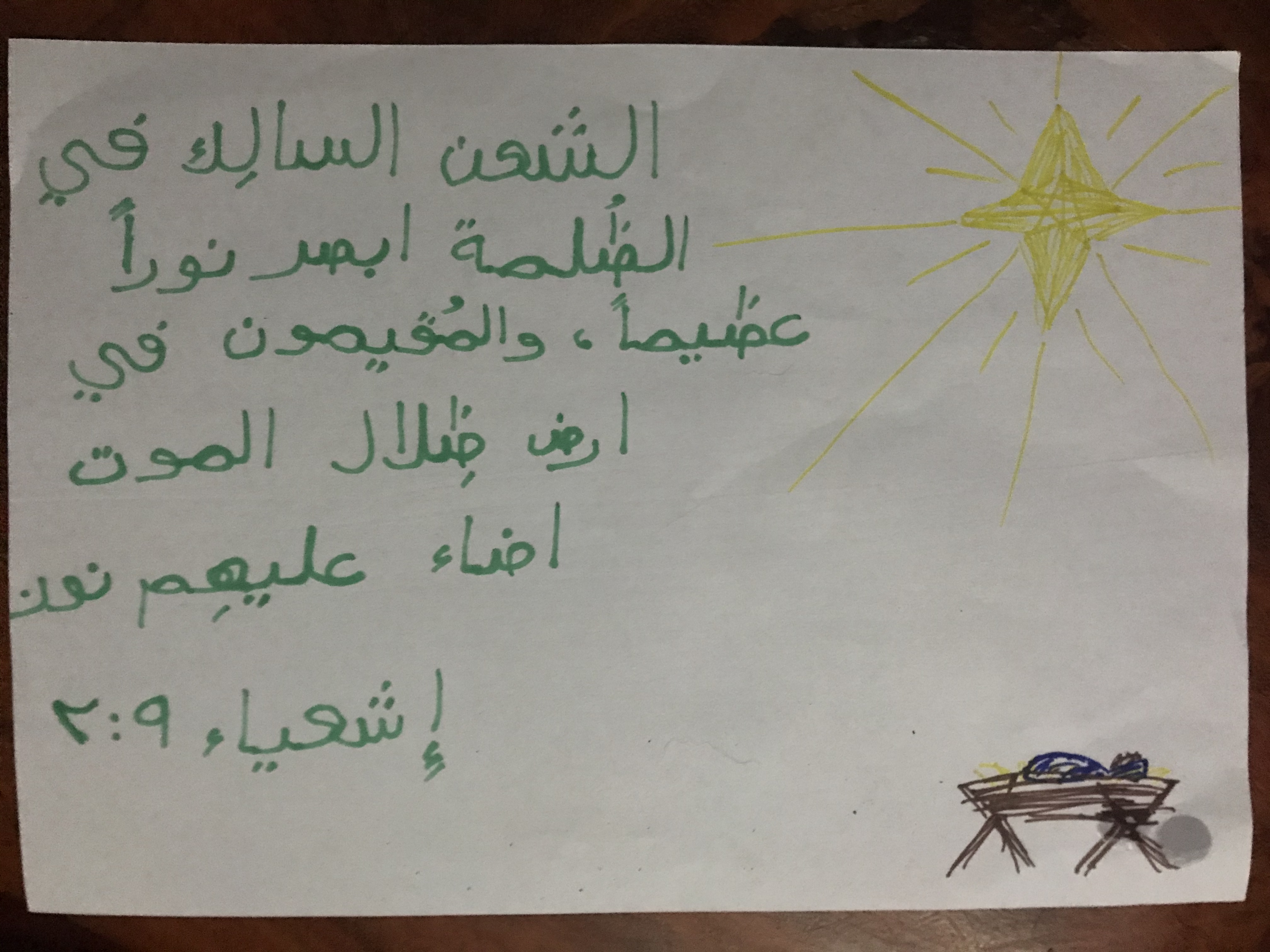
“The people walking in darkness have seen a great light; on those living in the land of deep darkness a light has dawned.” — Isaiah 9:2

Christ followers around the world celebrate advent because it teaches us to wait. As we wait for Christmas and imagine what it must have been like to live before our savior was born, we understand that the Christian does not wait passively. We hope. We prepare. We lament. We pray. We continue in daily faithfulness.

And this waiting—this numbering our days—teaches us holy habits. This season of anticipation for our savior’s birth trains our spiritual muscle memory to wait for our savior’s second coming in the same way.


This Christmas season has been a different one for me. I’ve spent Christmas overseas before: once for a brief visit in Cambodia and twice while I lived in Bulgaria. But my hot-climate Christmas was quickly followed by a return to the States and a wintry celebration back home with family. And my Bulgarian Christmases still surrounded me with snow, Christmas trees, carols, hot cocoa, and sweaters.

Christmas this year is on the equator, and the thriving palm tree just outside the front door dwarfs the fake Christmas tree just inside it. The only Christmas carols I’ve heard are the ones I played myself on the piano or from Spotify. I knew properly celebrating Christmas would take an extra effort when things feel so different, so I over-decorated and picked advent Bible readings to add to my normal quiet times. Little did I know how much my African context and regular readings in Kings would prepare my heart for advent all on their own.


I interact with refugees every day. Their heartbreaking situations are often normalized and mundane for me, but the heaviness slowly wears on you. It bows your back and puts a damper on your spirit. We talk about the hope of Christmas. I’ve shared my favorite Christmas verse from Isaiah about how a people walking in darkness will see a great light. But the reality is that I live in a land of lament among a people greatly acquainted with suffering. They carry with them an infectious ache for healing and a world made new. Deep in their spirits they yearn for great tidings of comfort and joy, and peace on earth to all mankind. Their longing for advent—for the savior’s coming—is not artificial or put on in any way.


Early in December I read 2 Kings chapter 7, which is a story from the siege of Israel. With Syrians at the gate and the last of the food gone days ago, the people were desperate. They ate donkeys’ heads, doves’ dung, even their own children. In that hopeless hour, God gave the people a sign to remind them he was with them: the next morning not only would the city have food staples they hadn’t seen in days, this food would sell for fractions of its normal price.

Sure enough, two outcasts with nothing to lose left the city that night to seek out the enemy camp. What they found was a ghost town. Provisions scattered, tents left standing, not a soul to be found. The Lord had frightened off the enemies with sounds of heavenly chariots. The men who found the camp gorged themselves on food and hid valuables they found free for the taking. But in the midst of their delirious joy, one had the presence of mind to say to the other, “What we’re doing is not right. This is a day of good news and we are keeping it to ourselves. If we wait until daylight, punishment will overtake us. Let’s go at once and report this to the royal palace.”

Those lines hit me like sack of flour. I decorate and celebrate Christmas in the midst of great darkness. I have good news! Great news of a savior born and a lost world saved, of comfort and joy, of hope for all mankind. Am I keeping it to myself? When the sun dawns and our savior comes back the second time, will I have shared this life-saving hope with the same conviction and urgency the men from the story shared their happy news with a starving people?

The truth is, refugees understand the waiting of advent, just like the men from the story did. They know what it feels like to wait for hope to come, straining their eyes to see from when or where help will arrive. They feel the world-weariness of the Israelites waiting for their savior, the Messiah, the Son of God.


An Arabic Christmas song I learned this year is about Emmanuel, God with us. We know our slow and haunting song, “O Come, O Come, Emmanuel,” and its words remind us of the pain and suffering God’s people endured while they waited, and the monumental task it was to keep their faith and hope alive in the prophecies God gave them to hold on to. But this Arabic song beautifully turns that idea to our African context.

Beautiful news on the earth,

It was the day He was born!

The Son of God, Emmanuel, the Lord’s redemption.

The sound of drums!

And angels cheering in the heavens!

And we below, full of need,

We wait for it…

The new covenant!


The song slowly builds and reminds us; now that our God has come, he will not leave us til the end. It expresses the ache with which we wait, the ache for the new covenant, for our God to be WITH us.

I have felt that ache this Christmas season. I’ve been reading 1 and 2 Kings, through seemingly endless cycles of kings who “did evil in the sight of the Lord” and “led Israel astray” or “caused Israel to sin.” As I read a collapsed version, generations of oppression, sin, and waiting pass in the turn of a page. The people dig themselves deeper and deeper into disobedience and suffering. As this horrible period spirals to its end, the people suffer each and every one of the covenant curses the Lord promised them should they stop following him and break his commands.

At the very end, a weary writer pens very matter-of-factly that the cities were captured. The people were carried off into exile away from their homeland. And all of this occurred because the people sinned against the Lord their God who had rescued them from Egypt. He had led them to the promised land and commanded them not to follow the religions of the people he drove out before them. But even so, the people built altars, temples, high places, and they worshipped the pagan gods and spirits. They broke the first covenant, turned away from God, and suffered their consequences.

I’ve simmered in these verses, these cycles of disobedience all December, just like a good Christmas apple cider simmers to take in all the flavors. I’ve felt the ache from the outside, the ache my refugee friends know so well. But I’ve also felt the ache from inside, from the inevitable brokenness sin leaves in its wake. Whether we live in exile or under oppression or just enslaved to sin in our lives, every human knows what it feels like to long for a new day, and new hope, a savior to swoop in out of nowhere to pull us out of the pit we’re in.

That is why we wait. Those are the emotions and the longing we feel leading up to Christmas as we wait not only to celebrate our savior’s birth, but for the righting of all wrongs that will happen when he comes a second time. As my heart yearned for a savior to lead us out of our mess, my advent readings led me to Luke 4:

[Jesus] went to Nazareth, where he had been brought up, and on the Sabbath day he went into the synagogue, as was his custom. He stood up to read, and the scroll of the prophet Isaiah was handed to him. Unrolling it, he found the place where it was written: “The Spirit of the Lord is on me, because he has anointed me to proclaim good news to the poor. He has sent me to proclaim freedom for the prisoners and recovery of sight for the blind, to set the oppressed free, to proclaim the year of the Lord’s favor.”

Then he rolled up the scroll, gave it back to the attendant and sat down. The eyes of everyone in the synagogue were fastened on him. He began by saying to them, “Today this scripture is fulfilled in your hearing.”

Those words of hope must have echoed in the silence of years of aching and waiting. This was good news indeed.

A Child’s Communion

Most people have a candlelight service on Christmas Eve. Everyone celebrates the story of when Darkness had seen a Great Light by coming together as a body, sharing bread and fruit of the vine, and a single flame, multiplied to fill a room. Christmas is, after all, a community celebration. We celebrate one of our founding stories together—as the Body. We celebrate the coming of the Body that was broken for us. There is something beautiful in the cycle of the calendar and the movement of the seasons that reminds us: there is a time to celebrate the Birth, and there is a time to celebrate the Death—the single human cycle that changed movements of the world.

But that single human who changed everything came as a child. He did not have his Father. He was not living in the comforts of the home He had known since the beginning of time. Regardless of all of this, that small child had a communion, of sorts. The Body had not yet been broken, but there was a gathering to celebrate the gift of new life. Joseph and Mary were there. A ragamuffin band of shepherds even came to goggle at the birth of their redemption. In fact, the whole of the created order was present for this first restored communion. The animals in the stable witnessed the birth of this Second Adam, just as they had witnessed the birth of the First. The baby was even nestled into a bed of hay—part of the vegetation that played such a prominent part in the story of creation and was to provide for the needs of all humankind. All was brought together for one shining moment of perfect community in perfect communion. And as we are told, Mary treasured these things in her heart, just as many of us savor the taste of the bread and the grapes as we meditate over their meaning and history.

My Christmas experience this year reminded me of a few of these essential elements of the first Christmas. On Christmas Eve my team and I found ourselves in a little village in Southeast Asia. We arrived too late to find any food, and all but a few vendors with day-old bread had shut their stalls and gone home to bed. We found a room in the inn, but we shared a meditative meal of crusty bread and some liter bottles of water. Mosquitoes buzzed around our lights instead of visions of sugarplums dancing in our heads. We made due with what we had in a place with which we were not familiar. And we had our little communion. We met as members of the body and shared stories of triumphs and loss. After talking about our futures on or off the Field, we heard about the believers’ work here and glorified in their successes and ached for their disunity. We savored the taste of an already-but-not-yet redemption, given, but not yet brought to fullness.

I mulled my experience over in my head, read a bit of the Word, and went to sleep. We woke up on Christmas morning and traveled to a home for children—children missing parents or whose parents cannot take care of them at home anymore. My communion experience continued with them in a different way. I shared with them about a child born into a very similar situation long ago on this day we celebrate, missing instead a Heavenly Father and away from his home. I saw in their eyes the all-surpassing understanding of children. They too knew what it meant to be out-of-place but completely belonging. There were in a communion of the Saints, brought together by nothing except a shared grace. Their community was whole and beautiful, complete with the same already-but-not-yet redemption as in that lonely stable long ago.

Fires and the Comedy of Jesus’ Birth

Our team has laughed a lot together. We laugh at ourselves and our mistakes and our language learning adventures. It helps us to not take ourselves too seriously and to fit into the culture. There are times when laughing is the only thing you can do. For instance, last night we lost our power because the electricity pole across the street sparked and caught fire. Over half our team slept right through it like babies while the hotel guests were filing out with their bags. Those of us awake waited it out and decided to wake the others if the fire spread. This morning we had a quite the source of laughter from teasing each other about panicking and sleeping through utter chaos. Sometimes we have to laugh so we don’t cry. And sometimes we just have to laugh at how ridiculous we must seem. I have known my savior far too long to not believe He has a sense of humor. He certainly has an appreciation for irony. Just as we are supposed to rejoice with those who rejoice and weep with those who weep, I believe we are supposed to laugh with those who laugh. I’m sure someone smarter than me could tell you about the health benefits of laughing—how it lowers blood pressure or releases endorphins—but they could also tell you that laughter is a psychological coping mechanism. When things are tense or difficult, sometimes our best defense as humans is to laugh.

The Khmer people have certainly been through more than their share of difficulties. Their history is riddled with persecution, prejudice, national disasters, hunger, and poverty. But they laugh. A lot. They laugh when they are uncomfortable, when people around them are uncomfortable, whenever someone is embarrassed, and just at life itself. But another reason they laugh is because they are able to do something most people can’t—they know how to find the comedy in everyday life, with all of its difficulties. How much more, then, do you think the Khmer who follow the Son laugh? They have true joy in life, despite their hardships. They know that in every situation, there is a true, giddy joy hidden below the surface, bubbling down deep. They have the Way, the Truth, and the Life. They are steadily moored no matter what comes into their lives, and they can laugh in the face of seemingly insurmountable troubles.

It should not have surprised me, then, when their telling of the Christmas story was riddled with laughter, radiant smiles, and a contagious joy that crossed all language barriers. The children put on a pageant of the story with costumes and everything. The wise men bent over their staffs and sported odd-looking Salvador Dali moustaches with attached beards. Herod was decked out in a yellow silk robe with a tiara on his head. The shepherds had their own herds of six-year-old boys crawling around on the floor in white button-up dress shirts. You see, they meant no disrespect to the story by staging and performing it this way. They didn’t mean for it to be a farce or something calling for derisive laughter. They valued this story so highly that they simply could not overlook its good tidings of great joy. Here is a story that, to them, meant the world; it meant that in their background of land mines, indigence, and the Khmer Rouge, there is a story of everlasting comfort to all people—a story of such joy that you can’t help but laugh at its brilliance and giddy delight. Unto us a savior is born! Unto us a son is given! And he means the redemption of the world. Who can help but laugh at such a wonderful gift of joy and salvation?

Christmas through the Eyes of a Wanderer

I have heard the Christmas story more times than I can count. I have not told the story quite as many times, but I can almost quote the Luke 2 version in King James verbatim, and within the next month I will tell the story quite a few more times. But this year the story sounds different. You see, this is will be my first Christmas away from home.

One of the things I’ve learned about stories is that, as hard as we try, we still tell and interpret them based off of our own setting. I know that the Israelites wandered in the desert and I know it must have been awful for them, but having never been to a desert myself without air-conditioning, I can’t very easily understand what it must have felt like. The Christmas story is the same way. We are used to hearing it from a cushy pew or curled up at home in Christmas pajamas, maybe sipping hot cocoa or picking up scattered bits of wrapping paper. I have always heard the story in the context of home—with people and places I know, traditions, predictability, and familiarity.

But nothing was familiar about the first Christmas, and nothing was homely. All of the characters would have been traveling, scared, and not anywhere close to home. Mary and Joseph were barely married, and they had been ordered to travel to a village they had never been to before. Mary was pregnant, uncomfortable, and in pain, yet she had to walk or ride on a donkey for long stretches at a time. Joseph would have had no idea where he was going—they didn’t pick out a hospital beforehand where Jesus would be born. And when they finally got to Bethlehem, Mary didn’t know she would birth her savior in a stable with animals and dung-ridden hay. She didn’t have a midwife or any of her relatives to attend her first birth. Nothing would have been as she expected.

And what about the shepherds? And the Magi? The Magi weren’t at Jesus’ birth but they arrived at the small family’s house after what could have been months of traveling through the desert on sweaty, smelly camels. And the shepherds were outside at night. Maybe it was cold. Maybe they were hungry. Whatever the case, they weren’t huddled with their family in front of a fireplace sipping cider.

The truth is, no one was home for the first Christmas. Maybe it was 23 hours on a plane headed to a country with a language and culture I’m not familiar to make me realize that truth. But now I understand that no one was comfortable; no one knew what was going on; and no one was around the familiar. The Christmas story, then, is not necessarily for people who are home. It is for people who wander—for people who are lost. And that is who I am going to share this beautiful story with. Please lift me up to the Father. That, more than anything else helps my team and me to have these kinds of opportunities.

Update: We all arrived safely with no missing baggage or delayed flights. They were long flights, but we were well taken care of. We’ll sleep tonight and wake up in the morning and head to the village. This will be a lot of language and culture learning for us so that we are sensitive to the people and how best to share our stories with them. We will be visiting churches and connections that we know, but we will have many opportunities to story. I’ll be telling the Christmas story to kids with candy canes, and we’ll have plenty of opportunities to share the One Story of our Book and our own personal stories of our relationship to Father.