Tag: church

Mountain Snapshots pt 2

I wish I could bring you all with me when I go to the mountains, so you could see what I see and hear what I hear. But this time someone joined our group with a photographer’s eye and a camera to channel it. I’ll throw in some of his pictures below, but I wanted to give you some “mental snapshots” to go with them—thoughts and moments I’d always want to remember if I never saw this place or these people again. 


Sundays on these trips are different days. They brim with activity like every other day, but they’re unpredictable and often lead to unexpected adventures. Every “teaching” day I wear a more comfortable dress and headwrap, balancing cultural respect with functionality. But on Sundays I break out the Sudanese cultural dress, a toub. Meant to be worn over a full set of clothing, this long piece of fabric wraps multiple times around the body to cover legs, torso, arms, and hair in one unbroken block of color or vibrant pattern. I don’t have to teach or lead on Sundays, so my decreased maneuverability and comfort in the sometimes 7-layer getup is an acceptable sacrifice to make for all the sweet smiles from strangers who can see my clothes, hear my Arabic, learn my local name, and immediately understand I value them and their culture. 

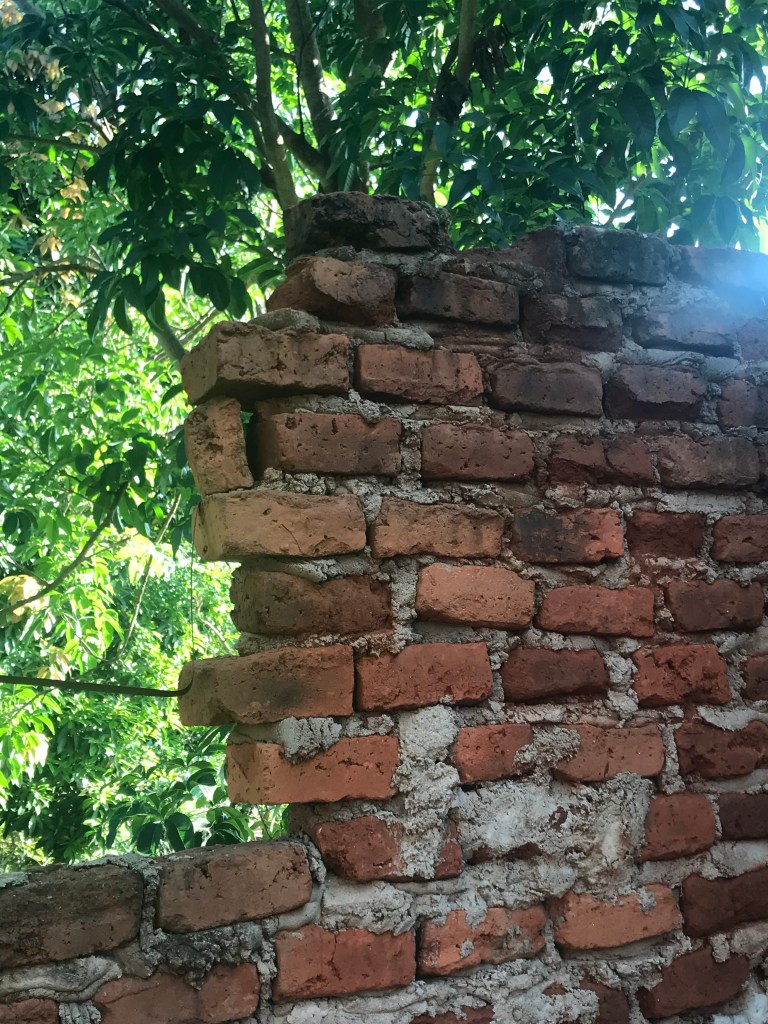
This Sunday I don an all-black under-layer of leggings and a long-sleeved leotard, so nothing will bunch or twist under the layers of  toub wrappings. Then I choose the tie-dye purple and green toub that’s more gauzy and breezy than some—a gift from a friend used to wear it herself in hotter desert conditions than this. When everyone is ready for church we cut across a couple fields, tramping on the footpath I could never have picked out for myself while hiking my layers up so I don’t drag half a field of dried grass and stickers into church with me. We arrive and worship with our brothers and sisters through a beautiful service in a simple building decorated with fresh-picked local flowers hanging from the roof supports. A few holes and pockmarks in the walls from the last war’s aerial bombardment makes the building an even more beautiful testament to God’s protection. 

As we mingle in the yard after church the typical jokes follow about my positive marriage prospects if I keep wearing a toub, and theatrical surprise played for laughs at my Arabic comprehension when someone suggests a son or a nephew who might be about my age. Laughing, I hold the pumpkin our teammate was given as thanks for sharing the sermon today, and clumsily try to balance it one-handed on my head to demonstrate the poor excuse I’d be for a working Sudanese wife. As we walk back home I unwrap one torso-encumbering layer of the toub and re-wrap it to throw it over my shoulder in a less formal style women wear when they have work to do. I’ll wear it that way for the rest of the day for greater ease of movement. After lunch, a friend calls out “hey Kandaka!” as I pass by. He’s teasingly comparing me and the toub over my shoulder to the iconic 2019 Sudanese Revolution picture of a woman called Kandaka. She herself was named that after the long Sudanese historical tradition of female leaders and cultural nurturers who moved and shaped a people with their stories. You’ve likely read about a Kandaka (or Candace) in Acts 8. A crooked grin immediately splits my face at the flattering comparison, and that I caught the deep cultural reference. 

Not long after a relaxed Sunday lunch, we’re given a few minutes’ warning before a trek to go see a building site for a hoped- and prayed-for new Bible college. Unsure of how long the trip will take, I wad up my body and my layers in the half-seat above the gear shift in a truck older than me, sandwiched between the driver and my teammate for what turned out to be a three hour excursion. The bed of the truck is a clown-car of people, and two motorcycles flank us carrying those who couldn’t cram into the truck bed as we drive through gardens and dry river beds up to the crown of a mountain. We clamber around on the mountaintop for a while and pray over the site before we descend to explore the flash flood river bed and the new springs that opened up last rainy season. 

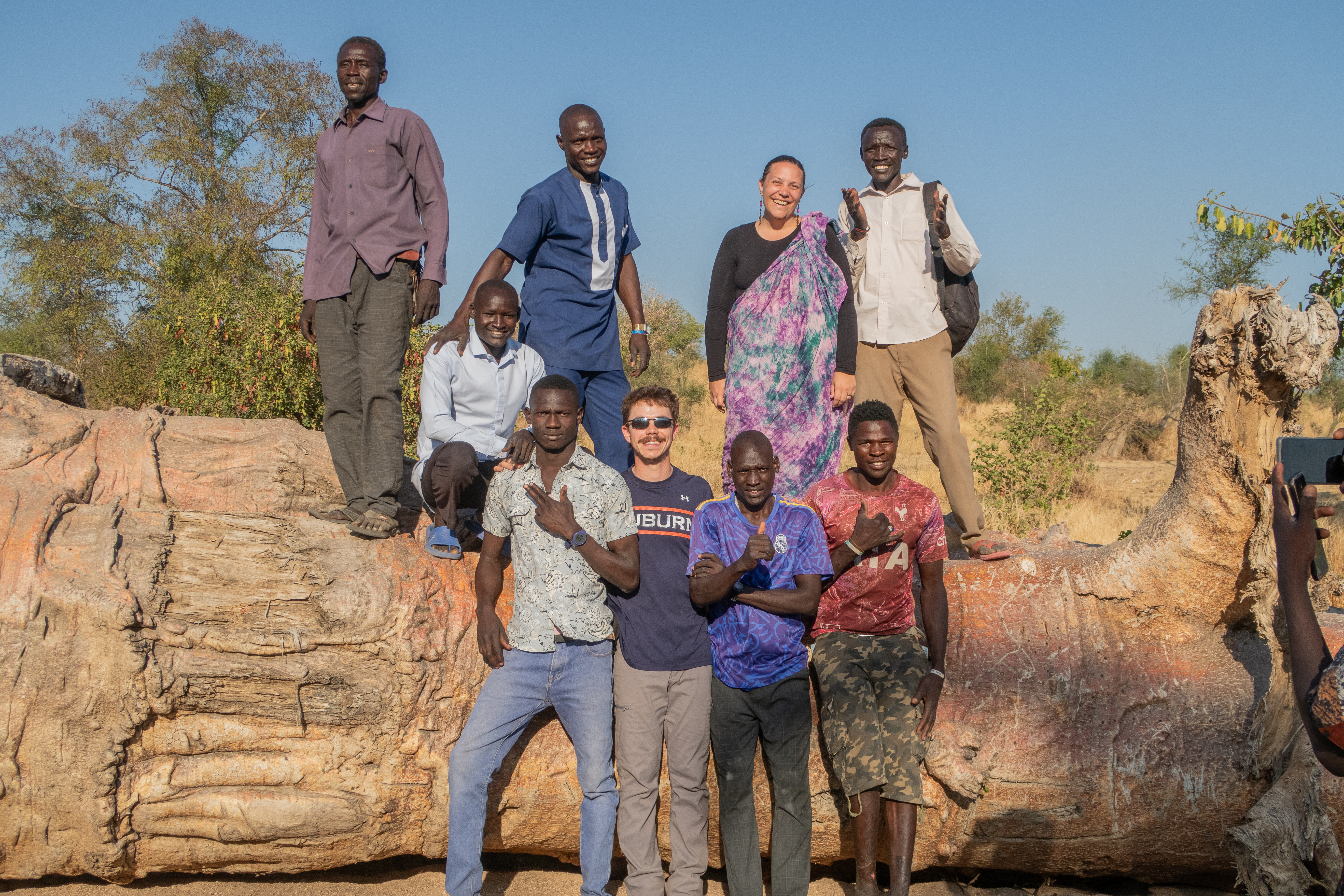
It was with pride that I managed almost as well as a Sudanese woman would in her own dress, and only caught my layers once on some fallen acacia thorns. In the dry riverbed valley below the brow of the hill, we see a baobab trunk that was swept down in last season’s flood. I still haven’t gotten over my giddy excitement of seeing these massive, distinctive-looking trees for the first time in my life in this area, so I rush down to feel its smooth, cool bark and branches I could never reach in standing trees. The youngest guys clamber up the side of the massive fallen trunk, and I know instantly I can’t miss this opportunity. With a moment to assess the physics involved, I kick off my flip flops and flex my toes in the sandy pea gravel underneath my feet. I hike up my layers and to accompanying shouts of “Go slow!” and “Don’t let the white woman fall!” I hop up the side of the ancient tree, using gnarled knots in the bark for hand and foot holds, with my skirts gathered in one hand. Everyone nearby swarms back up the tree and poses for a picture with the white girl in the local dress who miraculously avoided face-planting.

Photo credit: Johnny Rainey
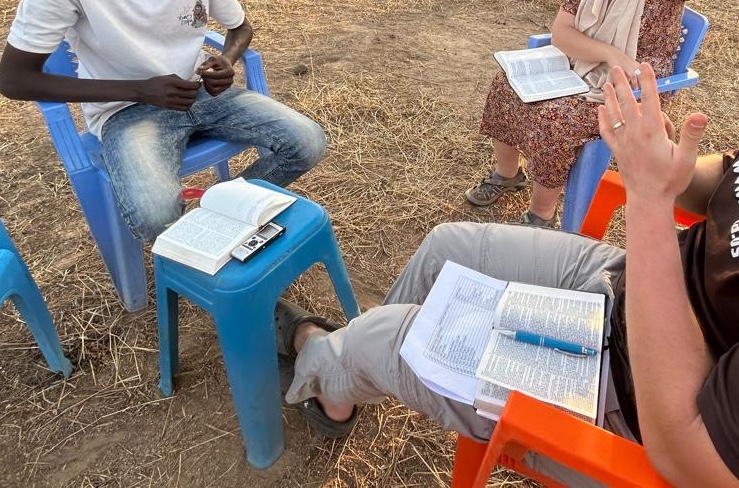
Photo credit: author

Toward the end of the week, I sat again under the same patchy shade of the same scraggly tree with the group of two young men. One has faithfully shown up to work every time we’ve visited. He’s my youngest brother’s age, and he knows me by my Arabic name that means “big sister.” This time we’re listening to the story of the woman caught in adultery from John 8 through translation from their language to Arabic. Every detail is accurate, and spit out in quick succession. Another deep story about how Jesus interacted with women who were publicly shamed, rattled off like a speed recitation. 

I take a beat to compose my thoughts and decide where to start to both compliment their good work and encourage them to go deeper and tell the story with more faithfulness to all those layers. But I didn’t have to worry. Perhaps more comfortable after we talked through some taboos earlier, my “little brother” blurts out, “where was the man?” A slow smile grows on my face as he continues. “If she was caught IN adultery, there must have been a man. Why didn’t the religious leaders bring him in too?” He has some theories that he rattles off, and I offer some more. But we dig into the story so he can see the way the religious leaders brought the woman there as bait for a trap for Jesus, to try to get him to say something against Moses and the Old Testament law. 

But I go back to some of the details in the story that explain some things between the lines. Miraculously God gives me the Arabic I need to communicate the nuance of this story. But I still don’t have the vocabulary to communicate the complex web of shame in this story that translates directly into these two young men’s culture. I explain that the story begins at sunrise, and how it was possible the woman was caught and brought in some state of undress when she was paraded out in front of everyone there at the temple to worship. I readjust the part of my headscarf hanging down over my torso, matching the unconscious expression of any local woman who feels exposed emotionally or socially. I hope my actions and gestures fill in for some of the nuanced vocabulary I’m missing, but before I know it, I’m up on my feet to explain the story spatially. 

When the religious leaders brought her into the temple, they treated her like she was only an object for their trap for Jesus. To answer the original question, they’re obviously thinking about incriminating Jesus more than incriminating the man she was caught with. But in the process, they make her the object of everyone’s attention. I stand in the middle of the circle, pulling my headscarf to cover more of my body. But then they ask Jesus, and not only does he take a long time to answer, he bends down and begins mysteriously writing in the dirt. I grab the shoulders of my American teammate, to use him as a stand-in for Jesus. Jesus could have immediately given them a wise answer, but he delayed. I step out of the circle and stand behind my teammate, with him between me and the young men. Now, everyone at the temple was looking at him and waiting for an answer. He was covering this woman and her shame, even though she had sinned. And not only that, he took some of the shame from her. When he didn’t answer, everyone looked at him and wondered if he could give a wise answer or if the religious leaders would humiliate him.

We continued telling the story with me walking through its paces, showing that Jesus chose to forgive this woman’s sin instead of condemn it, and to cover her shame instead of expose it. At the end, the young men had huge grins on their faces because they saw how Jesus has not fallen in line with heavy cultural shame directed toward women, but turned it on its head in order to protect them. I was glowing inside at the chance to be their big sister and tell them things other women aren’t socially allowed to. I was honored and humbled to help disciple them through the cultural expectations they face, so they can break the mold and be better brothers and fathers and husbands one day. 

Photo credit: Johnny Rainey
Photo credit: author

Easter Morning 2022

My body woke me up at grey sunrise this morning, and I immediately registered heavy dread in the pit of my stomach. Easter morning. But this wasn’t the familiar heaviness brought on by remembrance of Jesus’ horrific crucifixion. 

As I tried to set my thoughts aside and sink back into the temporary reprieve of sleep, my stomach continued to churn. I have to go to church today. I have to sit in a pew with leg-bouncing anxiety. I have to slap on a face of makeup and hope my bright lipstick distracts too many people from noticing my vacant, drifting eyes above it. 

I tried the well-worn fork in the path of my thoughts to redirect them. Easter isn’t about church and pastors and starched shirts and happy smiles; it’s about a grey sunrise that revealed heartbroken women making their way through the jarring contrast of a flowering garden to a familiar cold dead stone covering a tomb. It’s about Jesus.

And there was a thought that finally calmed my roiling stomach. Those women’s emotions were familiar to me. Their experience didn’t conflict painfully with what I felt, like a pastel Easter service with its lilies and church smiles did. 

Those women felt sorrow and death and disillusionment. They had been rejected by the religious leaders of their day who taught them wrongly about a “God” who did not care about or know them. They had lived in the fringes of society because the religious leaders of their day would not look them in the eyes, would not welcome them into the temple, could not cast out their demons or forgive their sin. And those religious leaders had taught them that their God would treat them the same way. 

But in spite of all that, these women had met Jesus. 

Jesus did not wound them in the name of religion, or worse, in the name of God. He had recognized their sin and brokenness and healed them. Accepted them. Loved them unconditionally. Stood between them and their accusers. 

As the gray morning lifted and brightened through my bedroom window, I remembered again the unerring peace Jesus brought those women. In their darkest moments when their faith felt dead and hollow, Jesus had been there. When his dear friend Mary anointed him with oil a week before his death, he silenced her accusers and told them generations would remember her faith. When his body was later wrapped for the tomb, her perfume might still have been there, faintly noticeable underneath the horrific smells of torture, blood, and sweat. When his mother Mary was alone and grieving at the foot of the cross, Jesus gasped out for his dear friend to love and care for her like he would his own mother. And when another Mary, one of his most devoted followers, sobbed insensibly in that flowery garden in the gray Sunday dawn, she felt some of the emotions I still often feel. Abandoned. Conflicted. Hopeless. Alone. Unloved. She felt like her faith had betrayed her. 

On that morning, no priest or religious leader came to her in her brokenness. The men who’d claimed to believe just as fiercely as she did were huddled together for safety somewhere far away, and she WAS alone with her grief and lament. 

Except she wasn’t alone. Jesus met her in that garden. He called out HER name so that when she couldn’t recognize anything through her tears, she could know he was with her still, again, never to leave her this time. 

Even when she returned and the men did not believe her, even when she endured fear and persecution at the hands of the religious leaders, even when she could no longer feel Jesus’ familiar touch in the days to come, Mary would never forget how Jesus called her by name and comforted her in the garden. 

So for those of you who fell asleep last night anxious about being in church today, if you woke up like me, sick to your stomach this Easter morning before you even knew why, remember Jesus in the garden. If religion has hurt you, if you carry shame spiritual leaders have put on you, if your church trauma keeps you at home or keeps you disassociated if you are at church, remember Jesus. HE is not the same as church who has hurt you. Those leaders did not act in his stead, and they didn’t reflect his character in the way they harmed you. 

In fact, when Jesus was perhaps his most angry in the gospels, it was because he found people abusing his temple—using it for profit and keeping people out who should have been welcomed in. When he turned over their tables, spilled their money, and chased them with whips, the people asked him what sign of authority he had to show for doing such things. “Destroy this temple and in three days I’ll raise it back up,” he said. He was talking about the temple of his Body. 

Friends, the church is not a building. It’s not religious leaders who have used or abused or abandoned you. It’s Jesus himself. And when his body, or his image and his character are destroyed for us, even if the religious leaders were the ones who distorted him for us—remember that he rose again and lives still as the same gentle shepherd we read about in the gospels. HE is the one who will meet you in the garden. And his true church—the people who truly make up the Body of the church today—are the ones who will meet you in your tears on those greyest dawns when you feel the most broken. 

How Many Baptists does it Take to Rebuild? All of them. 

Brothers and sisters, our Southern Baptist convention lies in ruins. Many of our leaders are openly heartbroken. Wonderful believers like Russell Moore and Beth Moore and plenty of others have left and pulled back the curtain on their way out so we can see what is behind it: corruption, abuse, pride, racism, and lust for power. We are fragmenting and arguing. Writing letters. Publicly condemning each other. 

Our convention is in ruin. It is broken down, in great trouble and disgrace—the same words Nehemiah uses in the opening chapter of his book to describe a broken Jerusalem.

I love the Old Testament so much because it puts flesh and bone to complicated concepts from the New Testament. Idea is made story, and concept is made concrete. The New Testament talks plenty about unity and one Body, about how in Christ there should be no us-and-them, and about how we should treat women as our sisters and protect them. 

But Nehemiah shows that. In his story, the exiles return to their homeland to find its capital dilapidated and destroyed. Nehemiah gathers them under the unified purpose of rebuilding their home and turning to God anew. 

As I have been working to collect Bible stories to help refugees understand and believe the gospel, Nehemiah’s story struck me as a particularly powerful one. It teaches the basics behind the gospel: repentance of sin, a biblical understanding of suffering, God’s redemptive restoration, and more. But this clear picture of the gospel doesn’t flow the same way our normal VBS ‘sinner’s prayer’ does. Nehemiah and the people rebuild the wall and reclaim the home God gave them before they can fully dedicate themselves to righteous living. And I think in more ways than one, Nehemiah’s rebuilding blueprints can be blueprints for rebuilding and repairing our broken SBC. 


First, as we should, Nehemiah begins by praying for favor because he realizes the monumental task ahead of him. He fasts and prays, and weeps for the brokenness he has heard about. He confesses his sins and the sins of his people. 

Once he arrives in Jerusalem, he inspects all the walls to find the broken bits. The returned exiles already living there had become comfortable with something that was unacceptable. Their wall lay in shambles, and they did not live in safety or in the power of the Lord’s protection.

In our case, the SBC is not the same as Jerusalem’s city walls. But we are, in a New Testament sense, the people of God. And our community lies broken around us while we have become all too comfortable with unacceptable conditions ourselves. Scandal after scandal has exploded into the public eye in which a church authority has sexually abused people under his care. Survivors of such an experience are hushed and demeaned in the name of ‘saving a reputation’ or ‘not wanting to drag the name of God through the mud.’ Spiritual abuse and manipulation is rampant. Our cultural values are hardly separated from our understanding of biblical conduct. We feel all too comfortable or complacent to do anything about our broken heritage that can make women, children, abused, singles, or minorities feel like second class citizens of the Kingdom of God in our churches. Because maybe they only feel mistreated but misperceive the reality. Or maybe they’re sensitive. Or maybe they’re not mentally healthy and don’t fully understand what they experienced. Maybe they’re ‘crying wolf.’ 

These things don’t happen in every church, but there is an incredibly disturbing pattern of them across the denomination. People experiencing spiritual or sexual abuse are hushed or discredited. Women are exhausted navigating a male world of ministry that wants to keep them at arms’ length. People who don’t conform to white, southern culture have to swim against the tide every day for recognition that the Spirit of God in them is just as trustworthy a leader as it is in others. And these sadly aren’t exaggerations or caricatures. These are each personal experiences I and dear friends have felt at the hands of our SBC churches. 

After seeing the ruined walls for himself, Nehemiah pointed out the trouble to the people. And his words ring frighteningly true for us and our convention too: “You see the trouble we are in. Jerusalem lies in ruins, and its gates have been burned with fire. Come, let us rebuild the wall of Jerusalem and we will no longer be in disgrace.” But the work after that obvious statement wasn’t so easy. People mocked them and questioned their motives. People tried through fear and intimidation to keep the work of rebuilding from happening, just as we see in our case as well.

But they did rebuild. Because EVERYONE pitched in. Families. Men. Women. Names no one remembers or knows about. Religious leaders. Wealthy men. Political leaders. Skilled artisans. People from the country. People from the city. Day laborers. Servants. Salesmen. It took all sorts to build Nehemiah’s wall, just as it will take all of us if we hope to repair or rebuild our SBC. We can’t leave the work of rebuilding to people behind pulpits or in seminaries or behind stacks of books or gathered at the convention. We have to address it at every status and level. We have to work to create change on our very own section of the wall, in our own little circles of influence. 

The people faced more mockery. “They’re wasting their time.” “Will they ever finish?” “Will they bring stones back to life from those burned heaps of rubble?” But the people kept working. And because EVERYONE worked with all of their heart and God blessed their work, they managed to build the wall to half of its height. 

But the workers got tired. They grew reasonably fearful of attack and ridicule. They despaired of ever finishing. That sounds incredibly familiar to me, at least. I fear getting worn down and compromising my convictions. I fear response to this blog post. I fear that our work will never begin or finish because so few people seem to be convicted to the point of action about the root of these problems in our churches. But in the middle of those feelings, Nehemiah reminded his people that this was a fight for the securities of their families and their homes. As we fight against cultural tide or powers-that-be, we have to remember our unity of purpose: to work together to build an SBC we are proud of because it is full of the Lord’s Spirit, one that is truly safe for every member of the family of God. 

As they continue to work, Nehemiah realizes that the work is extensive and spread out around the whole city; the people are separated from each other along the wall. So he says tells them that wherever they hear the sound of the trumpet, they have to join there to fight: “our God will fight for us.”

In a similar way, we have so much work to do in our churches. We are rightfully spread out and doing work where we’re convicted. But when our brothers or sisters need us to stand up for something they are convicted about and working toward, let them call. And let us answer and come to help. After all, if this is work God has called us to—to repair or rebuild our broken community of the faith—he will fight for us.

At this point the wall-building finally encounters a problem that halts the work. The wealthy and corrupt families had been slowing down the work. The hard workers on the wall barely had enough to sustain themselves because of these families’ extortion, greed, and underpay, so the poor families practically had their sons and daughters enslaved to be able to afford food. They felt powerless, and they kept quiet because they couldn’t even think of what to say. Sadly that mirrors an unacceptable number of people’s experiences with the SBC right now. Nehemiah harshly rebuked the people abusing their power, and he demanded immediately that they give back their dishonest gain. 

And wonder of wonder, miracle of miracles, they repented and gave it back!! He also shook out the folds of his robe for dramatic effect and said, “May God shake out the house and possessions of every man who does not keep this promise. So may such a man be shaken out and emptied.” Can you imagine if someone did that at the annual convention soon? Nehemiah tells everyone that the wealthy and powerful should be generous with their possessions and positions. Sadly and unfortunately, we do have pastors and leaders in the SBC who throw money around to move their agendas to the front of the line. But Nehemiah and the exiles mounted a unified effort so convicting and full of God’s sustaining power, that the sinful leaders repented and joined in.  

When the wall is finally finished, Nehemiah says that it was an obvious testament to God’s work, because there was no way it would have been done otherwise. May God work in our hearts, our churches, and convention in such a way that we can’t praise any president or board or meeting for its success, but rather the pure, unadulterated movement of God. 

Only then do the exiles go back to reading their ‘Bibles.’ And now they understood the words they had heard preached to them. How much better will our congregations hear and understand the Word when it has been modeled for them? 

Then the people wear ash and sackcloth. They publicly confess and repent. Sadly, the story does not end well. As much as the people try, without the new covenant and God’s law written on their hearts, they cannot obey God’s law and live righteously on their own. As long as our convention mingles believers with a true relationship with God alongside cultural Christians who only practice ritual religion, we will fall short of our aims. Our most earnest recommitments to righteousness will not be enough to keep every heart from straying away from the narrow path of righteous faith. But that doesn’t mean that our ‘wall’ doesn’t need to be rebuilt.


If the story of Nehemiah teaches us anything about rebuilding our communities to honor God, may it teach us about the utter necessity of rebuilding on a foundation of confession for the sins of our people. Nehemiah’s fathers weren’t there to confess their cultural sins and the sinful heritage that had led to exile, to God’s city becoming a burned down ghost town, and to the ruin of the people of God. So whether he had committed the same sins or not, Nehemiah confessed them before he could even begin to rebuild. 

I have heard many well-meaning friends and respected leaders say that the biggest problems in the SBC right now are that we don’t preach the Word, we don’t read our Bibles, we don’t evangelize. They’re right in part. Just like Nehemiah’s exiles, many of the people living in our broken convention do not actively follow the Lord in these ways. But that’s not where Nehemiah started. 

The foundation Nehemiah laid to rebuild his people’s spiritual home was confessing social sins: “I confess the sins we Israelitesincluding myself and my father’s house, have committed against You.”

Nehemiah didn’t ask the king’s permission to print a thousand copies of the Law to give out. He didn’t ask permission to walk the broken streets of Jerusalem and tell people to listen to the Word of the Lord. He asked the king’s permission to rebuild a broken home. He and all the people got to work and then they read their copies of the law together. Then they repented. Then they began to live righteously. 

Just like Nehemiah, we need to know the word of God ourselves. We need to be hungry for it, to be committed to obeying it, to be utterly broken and to fast and pray when we see that others don’t live by its life-giving words. But that knowledge must drive us to confess, and not just for ourselves, but for our broken institutions and communities. Nehemiah stopped the building of the wall to address slavery and extortion and the Powerful making others feel Powerless. Then they got back to work. He wouldn’t disenfranchise some people just because he wanted the wall built in a hurry. He wouldn’t overlook the abused and the hungry and rush to complete his project. The wall meant nothing if it didn’t keep ALL of God’s people safe. 

Isn’t that true of our beloved SBC too?

Brothers and sisters, I have worked alongside you, schooled alongside you, gone to summer camps and choir practices and prayer meetings and Sunday services alongside you. I love you and I am grateful for the Baptist heritage we share. It led me to the Lord and deepened my walk with Him. I value you as brothers and sisters and co-laborers. I have grieved with you at funerals and celebrated with you at baptisms and shared True Baptist Love with you over potluck tables piled high with favorite recipes and community staples. 

But we have a responsibility. Our SBC means nothing, our churches mean nothing, if they don’t show warm welcome to every single person made in the image of God—if a sexual abuse survivor feels fearful and lonely at the back of our church; if a woman feels she can’t use her spiritual gifts; if someone unmarried feels their input less valued at Bible study; if someone feels stared at for the shape of their eyes or the color of their skin; if an Asian-American believer isn’t surrounded with love and put on our meal-train when their communities are attacked and they feel vulnerable; if a Black man is treated with any less respect in the pulpit. If our churches are places that protect the man in the suit behind the pulpit because of where he stands, instead of protecting a woman who fearfully outs his abuse because she needs protection, then we have earned our broken down walls and public disgrace. 

We must confess, repent, and turn from our group sins like Nehemiah did, even if they are not our own personal sins. We must make that the foundation to rebuild our SBC. And after all of us from every walk of life put our backs into finishing that exhausting work, then we disciple our people and read the Word together and obey it. Our practice must match our principles or all the Bible reading in the world means nothing. No one is kept safe within our walls. And no one sees our example and says, “Only God could have done that work, and raised up a living people from burnt up rubble.”


*Much of Nehemiah is quoted or paraphrased in this post, both in and out of quotation marks. All of these passages are taken from the NIV translation.