Tag: Stories

War Stories part 2

Stories have always helped to give me a picture of something I can’t otherwise understand. A story takes something abstract like a war, and gives it faces, places, names, and feelings. When the people in the stories feel real to you, you can’t help but feel what they feel as your mind’s eye sees what they see. Stories teach our hearts empathy and can shape our emotions into actions—whether they be prayer, lament, protest, or giving. 

I’ll continue sharing Sudanese stories with you in this post to let you meet them in their experiences so you can better understand the war they’re living through. The following stories are difficult. They deal with genocide, rape, war violence, and other traumas. Each section has a heading so you can avoid topics that might be too difficult for you, but know that I never give graphic details. My goal is to walk with you as a guide, not to leave you feeling overwhelmed and hopeless. So, like in the last post I’ll share scripture and prayer points that have helped me respond to each story. 

My hope is that these stories will help you to remember the Sudanese—with prayer, with visits, with kindness, in whatever ways the Lord prompts. One of the most common fears I’ve encountered with any refugee friends is the fear of being forgotten and left alone. Too often in their times of deepest need they have been met with indifference and neglect, if not cruelty. By the very nature of their situations, they have lost so many relationships through war or displacement that the thought of being ignored or left alone deeply grieves them. They can carry a deep sorrow that people may shrink away from them in their need, or forget them because it’s uncomfortable to face their situations. Of course they need material help, but the emotional gift of sharing in their grief or offering a prayer is also important, and it often lasts longer. So for this reason I share their stories with you, so they will not be forgotten. 


Trauma: The Reporters

 I met both women over a year apart, but they were alike in many ways. Both were capable women who seemed to be the keystone of their families. And both had to flee Sudan for their lives and to protect their families from further threat. One woman was a highly educated reporter, and her commitment to exposing injustices in a country destabilized by the brewing war landed her in the crosshairs of powerful people. She showed me pictures of her acid burns the first time we met, almost proudly. Her reporting was helping to spread her people’s stories so the world could see and respond with help. 

She was now in her second country since she fled, and she left family members behind she hoped no one would targeted now that she was out of the way. She and one of her daughters with her still lived like they were hunted, careful of how loudly they spoke certain things, and fleeing people who still threatened them for what they believed and shared even two countries away. 

The other woman had lived in an internally displaced people’s camp within Sudan before she fled years ago. She reported serial rape in the camps to authorities, hoping someone with the power to stop it would intervene. But through corruption, her reports were leaked, and the very people raping to control women and frighten them into silence targeted her and her family. Her story of a chance warning and her harrowing escape even while she could hear her children crying and her husband being beaten was horrific. But she knew that leaving would spare them further abuse. So now she had lived for years separated from her children, the youngest of whom was an infant when she had to flee alone. 

Both of these women have been blacklisted, and cannot return to their homes for the foreseeable future for the safety of their families. Both are among the strongest and most resilient women I know, but the human mind and body have their limits. Mental trauma of this magnitude is debilitating, especially if you experience it in a foreign country without a support system or access to counseling. The second woman was finally reunited with her children who fled the most recent wave of violence. But she suffered from memory loss, crippling anxiety, and debilitating chronic physical issues that were the product of years of extreme cumulative stress from the mental trauma she had endured. 

I recently spoke with a South African eye surgeon after she served for two weeks giving vision-restoring cataract surgery to Sudanese. She was confused at how little response they gave when suddenly they could see again, especially compared to some of her regular patients who would dance or sing. We discussed their mental trauma, and the self-preservation of low expectations and not daring to believe change for good can really last. But many Sudanese I know also carry with them a “sideways hope.” Outwardly they expect the worst case scenarios, but inwardly they bravely keep hope kindled in their heart. As a favorite writer of mine so well described it, “For people habitually up against it… hope is something too sacred to be spoken. It belongs in the heart, not in the mouth.”[1] The mental trauma Sudanese carry may be disabling, but many still cherish hope when they have every reason not to. They may try to hide the effects of their trauma because they have a distorted sense of what every person should be able to carry without complaining, but hidden or not, their resilience is radiant. 

Genesis 16; 21:1-21

 Hagar’s story of trauma, abuse, and shame can feel too heavy for the cursory treatment the Bible seems to give it. But what Scripture doesn’t do is hide the shameful treatment she received at the hands of Abraham and Sarah. The account of her story does not excuse those parents of our faith of their behavior or explain it away. As Muslims, many of the Sudanese are Hagar’s spiritual descendants. Like her, their very presence is too often considered a shameful testament to someone else’s sin we would rather forget. They are often expected to cover or hide themselves to protect their communities from the shame of exposure—of domestic abuse their bodies would show, of the brutal control their female genital cutting testifies to, of the rape cowardly men forced on them and shameful men ignored. But the Bible does not ignore Hagar’s story. In fact, it takes care not to hide the sin of powerful men like Bathsheba’s king, and the dynasty-founding families of Dinah and both Tamars. Genesis takes care to call Hagar Abraham’s wife, to show in even more disgraceful detail the treatment she deserved but was denied. And at the climax of Hagar’s reprehensibly traumatic story, when Abraham and Sarah send her away rather than face their sin and its consequences, God SEES her. And HEARS her child’s suffering. God drew near to the broken-hearted Hagar just like he does to traumatized Sudanese women whose depth of pain no one else truly sees or hears.  

Pray for Sudanese dealing with mental trauma. 

  • Pray for God to provide families and communities they can safely share their experiences with so they can be comforted.
  • Pray for mental health professionals and therapy options to help Sudanese process their traumatic experiences.
  • Ask God to comfort them with his love and be near them with his Spirit so they do not feel alone or abandoned in their suffering and its aftermath.
  • Pray that Sudanese men and women would not carry the shame of what has been done to them and would be able to clearly see that their value is not diminished by the cruelty they have been shown.
  • Pray that like the Biblical authors, we who are not Sudanese would not cover or ignore their suffering, but instead would respond with respect and compassion. 

War: The Village School

We drove three hours from the nearest hub town across sometimes indiscernible roads to reach their village. “Out in the middle of nowhere” was an understatement. We traveled with friends of ours as they were returning home. Their grins in the back of the car were the biggest I’ve ever seen them, as they chatted with excitement for us to meet their people and see their home. 

 We shared their excitement to get to see their homeplace, but that wasn’t the only reason we were going. This village, out in the middle of nowhere, with no military base anywhere nearby, had recently been bombed from the air. One bomb fell harmlessly up in the mountains where no one lived. Another fell down a well and only property was damaged. But the third was dropped on a school while it was in session. Around fifteen children and teachers died on site, and dozens more were injured. We were traveling out with our friends to offer our condolences and sit with the village in its grief. 

I experienced a disorienting emotional whiplash as we finally rounded the last bend and caught our first glimpse of the village through the scraggly bushland surrounding it. The lively chatter in the car fell deadly silent as we caught sight of the school partially in rubble. A subdued voice asked if we wanted to stop there first and see it, but someone told the driver to go ahead and take us to the gathering point where we planned to meet everyone. I tried not to think of the sound of the plane overhead, or the chaos that would have ensued as this peaceful village frantically rushed to dig children out of the rubble. 

We sat with the village leaders and some of the fathers who had lost family members. They showed us kind hospitality and eagerly welcomed us. We offered prayers and some encouragement from God’s Word. But our words and presence with their grief felt so small in the shadow of that school, under the gaze of those fathers’ hollow eyes. There were not strategic resources the military could have gained here. This village and its people weren’t even active in the war that was taking place farther north. The bombing was completely senseless, and could have no other purpose than fear and destruction. But in every story I’ve heard, that’s how this war is. It’s senseless violence that will consume you if you try to understand the why behind it. 

As we left I experienced that emotional whiplash again. I was still mulling over the experience when my friend stood on tiptoe to poke his grizzled head through the car window and talk to me as I was climbing in. “You didn’t have time to come to my house this time!” he said. The engine was turning over and we were seconds from pulling out. “Next time you come you are welcome! You’ll have to meet my son! He’s the one your age, and he could use another wife!” he joked, with a mischievous twinkle in his eye. As we pulled out past the school that I barely even noticed after that proposal, I realized that was how they did it. This village lived under the looming war balancing sorrow when it struck with laughter and kindness when they could find it. 

Job

The book of Job isn’t a comfortable one. The conversations between Job and his ‘friends’ seems like a maze of the accepted wisdom of his age and ours, which God discounts by the end anyway. We can be tempted to see the final point of Job as, “Suffering doesn’t make sense. Period.” But in the end of the book, what Job learns when God speaks is that we may not understand God’s long-term plans or the big picture or how he enacts justice. But suffering isn’t senseless. Even if we don’t understand, God sees and plans so much more than we can. And not only that, God heard Job every step of the way. God knew Job’s suffering and grief, his faithfulness and his despair. God knew Job and honored him—both when he proudly pointed Job’s faithfulness out to Satan and when he blessed Job after the suffering passed. 

We cannot understand the senseless suffering in Sudan, but by wisdom so much higher than ours, God does. He knows and feels each broken heart and cherishes each soul that faithfully clings to him in the suffering as Job did. But Job saw God’s plan only imperfectly. When he begged for a helper, someone to take the suffering in his place and advocate for him to God, it was the wish of a broken man who thought it impossible. But after Jesus, we and the Sudanese who suffer can see that wish realized. The Holy Spirit is our advocate to God and can bring us near to him. And Jesus not only took God’s punishment in our place, but physically shared in the same kinds of suffering we may face and empathizes with us as we endure. 

Pray for Sudanese impacted by the war and its violence. 

  • Pray for those who have lost loved ones, that God would be near to them in their grief.
  • Pray for Sudanese who believe God only expects them to endure suffering. Ask that they would understand our God is a suffering servant who can join them in their pain and sorrow.
  • Pray that through this war, God would draw many Sudanese to himself as they search for someone to save and protect them.
  • And pray for Sudanese to come to know Jesus personally as the same redeemer and helper Job hoped for. 
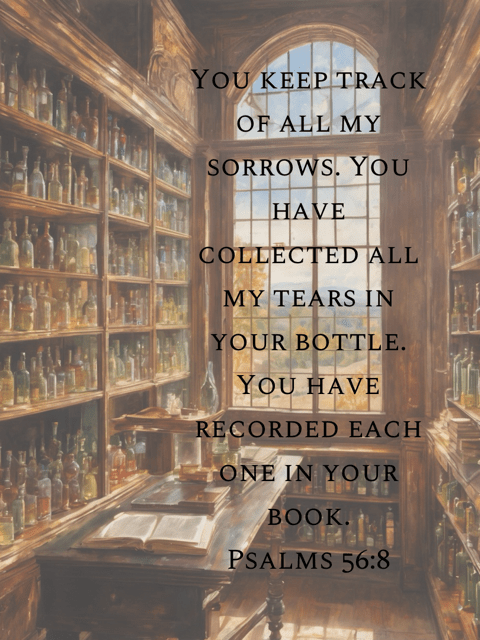
Image generated by Gencraft LLC. Text from the NLT.

Genocide: The College Student

I sat across the supper table from him after a discussion about his potential. He had just finished high school—late because of the years of interruption from the war—and he was considering where he might be able to get an IT degree. He was by most measures a fairly normal college-aged guy. He held his smartphone and his attention drifted to it during lulls in the conversation. He had just teased me like my own brother his age about how much shorter I was than him. But in a few important ways, he wasn’t any normal college guy. He is part of the Masalit tribe, a target of the quickly spreading genocide in Sudan’s Darfur region and of what was widely known as “the first genocide of the 21st century.” That first genocide began in 2003, just in time for the circumstances of his birth to be wrapped up in its horror. He had been displaced from his home for years and I’d never heard him talk about his family before, if they were even still living. 

After a break in conversation I broached the subject of the current genocide happening under the cover of the war, and asked him if other Darfurian tribes besides his were targeted as well. Contrary to the hesitance I expected, his eyes lit up. “That’s actually a very good question,” he said, eager to explain to someone who cared to know. He launched into a welcome history lesson, quick to share about his people’s dignity and strength and their difficult past. “My country,” he would say, as he proudly showed pictures of the flag, or political borders, or the beautiful landscape. He radiated a fierce sense of national identity and autonomy as he shared about the many and complicated reasons others are willing to commit genocide and martial rape. Many want control of his people’s land and its bountiful resources, and there are generations of tensions between Arabized tribes who consider the Masalit and other Darfurians inferior and want to rid the world of them. Some in Darfur want to split from Sudan entirely to be their own nation. But as things are now, many Masalit like my friend are displaced in many different countries, and some even as far as Europe. 

I mentioned the international news coverage, and how more people around the world are starting to hear about his people and what they’re suffering. He said, “What you see in the news is not real. What I have seen with my own eyes, the killing and the raping, you cannot understand that from the news.” He sat quietly for a while, leaving unsaid many more atrocities than any 23-year-old should have to experience. 

And then just like that, he flipped his phone around again to show me a picture of two hyena cubs he had caught and raised. He explained how abundant they were in Masalit land and how people caught or raised them for meat. But with a crooked grin he told me how he’d managed far from his homeland to catch and raise these two—Biter and Scratcher in his language—like security dogs, and later sold them to help support his schooling. He was carrying on as normal a life as any 23-year-old could despite the genocide: trying to make ends meet, enjoying a thrill of danger and the shock value of his adventures, wanting to travel the world and get an IT degree to get a stable job and have a future. 

Habakkuk

On the year anniversary of the coup, I sat with three Sudanese pastors around a table and they shared what they thought about the war and the future of Sudan. They lamented how many were suffering without cause. Some said they thought God was using the war to root out wicked men in power. They discussed how the instability exposed false gods or faith in the wrong deity and gave people maybe their first real prospect of turning to God. They agreed that only God could deliver the people of Sudan from this war and save them. One said, “God is still doing his work in the middle of this war.” 

These observations are exactly the same as Habakkuk’s in his small book. He considers the wickedness of his own people, and then regards God’s plan first with horror when he hears that a nation will bring war to them. Like Habakkuk’s people in his time, the Sudanese face unimaginable cruelty and violence. But also like Habakkuk’s people, they are having a chance to see God’s work that is hard to believe without seeing it for yourself. Muslims from tribes that cannot remember a time before Islam are uprooted and questioning for the first time if their faith is true, and if it can sustain them. At the end of his book, Habakkuk comes to an acceptance born only of his faith in a powerful but loving and merciful God. Though devastation surrounds him, Habakkuk chooses to depend on the Lord to be his strength. Even in famine, violence, and disaster, the God who saves him inspires joy in Habakkuk’s spirit. This same God calls to the Sudanese and offers them the same hope. 

Pray for the Sudanese facing genocide. 

  • Pray that God would provide a way for them to get to safety.
  • Pray that their homes and cultures and livelihoods would be preserved through the upheaval as they flee.
  • Pray for God to protect especially the defenseless among the targeted Darfurian tribes.
  • Pray for those committing the genocide—that God would help them to see clearly through their generations of hatred and the battle fever so that they cannot murder another man, woman, or child without feeling the eternal weight of their actions.
  • Ask God for the justice only he can give, and for ultimate reconciliation and peace. 

  1. Go read Benjamin Myers’ post, “Advent in Oklahoma,” on the Front Porch Republic site. He wrote a beautifully expressive reflection of a waiting hope particular to Oklahoma Plains people. As an Oklahoman myself working with Sudanese, I found a sort of kinship in the way we both persistently, stubbornly wait and silently hope. https://www.frontporchrepublic.com/2023/12/advent-in-oklahoma/ ↩︎
War Stories part 1

The War

Sudan has been at war for over a year. Many still have not recovered and returned ‘home’ from the last waves of violence, and the country was just finally beginning to let out its breath and hope for a time of peace. But instead, the peaceful civilian government they hoped for a year ago is only a broken dream now. The capital city of Khartoum is a smoking, shattered ruin. Much of the country has been ravaged by war as two military factions fight for control over the hollow husk of a country they have left in their wake. 

Millions of people have been displaced from their homes and fled to different parts of the country or to other countries entirely. Again and again the mass casualties from these clashes are civilians caught in crossfire. People can’t access necessities like medicine, food, basic health care, or clean water because soldiers raid or destroy what little is available. Roads aren’t safe and gas and transportation prices are unthinkable because the military routinely seizes goods and demands bribes for passage along the normal supply routes. 

Schools and orphanages have been bombed. City blocks and villages alike have been burned to the ground in places. People flee their homes when they are so desperate escaping on foot is their best option, only to lose family members along the way to military factions that bomb and burn civilian targets for no other reason than to spread fear and destroy resources. 

Systematic rape is an expected weapon of war to control and terrorize both the men who can’t protect their families and the women who lose their social standing and the last scraps of morale they had to hold their broken families together. Sieges and road blocks create artificial famine to demoralize and destabilize any who would resist military forces. And under the cover of this horrific war, the sparks of genocide have already started to rage into wildfire. Whole swathes of the country are now depopulated of certain Darfurian tribes; they have fled because they’re convinced that life in a refugee camp is better than continuing to watch the military target and murder their people by the hundreds. 


The Stories

These horrors—genocide, famine, inescapable trauma, displacement, and war—are so far outside our experience they’re hard to understand. Something that evil, that abominable, is hard enough to wrap our minds around, especially when we can’t put a face to it. So I want to give you stories. I want to give you some ‘faces’ to this war so that you can understand a small part of it. 

I’m no reporter. I’m not writing to propose a solution or help you choose a side. I can’t give you the facts and figures of the war in Sudan. But I can share stories. Sudanese who have survived these atrocities are my friends. Their stories weigh heavy in my heart, because through their experiences I have begun to understand the war. I hope that by sharing some of their stories, you can begin to understand too. 

May we together be driven to our knees in prayer. 

I won’t share these friends’ names, but perhaps that’s just as well. Their stories mirror so many others I have heard that, without names, at least one of these stories could apply to almost any given person who has been uprooted in Sudan. Be warned, these stories are difficult. But they’re worth knowing. These people are worth knowing and caring about. 

I’ll share one story in this post, and three others in the following one. Each story will illustrate some aspect of what Sudanese face: displacement, genocide, war, and trauma. To help as you hear these heavy stories, I’ll share some of the scripture and prayer points that have helped me process them with lament, hope, or truth that does not waver in the face of the suffering of this world. 


Displacement: The Sisters

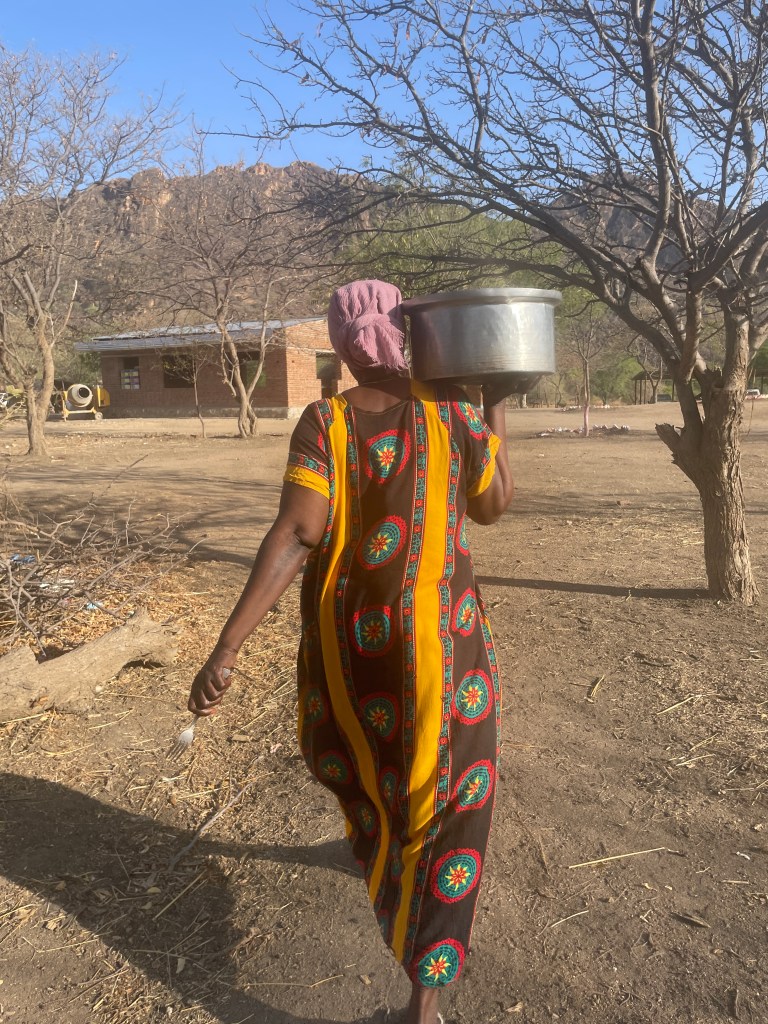
These two women had been like sisters since childhood. They called each other by childhood nicknames, teasing back and forth good-naturedly about being old or crying like a baby while cutting onions. They had fled from the war back to the small village where they had grown up. Their jobs in the city were gone, so they took whatever work they could to make ends meet and support their families. They rarely spoke of their husbands, who were dead or no longer took part in the family. The women worked long hours and never complained. 

When I first met them they often talked about returning ‘home’ when the war settled down. They held out hope, and their contented joy came only from a deep faith that sustained them through their unimaginable losses of family members, future, and livelihood. They talked easily about crossing desert mountain ranges on foot as they fled. They shared grim jokes about the deadly scorpions and snakes they faced along the way. Their stories about bombed out buildings they took shelter in left a more haunted look behind their eyes. One of the few signs of trauma they couldn’t hold back betrayed the difficulties they had lived through: when you meet one of the women after a long time away, she breaks down into shaking sobs. For so many friends and family members, she never knew which goodbye would be the last one, and who wouldn’t survive until she could see them again. 

These ‘sisters’ are in a multi-stage displacement. First fleeing their city home with their children, they came back to the place of their birth, or their tribal homeland. Here, they could find work, speak the language, and rely on a network of relatives to help cushion their displacement when they arrived with little more than the clothes on their back. 

As the war dragged on though, they began to see that going back wouldn’t be an option anytime soon. In at least one of their cases, there was no ‘home’ to go back to. Their village home they were in now was never meant to be more than a stopover, and they were beginning to see they needed a better long-term option. 

After the war passed the one-year mark, the women started to talk of traveling elsewhere. One’s daughter needed somewhere with a university so she could study and hope for a job to make her future. The whole family would have to move with her, so they could work better jobs to afford to put her through school. As the war further dried up resources in their village home, the other woman needed more stable work just to support her family, and she hoped for a more consistent school for her younger children. Both women are contemplating a move to different countries now—with unfamiliar languages and cultures—for a better life for their children. They live in the uncertainty of not knowing when or if things will change back ‘home.’ They have decided it’s less risky for their family to move somewhere completely foreign than to wait with hope for an increasingly hopeless war to resolve. So they wait and hope for money to travel. And I like many of their other friends don’t know when or if I’ll see them again after they move. 

Jeremiah 29:1-14; Hebrews 11:13-16

We often forget the context of the famous verse, “For I know the plans I have for you… plans to prosper you and not to harm you, plans to give you hope and a future.” Jeremiah wrote it in a prophetic letter to Israelites who were displaced from their homeland and had no idea when they’d return home or what to do in the meantime. God told the people to settle where they landed, to build and grow and marry and have families. If they worked to help the city flourish, they would flourish too—even as a displaced people inside the city. God promised the Israelites that one day he would bring them back home to their land. That same promise may not apply in the same way to displaced Sudanese, but we can hold to the promise that God plans to give them hope and a future. If Sudanese seek God like this passage promises, they will find him. And he may not bring them home in this lifetime, but they have a promise of a heavenly city that will be more a home to them than any place on earth could ever be. 

Pray for those displaced within Sudan.

  • Pray for God to provide for their daily needs like food and medical attention.
  • Pray also for their temporary new homes to provide some respite from the terror of war.
  • Ask God to give them family or friends to support them and help them to adjust after all they have experienced.
  • Ask God to give them wisdom to decide how long and where they should stay. 

Pray for those displaced outside of Sudan.

  • As they live among foreign cultures and different languages they can feel very isolated and alone. Pray for God to give them friends and neighbors who love them well and help them settle in their new homes.
  • Ask God to give them work that can support their families and build up their communities.
  • Pray for all of these displaced to know God’s peace, and to feel that he has been with them and guided their journeys to places of safety. 

Why I’m a Christian

What Christianity Means to Me

I was raised by parents who taught me the Bible and took me to church. I could see the difference their faith made in their lives. When they were kind, it was because of their faith. When they cared for and helped other people, it was because of their faith. When they struggled in life or made hard decisions, their faith helped guide them.

Of course I wanted to be like them and have faith like them. But Christianity’s biggest draw for me was the stories I heard from the Bible. They felt real and alive and applicable to me. So one day I prayed to God and asked him to forgive me for my sins—the wrong things I did all them time when I was selfish or lied or disobeyed—and to live in me and help me to be a better person. I felt changed after that; not perfect, but changed for the better. Of course I learned more about what I believed as I grew older, but from that point on, faith wasn’t just ‘faith’ to me. It was trust in a living God I could interact with through prayer and his words in the Bible. My reliance on that God made me a kinder, better person because I had a model to pattern my life after. I became a Jesus-follower.

My faith became more my own as I grew. I read the Bible for myself. I prayed more myself. I learned lessons about my Christianity from books, sermons, teachers, and my parents. But the lessons that stuck with me most were the ones I gleaned myself from reading the Bible on my own time. I learned what real love is from the stories of Jesus’ life. I learned about kindness, justice, mercy, and forgiveness from colorful stories in the Old Testament part of the Bible. The stories of faith came alive to me as I learned about its great history and my forefathers and mothers who participated in its founding epic.

Those stories wouldn’t let me sit still in a church pew. They moved me. They moved me out into the world where people were hurting and living and laughing. They moved me to learn what I could about and from the people of the world; and just like any other favorite book or cause or passion, they set a fire in me. Those stories enriched my life and helped me to live well. I couldn’t keep them to myself.

I learned that I love hearing and telling stories. The stories people tell explain their lives, their passions, and their spirituality. I live my life gleaning as many stories as I can. You tell me your favorite stories, and I’ll tell you mine. Our stories shape us and connect us—and whether they’re about Jedi, WWII soldiers, Middle Earth, or superheroes, the narratives we tell spin the threads of our belief. I learned that I am a keeper and teller of stories. I listen. I observe. And I tell the stories I hear. As a Christian, I see that our stories fit into a vast narrative that gives them meaning and purpose.

I could write books about why I’m a Christian, if anyone would read them. But there’s a better book I’d prefer you to read. It’s the book Christ-followers have been reading for centuries. It connects me to poor paupers, social activists, benevolent kings, historical figures, and great movers and shakers of the world who have all read the same book. Intelligent and powerful men and women for 2000 years have been reading this book, and it has shaped their lives. If they’ve read it carefully, it’s shaped their lives for the better.


The Bible 

The Bible has its rough edges. It can be hard to understand sometimes, just like any old literature. But it’s at once both gritty and real and soaringly beautiful and poetic. It tells about the building blocks of every day life, like families, governments, poverty, and celebration. It has elements of the fantastic, the mundane, the extraordinary, and eternal truth. It holds stories about rape, incest, coups, insanity, bravery, bribery, prostitutes, child kings, the rise and fall of nations, the cuss words, the graphic scenes, the victory songs, the nighttime weeping, crazy parties, and the simple contentment of dawn. In short, this ancient book relates to every aspect of life, both modern and ancient. It’s an anthology of music and poetry, philosophy, ethics, and epics and short stories. But it also traces the meta-narrative of history that gives our lives meaning beyond their narrow scope. Have you personally ever read the Bible’s engaging books? John, Genesis, or Acts? The Bible’s stories have real answers for real questions that have changed my life.

Lots of people today think the Bible is old or outdated. And in some sense, I suppose it is. We don’t ride around in chariots today, and our neighboring nations don’t sacrifice their children to statues of gods. The Roman Empire is long gone, as are the days when we raised our own livestock and grew our own produce. But family relationships aren’t all that different nowadays. People are oppressed today just like they were when it was written. And humans still ask themselves the same questions: why am I here; does this life matter; why would a good God let bad things happen; is it worth it to try to be a good person? In its own words, the Bible says, “What has been will be again, / What has been done will be done again; / There is nothing new under the sun.” In many ways, history repeats itself, so we have a lot to learn from the past. And if Shakespeare managed to tell stories that still move us 400 years later, perhaps a book that’s stood the test of time for 2000 years might be more relatable than we think.

Quite a few people think the Bible isn’t reliable, and that it has changed a lot since it was first put to paper. And those people have a valid point; can I base my entire belief system on some collection of stories that’s been warped from its original in the intervening years? First I’ll tell you that we never think about the reliability of our copies of Homer’s Iliad or Odyssey. We don’t care much how accurate our Aeneid is to Virgil’s first manuscript. Those books read as if they were whole stories. They move us, teach us, and intrigue us, so we give them credit for their worth. But the Bible is the most historically unchanged ancient book around. It has more fragments through history than any other book to attest to its integrity. Our copies today, in their various translations, are more accurate to the originals than our copies of the Iliad or the Odyssey.

Maybe we tend to judge the book by its cover. And maybe the cracked leather and fading gilt letters Holy Bible seem a little powerless or stuffy in an age of brightly colored news feeds, pixels, and immediate digital updates. But the Bible’s words pack just as much punch today as they did thousands of years ago when they were first spoken or written. Its harshest words are toward the prideful, the arrogant, and the self-righteous oppressors. Its kindest and most soothing words are to the poor, forgotten, repentant, and voiceless. It seems to me our world could use more of those words today. Just this morning I read in it that Jesus came to unite people near and far, to be our peace, and to destroy the barriers of hostility that divide us (that’s in the book of Ephesians, if you want to read more of it). As a citizen of a country ripped and bleeding by the divisions between race and gender and economics, those words are powerful to me. And when you come down to it, either they deliver on their promise or they don’t. That question lies with the most disputed, most intriguing figure of the entire Bible.


Jesus

Jesus is a character you can’t make up. He yelled and whipped people who charged others to come to the temple to worship. He stopped his busy schedule for children to listen to his stories. He wasn’t pompous or arrogant. He was kind and peaceful. He shared what he had and gave his time to everyone. He was a man who wept freely, but refused to speak a word in his defense when false accused of a crime. His love for his band of friends was self-sacrificial. He washed their dirty desert feet like a servant, spent every waking hour with them, and didn’t betray them when he was on trial. If anyone could unite people across nation, race, gender, and wage, it would be him.

He knew that the only way for generations to be able to personally know a God who hates sin but loves the people he created was to pay for their sin personally—to take our just punishment of death himself. Do you know anyone else who literally died for you? God came to earth himself as Jesus to deal with all the ugliness and limitations of our human existence so we could know him. And how could you not want to know him? He is so intriguing. He cared personally for women, children, sick, outcasts, thieves, educated, simple, shunned, oppressed, and foreigners no one liked. He himself was a refugee, most people assumed he was a bastard child, and he performed miracles you’d have to be crazy to believe.

I admire quite a few historical figures, but if you ask me which one I’d want to be like, hands down it’s Jesus. Many people admire Jesus as a historical figure, but they don’t believe everything he said. You may not have to believe everything a person says to admire them—I adore Tolkien, but I don’t agree with him on any and every topic—but if somebody claims to be God, and to be God’s savior for mankind, that colors everything else he says. You either believe him, you don’t, or you think he’s crazy. You can’t ride the fence with Jesus. You can’t say he was a good man and dismiss his claim of divinity as a little white lie or a moment of insanity. You have to take the whole package or leave it.

Jesus is the founder of my faith, and the founder of Christianity. He claimed to be the Christ, which means ‘the messiah,’ or God’s chosen deliverance for his people. Jesus came to deliver people from their bondage to sin. And if we think we can free ourselves from our own human nature, which prompts us to lie, to cheat, to be unfaithful, or to lack character, we’re wrong. It’s impossible to always do the right thing. Sin is a monumental slavery to break, and it requires a supernatural power who is unfailingly good. It required Jesus. That’s why Christians name themselves after him.


How Can Christians Bear the Name Today

So, to answer the questions I started with, how can I be a Christian when there’s so much hate today and in history connected to that name? When Trump, a man who spews hate the likes of which I’ve never seen in my life, calls himself the same name? When people who claim to be Christians value themselves and their fears too much to want refugees to find a safe haven in their county? When people claim the title who ignore the cries of the poor or oppressed?

Simple.

It’s a matter of definition. Being a Christian means you should look and act like Christ. I want to be like Jesus—to love like him, to speak truth like him, to tell life-giving stories like him. But if I never act like him, I’m not a Christian. If I tell you I’m an astronaut, or an oak tree, or a purple baboon that lives in a zoo, I’m lying. I don’t look or act like those things I claim to be, so I’m not. Anyone who doesn’t act like Christ, but claims to be a Christian, they’re pulling your leg. We all make mistakes and we aren’t perfect on our own. But real Christians will tell you that God’s Spirit lives in them. And if he does, they’ll act with that same inexplicable love and compassion Jesus showed, that same fury at the self-righteous and self-assured. I’m a Christian because I want to act like Christ. Not I, nor anyone else, have a right to bear that name we don’t live by it.

I hope that you all have the chance to read about Jesus in the Bible. And I hope he rocks the world you’re standing on like he did mine. I hope that, as a Jesus-follower, I look recognizably like him to you. And if I don’t, you have every right as my friends to say something to me. If I do look like him, and that intrigues you, let’s sit down and talk.

A Culture of Stories

Any of you who know me well know I love to tell stories. I study stories at college, and I’ve told them since I’ve been able to speak… some of them have been more true than others. 😉 I don’t necessarily feel called to minister in the culture I’m currently visiting long-term, but I do love it, because this culture loves stories. I’ve seen two Christmas pageants performed by children, and in each one, there was no director sitting on the front row. Each child knew his lines perfectly. They sang, they danced, they read, they recited, and they acted with much gusto. They loved the story itself, and they loved to help tell it. That is how any important story is told in this culture.

I recently saw The Hobbit (more than once), and one of my favorite lines was “All good stories deserve embellishment.” This is the philosophy of people here: a good story should be embellished with drama and singing and dancing to enhance and proclaim its value and truth. We western Christians could learn a lesson from them. Stories are important. They are the fabric of our daily lives, with plot lines and truths weaving us together. We have built our culture, our beliefs, and our understanding of society on the stories we have been told. Certainly our Bible stories should be given a place of honor.

Unfortunately, the people here honor the stories of their faith just as much as the believers here. My team and I recently visited a Buddhist temple. As someone trained to recognize stories in their various forms, I was completely overwhelmed by their numbers. The walls and ceiling of the temple were covered in beautiful murals depicting gods, goddesses, spirits and humans in divine narratives. The various Buddha statues in the center of the building stretching to the roof told stories of how their real-life counterparts had achieved enlightenment and been relieved of the burdens of this world. The small idols for sale at the back of the temple were images of various deities whose stories tell of how they are especially equipped to bring those who house them good luck, health, wealth, or happiness. And worst of all, evil spirits inhabit the statues, tiny spirit houses, and objects they are invited into. These spirits control the lives of the people with their perverted narratives. The worshippers truly believe the demons have the powers they claim as ‘gods.’ They truly believe that by appeasing the spirits with money, incense, fruits and other expensive offerings, that they can win their approval. Their narratives are riddled with lies, so the promised fulfillments never come. And the people are enslaved.

I am more grateful than words can express that I know of the True narratives. I know of a loving Father, and a redeeming Savior. I know of a God whose story is not limited to a time or place; a God who specializes in being the All in All; a God who says of himself not ‘I will come,’ but ‘I Am.’ My God has given me the stories of Life—stories that always satisfy. And He hears me when I pray. I do not need flags that wave or bells that ring or incense that rises. My God understands my voice even when I cannot bring it to form words, because I have an Intercessor Incarnate. And that makes all the difference. Join with me in lifting these people up to Father. Ask that they would begin to learn the stories that will free them from their bondage.