Tag: travel

Mountain Snapshots pt 3

I wish I could bring you all with me when I go to the mountains, so you could see what I see and hear what I hear. But this time someone joined our group with a photographer’s eye and a camera to channel it. I’ll throw in some of his pictures below, but I wanted to give you some “mental snapshots” to go with them—thoughts and moments I’d always want to remember if I never saw this place or these people again. 


Another day of teaching through until dusk blurs the words in our Bibles. I walk slowly back to the room I share with my teammate and pause at the foot of my bed, my mind too numbed from the long day to make a decision quickly. I glance toward the concrete room with the drain where we take our evening bucket baths, and I’m too tired to begin that process at the moment. Instead I just pull off my headscarf since I’ve finished teaching for the day. I walk back outside intending to find a chair to drop into. I hope to enjoy a still and quiet moment, with the rising evening wind cooling my (finally) bare head and neck while I think through the day we’ve almost finished. 

I scan the clean-swept yard for a chair near enough a group that no one will assume I’m alone and need company, but at enough distance I can absent myself from the conversation I have no energy for. My eyes land on a perfect spot and I make a bee-line for it, but before I reach my destination one of our friends and workshop participants crosses my path. A smile springs to my face automatically, followed by the traditional greeting and hand-grasp. This friend speaks no English, and I often have a harder time understanding him through his quiet tone and slightly different accent. My selfish desires still have my eyes cutting toward that chair and its promised moment of tranquility as we continue through the socially required greeting process. But then I take a moment to actually look at his face in the gathering dusk. He never smiles, but there it is, unmistakable on his face. And he’s often quiet in groups, yet he chose to initiate this conversation with me. 

Something feels different about this interaction, and about him, so I shake myself mentally, check my selfishness, and redirect my mind and heart to genuinely engage with him. He is a respected and capable farmer and herdsman, so I ask about his home and land. As he continues through the small talk that smile lingers, and he seems almost… joyful. For a man usually grim-faced and close-mouthed he is unusually lively. I have never gotten much response from him before when I ask about the Bible stories that make up our days’ work, but his mood is different than I’ve ever seen it before, so maybe it’s worth trying again. 

I ask one of my favorite questions: “What is your favorite story we’ve learned?” The answer speaks so much about personality or spiritual state or personal connections to God and his word. But my friend’s answer halts me mid-conversation. “The story of John’s Vision,” he says, referring to a story we’ve worked on from Revelation. Nearly twice the length of most other Bible stories, this one notoriously gives rise to fatigue and complaints from our groups as they struggle to remember all the details correctly. Just two days ago for our morning devotion we heard the story told and then acted it out together to help our bodies and emotions remember the story as well as our brains. As much as amateur drama usually elicits self-conscious or amused giggles, when we do this story the atmosphere is unusually heavy. With Muslims and Christians in the group, reenacting moments like when those who followed Jesus in life are judged differently from those who didn’t, or when Satan and those who didn’t follow God through Jesus are thrown in the lake of fire remind us of eternal stakes. 

Shocked that my usually gloomy Muslim friend would tell me with a broad smile that this is his favorite story, I ask him again, wondering if I misunderstood. “You mean the story about the End, with Satan and the lake of fire?” “Yes,” he reassures me. Still confused, I ask him why that’s his favorite, or what he likes about it so much. “Because everyone who follows Jesus will be with God,” he answers smiling, like it’s the most obvious thing in the world. And God himself will wipe away our last tears. 

Our conversation was interrupted when someone called him away. But I stood there frozen a few moments longer, my solitary chair forgotten as my own smile grew and I began to consider what his answer might mean about his own thoughts about Jesus. A few days later I learned that new liveliness I saw in him was abundant life, springing up in his soul and overflowing because he’d decided to follow Jesus. 
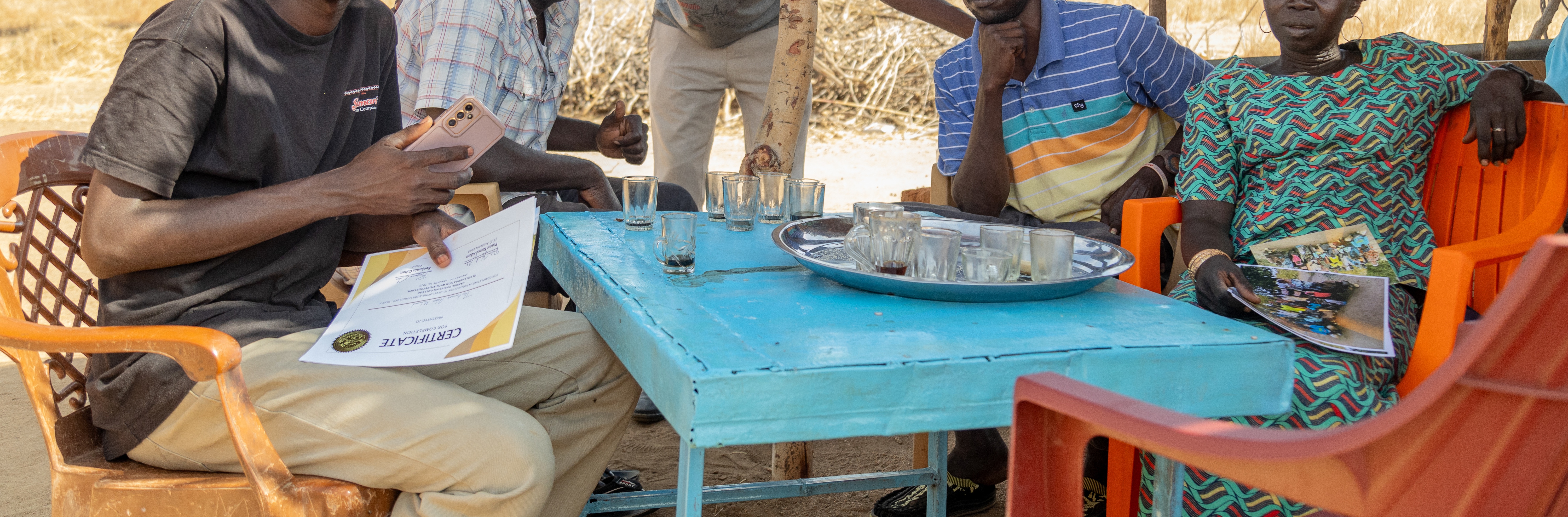
Photo credit: Johnny Rainey

On our last day, we leave before the sun is up. Before we all pile in the same truck that has ferried us back and forth for all our local travel, a crowd gathers in a semicircle. The bags are loaded in the bed and we stand in an awkward silence, loath to say goodbyes. A prayer is said for travel, and then we give the deeper greeting since we won’t see each other again for a while. Extend your right arm and place your palm over the friend’s heart opposite you while they do the same to you. Then drop your arm to grasp their right hand in a goodbye, or wrap that right arm around them first to pull them into a hug depending on your relationship. We look into each others’ sleep-swollen eyes in the gloom as we greet each in turn, and I try not to wonder when I’ll see them next or how long it will be or what hard times they might face in the meantime. 

I scrunch up over the gearbox again, angling my hips and legs to give the driver as much room to maneuver the gear shift as possible. It’s still warm from its long trip the night before, taking the first load of everyone home. For the first two hours the talk in the cab is quiet and sporadic. We watch the sun rise over these beautiful mountains and I am careful to take in the images—the ground terraced for farming, the ‘desert baobabs’ that burst with brilliant pink flowers, familiar spots where recognizable trees grow or where we’ve made pit stops before on the road. 

After we stop two hours in at a town the sun is fully up, and I decide to move to the truck bed. I’m given the spot over the wheel well, and someone insists on giving me the folded up blanket as a cushion for all the bouncing, even after I insist I have more built-in cushion than all of them put together. It would be a cultural sin not to offer (and receive) hospitality in this way. As we start moving, the three young men in the back with me at first seem nervous I won’t have the balance or strength to manage as we drive over the roads that are sometimes just scraggly rocky mountain faces. But I drape my forward arm along the rim of the truck bed and can maintain a light grip as we bounce along for the next hour. The curve of my back fits snugly around the lip of the rim, further helping to hold me in place, and I ride comfortably and enjoy the cool morning air and chance to stretch out my legs. 

We drive so slowly over these roads that we have no problem conversing over the road noise. We talk in spurts, shifting between English and Arabic, but I mostly enjoy taking in all the morning sights and sounds as we drive through villages waking up and beginning work. The children always do a double-take when they see the rare white woman in the back of the truck. Some run behind us, nearly all wave. My teammates and I jokingly call me a princess because of all the attention I get, like that folded up blanket currently saving my tailbone from bruising. But right now I feel like a princess in a parade waving back at all the children every few minutes, watching their faces break into massive smiles. 

The kids’ excitement at my obvious other-ness would seem to make me feel I don’t belong. The waving little knots of children overflow with an enthusiastic sing-song repetition of the word for foreigner or white person—kawaja—yelled out to announce to others to come and look. Some days being known known and called by this word instead of my own name grates on my patience and feels like a stiff arm keeping me outside the circle of the community. But today in the light of the golden-pink sunrise I feel a contented sense of belonging as we drive through roads and villages that have become curiously familiar through our repeated trips. As the conversation moves in and out of Arabic, for the most part I am able to follow its thread. I’m even able to interject with some of the history of the place, like a local telling newcomers the gossip about what happened at that bend of the road a year ago, because I drove past and saw it firsthand myself. 

The contentment grows as the conversation continues in Arabic, and no one pays me special attention or translates for me. I’ll always be in a middle-place in this community—on the fringe, but welcomed in as a familiar friend. Allowed to ride in the bed of the truck, but given the only blanket to help account for my difference. So the next time the children start a chorus of “ka-WAAA-JA!” I smile and raise my eyebrows at the group. “Do you hear them singing my song?”

Photo credit: author
“Desert Baobab,” photo credit: author

Two Years

“If I take one more step, I’ll be the farthest away from home I’ve ever been”
“Come on, Sam, remember what Bilbo used to say: “It’s a dangerous business, Frodo, going out your door. You step onto the road, and if you don’t keep your feet, there’s no telling where you might be swept off to.”

Today marks 2 years living in Uganda, and it’s the farthest away from home I’ve ever been. Well, the longest away from home. Or the longest in a new home? I haven’t lived in one place longer than two years in a very long time. Two years means I’ve lived in Uganda now for longer than I did in North Carolina. For longer than in my parents’ home they moved to while I was overseas last time. Longer than I ever stayed in dorms or apartments at college. Longer than in Bulgaria. It means this is more home than many other homes, in some respects.

I’ve had two Christmases here. Two dry seasons. Two rainy seasons. I’ve learned language (sort of), learned to make soap, made new friends, learned a new culture, learned my way around a new town (no small feat with my sense of direction).

These two years have been very rich and blessed. But also very difficult and maturing. I’ve cried buckets and buckets. I’ve belly-laughed and snort-laughed and giggled. The Lord has stretched me in ways I didn’t know I stretch without breaking, and he’s grown spiritual fruit I didn’t know was possible for me to produce. There’s no way I can process two years of life in a single blog post. But to give you a taste, I’ll make a list of some of the things I’ve learned and experienced over the last two years. Hopefully this eclectic collection of fun facts and life lessons and cautionary tales will give you a bit of the flavor of the past two years. And maybe they’ll help remind you that my life may not be that different than yours, when you get down to the meat of it.

  • I’ve learned that my love for house geckos is strong and never-waning. You eat the mosquitos that try to give me malaria and I’ll be your devoted friend too!
  • I’ve learned to celebrate small things, because fellowship and fun, and marking time or achievements are worthwhile encouragement.
  • I’ve felt the awe of stargazing at an open sky with a cool breeze from over the Nile.
  • I know what it feels like to grieve with my home country over injustice and brokenness and disaster, and to grieve that even in that grief I am separated and separate. I don’t belong entirely to my new home, but I no longer belong entirely to my old home either.
  • I know the accomplishment of studying hard and feeling the reward of learning language well enough to communicate.
  • I’ve learned to care for two goats (Lottie and Livingston still live happily in our yard and enjoy pleasant escapes in the cool of the evening to the fresh-scented wild oregano fields outside our fence).
  • I am learning about humility—what it means and what it doesn’t mean. Usually I struggle to find the line between taking true pride in the Spirit’s work in me through difficult obedience, and denying all compliments because I fear they glorify me instead of the One working in me.
  • I’ve learned to love two puppies, and to lose one when it was time to put him down.
  • I know how to make ice cream in quite a range of delicious flavors.
  • I learned how to give henna tattoos and tie them into Bible stories.
  • When I’m sick, I know the exactly where the line is between when I can make it, and when I need to take not only extra toilet paper, but extra underwear with me when I go into the squatty potties in the camps.
  • I learned that yelling a battle cry at colonies of ants (we’re talking like, all the British colonies there ever were) migrating through the INSIDE of your home is largely… ineffective.
  • I know not to trust myself to go to the brilliantly colored fabric market alone, or with too much cash in my pocket. And ESPECIALLY don’t trust me if I talk to my tailor friend there. I’m bound to come away after placing an order for some new clothes.
  • I’ve learned just how much the wild places of the world rejuvenate my soul.
  • I’ve learned how to make soap, and teach others to do the same.
  • Heck, I’ve learned (haltingly) how to (mostly) run a small business for and with the ladies making that soap.
  • I’ve learned to bake so many delicious and fattening things from scratch: beignets, donuts, sopapillas, fries, baklava, banitsa, hot pockets, thin mints, and the list goes on.
  • I’ve learned how to teach friends to bake—in a different language and across quite a few cultural differences.
  • Shoot, I learned to make my own dang POPTARTS!
  • I also learned that if you have intestinal worms for too long and don’t realize it, you can eat allllll these fattening things and stilllll be halfway starving.
  • I learned how devastating cultural Christianity can be—a paralytic to discipleship, a false assurance to the nonbeliever, a justification to the radically political, poisoned water to the truly suffering, and apathy to those on the brink of true spiritual growth.
  • I grew courage in trying new things.
  • I’ve become a pro at riding a boda-boda (motorcycle taxi) side-saddle in skirts of all kinds.
  • I learned to lean even deeper into the Lord when lockdown stripped away all sense of a schedule or normalcy, of competency and purpose, and of task and accomplishment. I learned to be more content in his presence, and more sustained by his personal love and eternal truth than ever before in my life.
  • I’ve learned to love driving dusty roads, because they make me feel at home no matter where they are in the world.
  • I’ve learned how to get a car stuck in the mud, and helped plenty of times getting one un-stuck.
  • I’ve learned and helped to lead a mental trauma healing program based on Bible stories, and seen the Lord work true miracles in people’s lives.
  • I’ve learned so much truth and experienced immeasurable kindness through cross-cultural friendships that I wouldn’t trade for the world.
  • I learned to play a lot more piano after getting locked inside with her for a good bit of 2020.
  • I’ve looked my singleness dead in the eye and taken just about every difficulty and self-pitying urge to God loads of times, wrestling with contentedness and longing, with brokenness and loneliness, with freedoms and weakness, with past traumas and present gifts. The Lord is my sufficiency, and I’ve felt his presence with me more tangibly and practically than ever before.
  • I’ve driven through a herd of giraffes at sunrise.
  • I’ve learned to love my family better from afar. And I’ve learned better how to gather family around me wherever I am.
  • I’ve waged war on termites and learned how to mark my territory to keep them away.

These two years have been rich with trials that led to growth, but also with nourishing relationships that set the scene for all the learning and opportunities the Lord provided. I’ve learned and experienced many things, most of them still percolating so that I’ll only realized I’ve grown and changed later.

But perhaps more than anything, these past two years, I’ve learned that my home is in the Lord’s presence. My family are his people. My culture is a vibrant bouquet of colors from all over the world—Bulgarian red and green, Oklahoman sky blue, North Carolina green, Ugandan red black and yellow, dusty sunset orange, brilliant open sky starlight, sunflower yellow. Nowhere in this world will I ever feel completely a part, and nowhere completely separate. My heart aches and longs for a better country: an eternal homeland where I can communicate perfectly, always be with family, and never feel like an outsider. But until then, I get to see glimpses and sample flavors of that someday home in all of my temporary homes on this earth. That hope has given these two years their enthusiastic wonder and desperate longing all at once. And for that, I am grateful.

The Dress

So, how is Africa, really? Do I live in a mud hut? Do I sweat miserably all the time? Have I ridden a rhino? Have I gotten a weave yet? How am I doing? Really?

I bought a dress recently that brought on some good, old-fashioned introspection. And for those of you who want to know how I’m doing here—surviving or thriving—this is post is for you.

Recently I went to the fabric market, one of my favorite places here, and I spent the $15-ish for a favorite piece of fabric and a tailor-made dress to match the style here. I LOVE the bright orange and yellow and the crazy pattern. I love the colors and the shape and how much it makes me feel in my element. As I took some pictures for family and friends to see the finished product, the dress reminded me somehow of a chrysalis, my entrée into ownership of my new life here.

My first three months in Africa have tanned my skin, slimmed my waist, strengthened my endurance, made me treasure my laugh. Life is hard here in some ways. But it’s beautiful in so many more. And I love it. Some quality of life here refines things and chips away at the rough edges to help you find a beauty and a wildness underneath. Looking at my dress and my wide smile in the only mirror in our house that I can see myself in, the thought occurred to me that through the sometimes difficult adjustment, I’m becoming more of the Caroline I was meant to be.

I always feel that way when I’m overseas because I love being immersed in new cultures. Something in this crazy nomad life makes me feel more alive because I think it’s what I was created to do. But that feeling is somehow stronger here in Africa than it was in Bulgaria, where I lived before for two years.


To help explain, let me give you some pictures, photos and narratives, of what I mean.

Like I said before, life can be hard here, and the adjustment did not come naturally.

IMG_5768

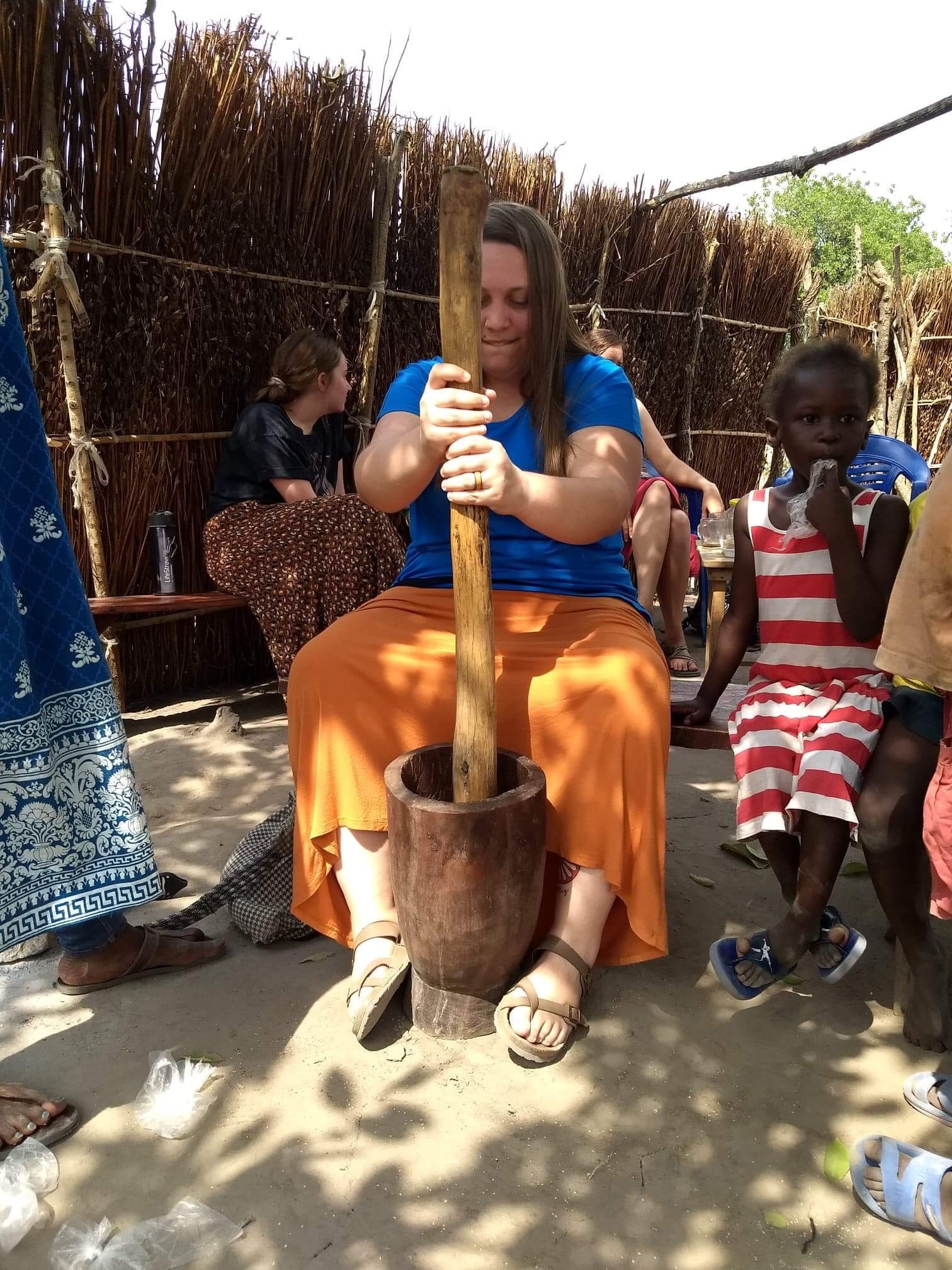
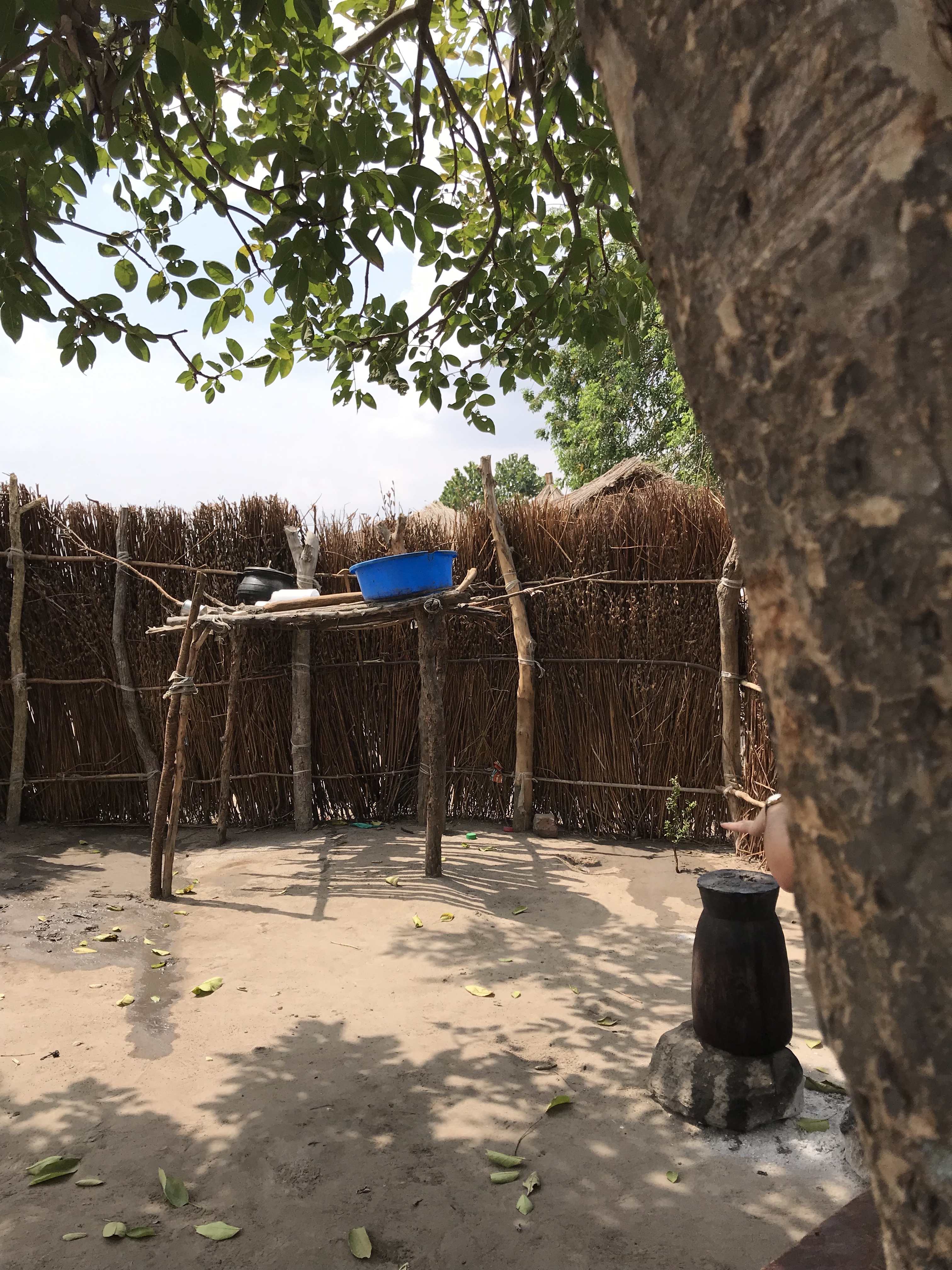
While I’ll never have to pound grains like my African friends, or have arm muscles as defined as theirs, my life still isn’t very ‘cushioned’ here. It’s taken work to become comfortable making nearly every meal completely from scratch, to learn which ingredients I can and can’t find here, to become a pro at kitchen substitutions and same-day market trips so I know how to navigate my way in a world without steady refrigeration, a world that laughs at the suggestion of a freezer.

I arrived in my new Ugandan hometown as dry season escalated to its peak, when the winds that would bring rain instead dry and crack the ground and slowly burn away at our water sources. I live hours from the nearest AC unit, and our hydro-electric power grid gives us an average of 2-5 hours of electricity out of every 24. Sometimes during worse dry spells we can go without power for nearly a week. Fans are often out of the question, so I’ve grown familiar with dripping sweat from more places than I knew possible. On particularly hot days the butter at our market and in our homes sloshes around in its containers, more liquid than solid. The nice, imported chocolate bars are more like chocolate sauce.

IMG_6440

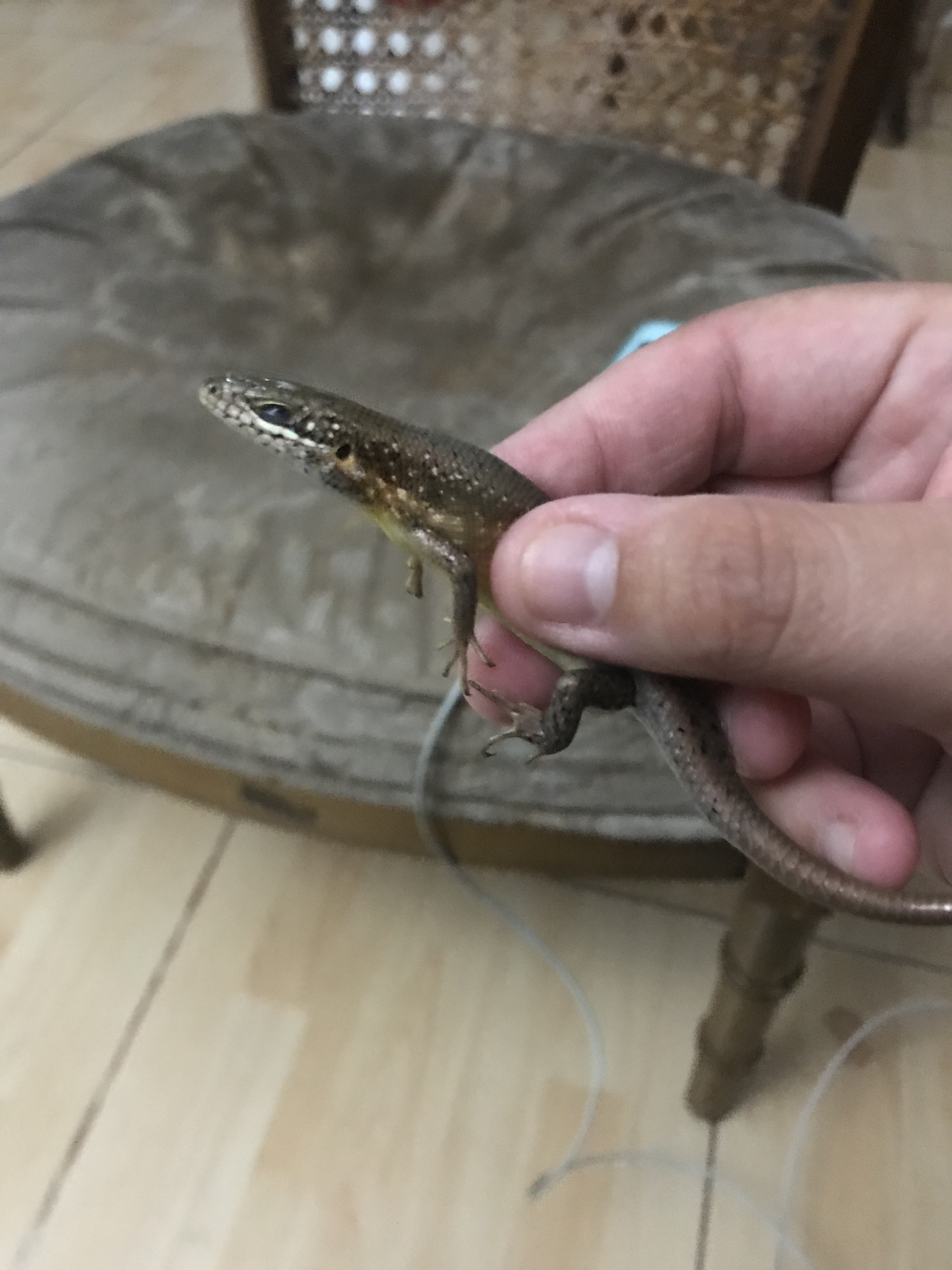
I have a home with screened windows and a mosquito net for every bed frame, but we aren’t completely critter-proof. Colonies of ants and I are at war, battling to claim the house as our territory. We fight over rights to our food, for clear food preparation spaces, for a floor to sit or lay on without fear of being crawled-upon. I also harbor strong murderous feelings toward mosquitos, especially after my first (false alarm) malaria scare. The number of mosquitos killed from inside the net around my bed is frankly alarming, but not nearly as high as the amount of bites I’ve received. The geckos are my allies in this war, and I happily rent them residence in my house for the price of eating their weight in the little blood-suckers. I’ve become an avid lizard-rescuer, doing my best to save them from mop buckets, shoes, and ant swarms.

I don’t, by any stretch of the imagination, actually live in The Bush of Africa. I can go to restaurants in town when I can’t bring myself to cook. During rainy season I’m told we’ll have electricity more often than not. The freezer now sitting dormant in my pantry will stay always below room temperature instead of above. But these small ‘hardships’ of life—now or in rainy season—more than pay for themselves.

IMG_5618

Living so simply has made me immensely grateful for basic needs that so often before I overlooked. A simple breeze or the cool of a shade tree cracks a smile wide across my face. Sure, I grumble when the water tanks for my house are empty, but I am grateful for every cup of water, recognizing it for the luxury that it is. In a life like this that pushes me to limits of heat, dehydration, patience, and ingenuity so often, I am thriving. I am living my best life now.

IMG_6203IMG_5641IMG_1573

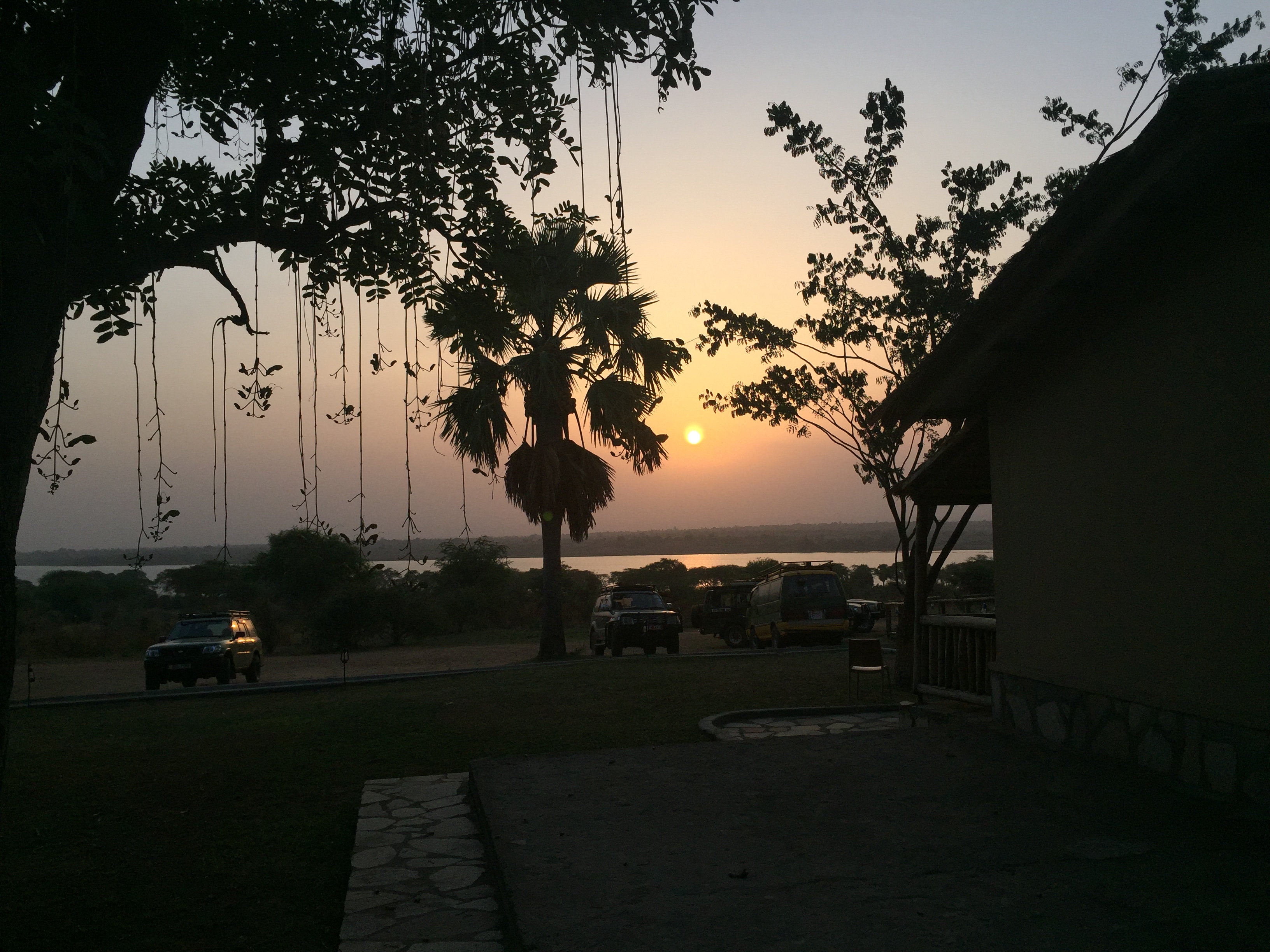
The heat and dust and sweltering sun are so extreme they are beautiful. Every fresh sunrise or sunset I see strikes me with its fierce, undomesticated beauty. Something in the harsh extremes and severe intensities is perfectly home for my wild spirit—the same wild spirit that found itself at home among the loud and dramatic Roma people in Bulgaria, or in the blazing, miles-long sunsets of Oklahoma grasslands, or hidden forests and rivers of North Carolina.

The wildness in me that loves to decorate with zebra stripes or wear purple lipstick is perfectly at home here. I wear giant earrings that orbit my head like small moons. I love the freedom of wind in my hair when I travel through town on a motorcycle taxi. The thrill of driving our 4×4 across the ruts and holes and boulders in our roads awakens my sense of adventure. Safari in the bush is one of the quickest ways to make me feel like myself again. I find it impossible to imagine that I could ever lose my awe over the flight of some of the world’s largest bats across the sunset in the evenings.

But my lack of domestication has not only found a home here; it has made one. Finding new and different ways to bake from scratch stokes my creativity and keeps me on my toes. I love to share what I have and to build friendships scattered with muffin crumbs and dusted with flour. I feel my ramshackle house to be a home most fervently when it is full of the smell of fresh yeast rising. But I also feel satisfied and contented in those full, quiet moments walking through the fabric market and soaking in all the colors and the steady clicking of manually powered sewing machines. I feel at home in this untamed landscape whenever I get the chance to look out over the Nile at sunset and silently meditate on its power, steadiness, and lifeblood for the land. I have already grown to love calling everyone ‘sister’ in the market as I barter for fresh produce so full of color, texture, and smell that I can’t help but touch everything to soak in the vitality of the place.

The community here, the incredible hospitality, the food and smiles and vibrant worship on Sundays that kicks up clouds of dust—these make me feel comfortably at home here, even if the heat or the bugs are anything but comfortable. The inconveniences of life here make me cherish its joys all the more. This strangely incongruous life is so unique, spirited, dynamic, and vivid. Its hardships make it all the more dear. Its inconveniences make it all the more precious to me. It is a life of extremes and ironies, of charging your smartphone by a solar panel, of introducing your African friends to the Lion King, of white skin truly belonging in an African dress.

So no, I don’t live in a mud hut. But I do quite enjoy swinging in my hammock in the grass hut in our yard. And no, I haven’t ridden a rhino or gotten a weave or fulfilled my promise to get a pet zebra for my backyard. Yet.

But I do feel undeniably good here: healthy, whole, home.

The End

Well, I was going to post today during my layover in Amsterdam, but after I typed everything up I found out that I didn’t have internet. 🙂 So, enjoy!

I am posting this blog from an airport terminal in Amsterdam. I’m on my way back home, and I’m fixing to board a plane to timewarp back to Dallas. I leave here at 10:30 in the morning and I’ll land in Dallas at about 2 in the afternoon. How is it possible that my flight over the Atlantic Ocean will take only as long as my drive home from the airport? I’ll tell you how… I’ll lose 7 hours (crossing time zones) during my 10 hour flight. I like to think that I’ll be traveling at the speed of time. Maybe that will make it easier for me to leave behind my friends and family in Romania.

Seriously though, I want to thank you all for praying for me while I’ve been gone. It has been a wonderfully blessed experience, and I am certainly not the same as when I sat in this airport waiting on the plane that would take me to Romania. In my last week God strengthened the bonds He has given me with my sisters and brothers in Romania, and leaving comes very hard. I am ready to be home, and I miss my family and friends dearly, but my chest is still tight from the grief of leaving behind my home here. God blessed me beyond my wildest imagination with the family I lived with, and I feel like I’m leaving behind a mother and father and some brothers and two little sisters. I will also miss my church family here and the beautiful children I got to work with every day. I almost want to be mad at God for the unity he gave me with the Body of Christ here for the fact that I have to leave, but I know that it is His timing, and I feel very strongly that He will bring me back. So, don’t stop praying now. Re-adjustment will be hard and I will be seeking God’s will about how and when to return and who to come with.

I left letters with the church and my foster family and my translators explaining how grateful I was for their help and for their time spent with me as we served the Lord together. I couldn’t bear to say most of the things I could write, nor could I take the frustration of imprecise translation, so I just left the letters. I know that someone (probably Florin) will end up translating them later, and so long as I’m not there, it’ll be alright. I wrote most of them Monday and I almost cried then, even though I still had a few days left.

Sunday morning we had communion at the church and I really understood for the first time the communal aspect of that meal. I have broken bread with my brothers and sisters here almost at every meal, and I thought nothing of it, just like the disciples probably thought when Jesus began to break the bread at the Last Supper. But, as we were all eating from the same loaf of bread and drinking from the same (incredibly strong!!) wine, I felt the connectedness of the community of the Kingdom wash over me like a tangible wave. It was a really odd/exciting experience. I wanted to grab the hands of the people sitting next to me and squeeze them and kiss them on the cheeks. While that is the appropriate way to express friendship or kinship here, I didn’t think it was quite appropriate for communion, so I restrained myself. It’s just become second nature now to greet people and tell them goodbye with the cheek kisses. Anyhow, after reading a bit and studying, I learned that Paul is so mad with the Corinthians (1 Cor 11) about the way they celebrate communion not only because they did so irreverently. Verses 17 to 22 indicate that Paul was fuming because the Lord’s Supper was not practiced in a way to unify, as it should have been. Instead of uniting the body, they were eating in such a way as to tear it apart into factions. It is a symbolic act to help us remember what Jesus did for us, but also to remind us that we all share in the same grace (Phil 1:7) and salvation, no matter where we are or how we are serving God. The same Body was broken for all of us, and the same blood spilt. Communion unites the Body of Christ in the same mystical way that the physicality of marriage unites a couple and makes them “one.” Paul describes this a little when he talks about the Body of Christ (the church), Christ himself, the individual believer, and married people (1 Cor 6:16-17, Eph 5:28-33). This view of communion makes sense, especially when taken in the larger context of the 1 Corinthians. Paul is talking about creating and keeping unity in the Body from chapter 10 to chapter 14. He speaks of things that divide and things that unite and he instructs on the way things should be done so as to promote unity and cooperation. I say all of that to say that I experienced communion in a completely different way Sunday, and I became even more attached to my church family here.

Sunday afternoon things just got worse (I’m getting ready to leave, people! Quit being so nice to me and inclusive; you’re making it even harder!!!). Gaby and Gigi took me and the family camping for the rest of the day. We were on a tributary of the Danube (so it was wide and shallow and great for playing in – even if no one brought a swimsuit) in a beautiful forest. Florin still couldn’t walk, so he stayed home, but Alex and Catalin (cousins) and Gaby and Gigi and I all went. We dug a fire pit and grilled some pork and toasted bread to eat, and we had dinner under the trees. Alex and Catalin caught some small fish and I took them off the hooks, and then we all played in the water. Afterwards Gigi fished with the boys and Gaby and I walked through the woods and talked. We went back and the boys finished fishing and we started to pack up. With my impeccable balance I managed to slip into the mud by the banks twice at this point, and the second time I was laughing so hard that I couldn’t get up again. Catalin and Gaby came over to pull me out and then Gaby gave me a thorough washing before we left. She made me stand on one foot so she could wash the other (or one of my shoes) and I was afraid I was going to slip again, but I didn’t. 🙂

Of course, on my last full day here (Thursday) things got even worse. Gaby and Gigi and the FARM team and I went to Dobrogei to see and play in some mountains with caves. Florin is, thankfully, on the mend. He’s had an infection but he is getting better. Dobrogei was a lot of fun, and I got closer to the FARM team. We may or may not have illegally fed the şobolani (fieldmice) our croissants. They were just so cute that we couldn’t help it. The FARM team members are from Bucareşti and they got here about the same time I did. They only have part of next week left before they go home. Ana translated for me again at Barǎci that morning and she did an excellent job. We both prayed for her to do well. She can’t speak probably about the same amount of English that I can Romanian, but she understands well. I can’t translate, of course, but I know enough words to be able to tell if I’ve gotten a true translation. After Barǎci we went straight to Dobrogei, and then we picked up Monica and dropped off FARM and headed to Peştera for my last day there. Those kids are wonderful. I’m really going to miss them. After that we went to Bible study at the church in Medgidia and then all the young people had a going-away party for me. I cried at church because of the church family I was leaving, and Ana (the FARM girl) almost made me cry at the party.

I finished up my story sets at Barǎci and Peştera this week. I did a chronological set at Peştera because the kids had enough background to the stories that I could skip a few in order to have enough time to make the historical connections and explain the order of events. They have never heard the stories that way before, so they didn’t realize the Nebuchadnezzer’s dream of the statue explained the changing empires all the way up to and through the 400 years of silence, and they didn’t realize that the mountain was Christ’s first coming and the growth of the kingdom. The story quilt Olivia made for me was a WONDERFUL help to connect the stories for the kids. I could point to Jesus and his blood on the cross and move my finger just a few inches to the picture of the Passover lamb’s blood on the doorpost to make the connection for them. I could point to the picture of Isaac carrying the wood for his own sacrifice up Mount Moriah and remind the kids how Jesus carried his cross up to Golgotha. Tuesday I did the story of Jesus (birth, twelve-year-old, baptism, miracles, teachings, healings, parables, crucifixion, tomb, resurrection, ascension… *gasping for air*), and Wednesday I started Acts and explained how the rock that fell on Nebuchadnezzar’s statue became the kingdom of God and began to fill the whole earth. At Barǎci I told a cultural set because the kids had almost no background. This last week they learned about every human’s sinfulness, the punishment we deserve, and that someone was beaten for us from the story of Balaam and his donkey; about God’s power of forgiveness and cleansing from the Gaderene Demoniac; and about His overwhelming love for us and His gift of life from the resurrection of Lazarus. I’ll probably write another blog after I’ve gotten home and processed a few more things. I’ll try to give you a recap of the trip and point out the important parts, but until then, la revedere (goodbye). Thanks for the prayers, and I’ll see you soon. Thanks, guys! You were a blessing!

Blessings,

Caroline