Tag: Uganda

A Psalm of… Descent

Psalm 91 is all marked up in my Bible. It is a prayer song about God’s protection, and it was a particularly sweet reminder of God’s character in a season when I needed to remember God’s ‘feminine’ side—that God gathers us under wings to protect and shield us like a mother bird. 

But I never really thought Ps 91 was a promise for me. After all, it was probably written by David, and we all know David was a man after God’s own heart. He sinned and made mistakes, sure, but I still don’t presume to walk as closely with God or have as much faith as David did. And for crying out loud, Satan quotes this psalm to JESUS when he’s being tempted in the wilderness. In Caroline paraphrase, he says “Jump off this roof and God will catch you, because the Psalm says God will command his angels to catch you and hold you up so you won’t even brush your foot on those rocks below.”

Read Psalm 91 for yourself. It makes these beautiful promises about God’s protection, about how he is our refuge from disease and terrors and violence and other dangers. But the promises are always for whoever lives in God’s shelter or whoever professes God to be their refuge: “Because he loves me, says the Lord, I will rescue him…” That’s all well and good, and of course I would say that God is the one who protects me, but do I really believe and live that with 100% of me? I don’t think I can claim to—I have doubts, and I trust in insurance or people or other things for protection more than I’d like to admit. So I didn’t think these promises would literally apply to my life. 

Without putting it into these words, I believed, “If I trust and love God enough, then I earn the kind of loving loyalty he promises in that psalm. And there’s no way I love and trust God enough. So those promises can’t be for me.” 

I didn’t think Psalm 91 was useless, I just thought it showed God’s character and the kind of love he shows to people who fully depend on him. I didn’t think I belonged in that category. I belong in the category with the disciples, “You of little faith,” or even, a little more kindly, with the man who comes asking Jesus for a miracle and says, “I do believe! Help me overcome my unbelief!” 

But that’s just what I learned recently. Nowhere does Psalm 91 say we earn God’s kindness with our faith. In fact, that’s contrary to everything the New Testament teaches about how God saves us. I believe that God saved me out of his grace and kindness, but somehow along the line I lost the thread and believed that certain other blessings or kindnesses from the Lord had to be earned by my faith and obedience. And that’s simply not the equation the Bible uses. God is the Father of all good gifts, not all good merited-awards. And when Jesus teaches about prayer, to illustrate the point he asks, ‘if you earthly fathers know how to give good gifts to your children, how much more does your heavenly father?”

God’s protection from the dangers of this world is a gift we do not earn. Like Job says, we know that that sometimes he gives and sometimes he takes away (that protection), but it is not on the basis of how strong our faith in him is. In fact, God’s unearned protection in the midst of those dangers is the very thing that often grows our faith. And God chose to teach me that by way of a very memorable object lesson recently. 


On the first Friday of September I was taking a recovery day at home after a week of all-day teaching. I was bouncing back and forth between work on the computer and work around the house and checking in on the repairmen who could finally come by now that I was home for the day. A little after 3:20 I decided to pop my head through the attic access to see if I could find any evidence of termites or some other pests causing the problems with my electrical wiring. I tugged on the ladder the electrician had been using to make sure it wasn’t going anywhere, and then started up. Just after I poked my head through the ceiling 11’ up, I felt the ladder twitch underneath me. I bent my head back down below the level of the ceiling and saw the ladder start slowly making skid marks down the wall, and that’s the last thing I remember. 

The ladder fell all the way to the floor, taking me with it, and I must’ve lost consciousness on impact. I bruised several bones and sprained an ankle, and smashed my face diagonally on the ladder rail. I fractured my lower jaw and three teeth, and shattered my upper jaw and chipped, shattered, or dislodged 5 teeth on the top. I sustained a concussion, and may also have caused hairline fractures in my foot and below my left eye. 

About 30 or 40 minutes after I climbed the ladder, my memory clicked back on, and I was sitting on my couch next to a friend, with a hand full of blood and some teeth or bone chips. Somehow in my daze after consciousness returned, I called a nurse friend to come and help me. I still have no memory of that call, or her arriving as quickly as she could. She got me to the hospital nearby, and scans confirmed no brain bleeds or skull or spinal fractures. I was transferred to a different hospital for more thorough scans where everything was confirmed a second time, and I had surgery to remove three teeth that were lost causes and stitch up my gums. I was hospitalized just shy of a week, and then came home to recover from a concussion that’s lingered for more than a month and the ongoing dental work that’ll take several months to complete, including time for my broken jaws to heal. 


Sometime in Admitting at the hospital, while I was still spitting blood into a cup and we hadn’t done any imaging of my head or moved me to a room yet, it started to dawn on me how much worse the fall could’ve been. Yes, I had several goose-eggs and an impressive set of Gollum teeth, but I hadn’t directly hit my forehead or gashed open any part of my face. My alertness had quickly returned, and my relatively low pain level we knew even then meant it unlikely I had fractured my spine or skull or caused any brain bleeds, which could lead to more permanent neurological damage. And the next day after I transferred hospitals the doctor’s mouth literally dropped open after I was able to explain the fall and injuries in detail, and get up and walk around: “You shouldn’t be able to walk after a fall like that.”

It was then that God reminded me of Psalm 911, and I began to process God’s incredible protection. I remember silently weeping once in the hospital after the lights turned out and I knew I could rest peacefully for the night. “Those who live in the shelter of the Most High will rest in the shadow of the Almighty.” Surgery on my mouth took a few days longer to schedule than I had hoped, but my fear of infection or worse proved groundless. “Do not dread the disease that stalks in darkness…” And repeat scans of my brain showed nothing worse than a concussion, even though I had been at home alone with no one to anticipate or help immediately after the accident. “Nor the disaster that strikes at midday.” Eventually I connected the dots and realized that a fall like that could have killed me under different circumstances. “Though a thousand fall at your side, thought ten thousand are dying around you, these evils will not touch you.” And on the third day after the fall, with many of you praying for me, my sprained ankle that should have taken enough force to shatter it could suddenly and miraculously bear weight and I could walk without support. “If you make the LORD your refuge, if you make the Most High your shelter, no evil will conquer you; no plague will come near your home. For he will order his angels to protect you wherever you go. They will hold you up with their hands so you won’t even hurt your foot on a stone.” 

Even now as I write I still tear up, overwhelmed by the Lord’s gracious protection that I did not deserve. God took care of me in the initial accident, with the healthcare I could access afterward, and through so many of you far and near. I have been surrounded by love and people checking in. I still smile with gratitude for all of you when I use the body soap someone brought me in the hospital. And I have been dependent on the kindness of strangers and friends who have given me medical care, visited me at home or in the hospital, helped me with errands, and borne with me as I dealt with the ongoing effects of the concussion.

Humor and humility have been the most gracious and necessary ways to accept my limitations as I’ve healed. I’ve joked many times about how I only damaged the breakaway portion of my face, or the dentures and cane I earned myself. I’ve matched my bruises to purple clothes and joked about being Gollum from Lord of the Rings or Toothless from How to Train your Dragon. I had to have patience with a brain that processed emotions like a toddler and couldn’t remember how to handle social interactions. I had to let being a single independent woman go more times than I wanted and ask for help with simple tasks like cleaning my house or preparing food or picking up groceries. I had to humbly accept the massive privilege I have to complain about oatmeal and soup when many of my friends would go hungry if they had to have a special diet, or the privilege I have to immediately access health care many of my friends cannot even consider, without worrying about the price tag. Many times the jokes come easily and the humility has taken more work. 

But there again God has shown kindness I did not deserve, and answered my prayers with the humility and strength and endurance I needed. Not long after I returned home from the hospital, I found myself crying again over a minor inconvenience because my concussion hampered me from letting it roll off like I normally would. I sat down at the piano to see if music would come back easier than other things. Soon I found myself playing and singing, lisping praise through broken teeth, and weeping from blackened eyes. Moments like that have only grown my faith—moments when God met me in my brokenness and was sufficient to calm my mind or quiet my heart. God deserves praise in our brokenness because of his unsurpassed kindness, and that same posture of praise can grow our hearts along a trellis of gratitude instead of bitterness. 

Say what you want about coincidence or spiritual forces we cannot see, but the teaching I finished just before I fell with the ladder was a Bible-story based mental trauma healing program with Sudanese church leaders here. They were reminded in fresh ways that God cares about their immense suffering and is with them in it. They learned how to support the many freshly traumatized refugees in their communities and their churches who have recently arrived fleeing the war in Sudan. And many of them tearfully praised God for the encouragement and healing they found in his Word. Our first story began with God’s perfect unspoiled creation in the Garden, and our last story finished with the hope that all will be perfected and healed once again in the heavenly garden after Jesus returns. I had been meditating on a beautiful lament song, Garden Hope,2 that reminds us of God’s good plan while we wait here in-between the gardens. 

My fall reminded me afresh of those realities. And as long as my body and mind are still bruised, I carry with me physical reminders that though we suffer now, one day we will be healed. I was also reminded afresh to practice what I teach when my injuries forced me into a vulnerability that tied me closer to my community here. When my tribe of Sudanese sisters here finally worked out of me how badly I had been injured, they insisted on visiting me like a shut-in. I cried again because I couldn’t remember much Arabic and didn’t know how mentally stable I would be. But those women, who have been through persecution and famine and war and worse aren’t fazed by much, and they wept over me. They prayed and encouraged and looked me in the eyes to tell me they knew exactly why I fell—because our Enemy was not happy with the life-changing hope they had been reminded of and equipped to share that week. They reminded me that as refugees they know what it feels like to be far from family when you need or miss them most, and repeatedly told me that I am their sister and they are ready to help at a moment’s notice when I need anything. When I mentioned Psalm 91, they smiled and said, “That’s our psalm,” and quoted their favorite parts of it from memory. It sounded even sweeter in Sudanese Arabic from the mouths of friends who have personally known God as their refuge and protection in many hardships through the years. 

I’ll be recovering from that kind of love for quite a while too. In the meantime, my concussion seems to be mostly cleared except for the lingering slowness with decisions, communication, and emotional processing. I still have a minor limp that will heal with time, along with the other broken bones in my face. I got some temporary teeth to last me until I can get permanent implants around the end of the year. And I’m still managing some minor pain and fatigue while God continues to heal my body. But God has tattooed Psalm 91 on my heart and I can’t help but praise him for his rescue and protection. 

The LORD says, “I will rescue those who love me.
I will protect those who trust in my name.
When they call on me, I will answer;
I will be with them in trouble.
I will rescue and honor them.
I will reward them with a long life
and give them my salvation.”

Ps 91:14-16

  1. All Psalm 91 quotations here are taken from the NLT. ↩︎
  2. Click below to listen to the song. ↩︎

Prone to Wander, Longing for Home


nature bird animal fly
Photo by Pixabay on Pexels.com

My love for birds comes from my dad. He has always been one to seek out wonder in the world around him, so it makes sense that he took a completely unnecessary ornithology class in college. I have early memories of sitting in a car in parking lots with him, partway through some errand or another. In the middle of an oil-stained landscape of tarred gravel, sketchy yellow lines, and exhaust fumes, he would point out the birds who found themselves at home in it.

He taught us to know their shapes and colorings, and slowly I learned which birds were more likely to pick up stale McDonald’s French fries with no fear of the nearby humans, which birds perched on the stacked-up shopping carts and bobbed their tails at rest, and which birds preferred to sit atop the street lights only to swoop down once the coast was absolutely clear. We played a treasure-hunting game, looking for birds and calling out their names before another sibling could beat us to it: Boat-tailed grackle! Brown-headed cowbird! Crow! Sparrow!

Dad passed on his love for nature, as well as the “Birds of East Africa” guidebook which sits easily accessible in my living room. Its dog-eared pages and starred descriptions show how often I try to identify a new bird, or show off one of the rarer ones I have happened to see. We also played the same identification game with trees, so I often find myself googling bark textures or leaf patterns to identify local trees. Or without provocation I’ll find myself asking no one in particular if African eucalyptus trees are different from the ones koalas eat in Australia.

I first noticed this same wonder and curiosity in myself for trees and birds (and insects and animals) when I met it in Wendell Berry’s writings. If you haven’t read any of his writings (or even if you have!), do yourself a favor and go read some by a stream or under a tree. He often writes on themes connecting community to landscape. Knowing the growing things of a place can ground you there—give you a sense of place, and a feel for the roots beneath your feet. I feel I know a place where I live if I can name its trees and crops, and if I know which of its birds are common and which rare ones deserve to be treasured.


I’m an expat. I live now on different dirt than I was raised on. The dust on my feet at the end of the day was made from centuries of birth, life, and death foreign to my experience. In many ways I don’t belong to this place and it doesn’t belong to me. My life here has shallow roots like the weeds that spring up almost overnight during rainy season and are easily swept away, withered and brittle, by the dust devils of dry season. There isn’t always much stable to hold onto in this expat life, so I cling to fragile community that comes and goes with the seasons. I get overly-attached to pets committed to me as long as I’m committed to be here, if for no other reason than for their needs of food and nurturing.

I dig deep, send out roots, drink in the water of this place, and wear its dust. And in the end, maybe that is why the creatures and growing things of a place bring me so much comfort; they root me to the land. They were raised on ages of instinct and adaptation shaped by the landscape. They take in the recycled water of generations. They grow on a bed of earth built piece by piece from the fallen leaves and withered grass and trampled dung of centuries. The life that grows and flies and crawls in this place has a much longer memory than I.

Recently I learned about one of these creatures that now has a special place my heart. My scattered roots had me reading up and preparing to celebrate Baba Marta day, a Bulgarian holiday to welcome spring. I missed an historic snow in Oklahoma, and the temperature gap between that winter blizzard and my dry season dust storm had me longing for a place with spring, with tender flowers peeking fresh blooms through the snow, and the smell of linden flowers and paths carpeted with fallen redbud blossoms.

As I read again about Baba Marta day and debated whether to make martenitsa to tie or medinki to eat, I read about the storks. Bulgarians wear a martenitsa bracelet or pin beginning on Baba Marta day, and they should take it off and tie it to a tree the first time they see flowering plants or a migrating stork returned from its wanderings. I remember seeing these storks frequently in Bulgaria, and even while the birds were gone for the winter, you could see their impossibly wide nests still adorning buildings or slender telephone poles anywhere in the country.

Further research showed that the same storks who travel to Bulgaria in March migrate south to spend Europe’s cold winter in Africa. Many even spend those months here, in Uganda. These migratory birds stuck a chord with me. I, who sometimes feel as if I’m always in a slow-going migratory pattern from one place to another, building my nest perched precariously in some of the most unlikely places, leaving for warmer skies when the wind changes, living without much footprint, moving back and forth making a life of travel and in-betweens.


I have a Gypsy wagon wheel tattooed on my body to remind me that I sojourn through this world, refusing to settle until I find the better, heavenly country that my heart desires. Jesus himself said that foxes have dens and birds have nests, but he had no place to lay his head. He trained his disciples to set out taking with them a walking stick, the clothes on their back, and a hope of finding a welcoming home to kick off their sandals and wash their feet.

But that picture of a wanderer isn’t the only one that comes from Hebrews 11. Our faith drives us onward to sojourn until we reach heaven. But that doesn’t mean our hearts won’t feel unsettled and long for home the whole time. Even as we recognize our fragility and homelessness, we stay in tents and make our temporary home as best we can. We look forward with assurance of our hope to a city—with foundations: roots into our earth that will be changed, but will very much still be here once heaven arrives on it.

The one who labors to dig those foundations and set the stone into the earth is our Lord himself, designing, preparing, and building a home for us. If we don’t carry that longing around burning like an ember in our hearts, we’ve missed the point entirely of our sojourning. We yearn. We long for our heavenly country with all of our heart, and as we wander and long, our God is not ashamed to be called by our name. He goes ahead to prepare a place for us.

My longing to make a home with roots is not wrong. Nor is my ease in picking up and traveling. Both longings are rooted in a need to reach my eternal home someday. And a believer who lives in one town their whole lives has just as much of a picture and a fierce longing for that heavenly home as does a believer who never lived anywhere longer than 3 years at a time.

Our Lord directed our gaze to the birds of the air, who do not plant or harvest, or store away things for themselves. If he can feed them and sustain their lives, how much more will he keep us? If a stork can be as easily at home perched on a lone telephone pole in a gypsy slum as in the grasslands of sub-Saharan Africa, it is only because the Lord creates in it a desire to make those places home and provides for its needs. If a stork can belong to both words, so can I. And if the Lord can clothe and shelter birds in their migrations between worlds, so can he for me.

IMG_3018

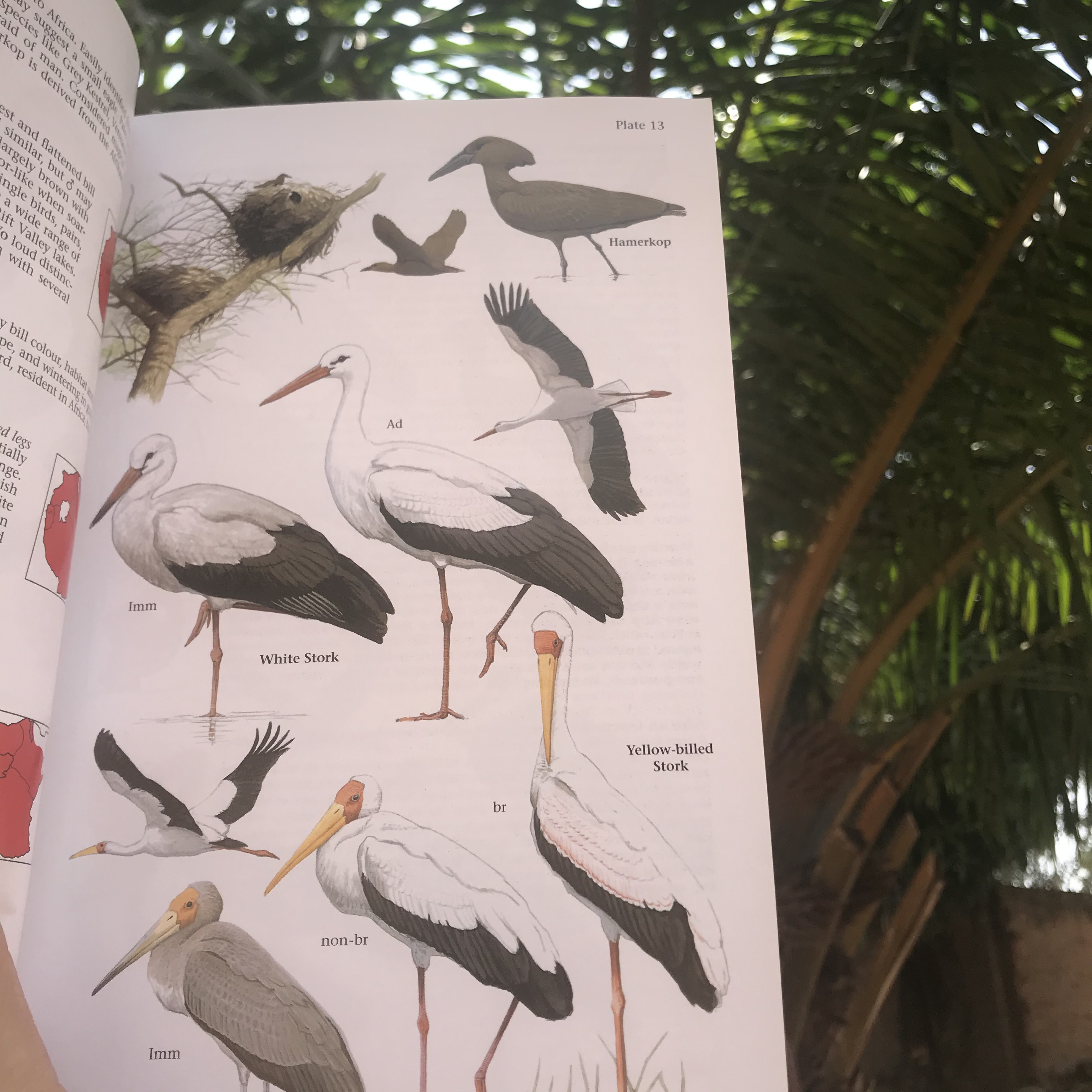
“White Stork is the classic stork nesting on buildings in Europe, and wintering in grasslands throughout sub-Saharan Africa.”
“Princeton Field Guides: Birds of East Africa,” Terry Stevenson and John Fanshawe, Princeton Press, 2002, 26-27.

Two Years

“If I take one more step, I’ll be the farthest away from home I’ve ever been”
“Come on, Sam, remember what Bilbo used to say: “It’s a dangerous business, Frodo, going out your door. You step onto the road, and if you don’t keep your feet, there’s no telling where you might be swept off to.”

Today marks 2 years living in Uganda, and it’s the farthest away from home I’ve ever been. Well, the longest away from home. Or the longest in a new home? I haven’t lived in one place longer than two years in a very long time. Two years means I’ve lived in Uganda now for longer than I did in North Carolina. For longer than in my parents’ home they moved to while I was overseas last time. Longer than I ever stayed in dorms or apartments at college. Longer than in Bulgaria. It means this is more home than many other homes, in some respects.

I’ve had two Christmases here. Two dry seasons. Two rainy seasons. I’ve learned language (sort of), learned to make soap, made new friends, learned a new culture, learned my way around a new town (no small feat with my sense of direction).

These two years have been very rich and blessed. But also very difficult and maturing. I’ve cried buckets and buckets. I’ve belly-laughed and snort-laughed and giggled. The Lord has stretched me in ways I didn’t know I stretch without breaking, and he’s grown spiritual fruit I didn’t know was possible for me to produce. There’s no way I can process two years of life in a single blog post. But to give you a taste, I’ll make a list of some of the things I’ve learned and experienced over the last two years. Hopefully this eclectic collection of fun facts and life lessons and cautionary tales will give you a bit of the flavor of the past two years. And maybe they’ll help remind you that my life may not be that different than yours, when you get down to the meat of it.

  • I’ve learned that my love for house geckos is strong and never-waning. You eat the mosquitos that try to give me malaria and I’ll be your devoted friend too!
  • I’ve learned to celebrate small things, because fellowship and fun, and marking time or achievements are worthwhile encouragement.
  • I’ve felt the awe of stargazing at an open sky with a cool breeze from over the Nile.
  • I know what it feels like to grieve with my home country over injustice and brokenness and disaster, and to grieve that even in that grief I am separated and separate. I don’t belong entirely to my new home, but I no longer belong entirely to my old home either.
  • I know the accomplishment of studying hard and feeling the reward of learning language well enough to communicate.
  • I’ve learned to care for two goats (Lottie and Livingston still live happily in our yard and enjoy pleasant escapes in the cool of the evening to the fresh-scented wild oregano fields outside our fence).
  • I am learning about humility—what it means and what it doesn’t mean. Usually I struggle to find the line between taking true pride in the Spirit’s work in me through difficult obedience, and denying all compliments because I fear they glorify me instead of the One working in me.
  • I’ve learned to love two puppies, and to lose one when it was time to put him down.
  • I know how to make ice cream in quite a range of delicious flavors.
  • I learned how to give henna tattoos and tie them into Bible stories.
  • When I’m sick, I know the exactly where the line is between when I can make it, and when I need to take not only extra toilet paper, but extra underwear with me when I go into the squatty potties in the camps.
  • I learned that yelling a battle cry at colonies of ants (we’re talking like, all the British colonies there ever were) migrating through the INSIDE of your home is largely… ineffective.
  • I know not to trust myself to go to the brilliantly colored fabric market alone, or with too much cash in my pocket. And ESPECIALLY don’t trust me if I talk to my tailor friend there. I’m bound to come away after placing an order for some new clothes.
  • I’ve learned just how much the wild places of the world rejuvenate my soul.
  • I’ve learned how to make soap, and teach others to do the same.
  • Heck, I’ve learned (haltingly) how to (mostly) run a small business for and with the ladies making that soap.
  • I’ve learned to bake so many delicious and fattening things from scratch: beignets, donuts, sopapillas, fries, baklava, banitsa, hot pockets, thin mints, and the list goes on.
  • I’ve learned how to teach friends to bake—in a different language and across quite a few cultural differences.
  • Shoot, I learned to make my own dang POPTARTS!
  • I also learned that if you have intestinal worms for too long and don’t realize it, you can eat allllll these fattening things and stilllll be halfway starving.
  • I learned how devastating cultural Christianity can be—a paralytic to discipleship, a false assurance to the nonbeliever, a justification to the radically political, poisoned water to the truly suffering, and apathy to those on the brink of true spiritual growth.
  • I grew courage in trying new things.
  • I’ve become a pro at riding a boda-boda (motorcycle taxi) side-saddle in skirts of all kinds.
  • I learned to lean even deeper into the Lord when lockdown stripped away all sense of a schedule or normalcy, of competency and purpose, and of task and accomplishment. I learned to be more content in his presence, and more sustained by his personal love and eternal truth than ever before in my life.
  • I’ve learned to love driving dusty roads, because they make me feel at home no matter where they are in the world.
  • I’ve learned how to get a car stuck in the mud, and helped plenty of times getting one un-stuck.
  • I’ve learned and helped to lead a mental trauma healing program based on Bible stories, and seen the Lord work true miracles in people’s lives.
  • I’ve learned so much truth and experienced immeasurable kindness through cross-cultural friendships that I wouldn’t trade for the world.
  • I learned to play a lot more piano after getting locked inside with her for a good bit of 2020.
  • I’ve looked my singleness dead in the eye and taken just about every difficulty and self-pitying urge to God loads of times, wrestling with contentedness and longing, with brokenness and loneliness, with freedoms and weakness, with past traumas and present gifts. The Lord is my sufficiency, and I’ve felt his presence with me more tangibly and practically than ever before.
  • I’ve driven through a herd of giraffes at sunrise.
  • I’ve learned to love my family better from afar. And I’ve learned better how to gather family around me wherever I am.
  • I’ve waged war on termites and learned how to mark my territory to keep them away.

These two years have been rich with trials that led to growth, but also with nourishing relationships that set the scene for all the learning and opportunities the Lord provided. I’ve learned and experienced many things, most of them still percolating so that I’ll only realized I’ve grown and changed later.

But perhaps more than anything, these past two years, I’ve learned that my home is in the Lord’s presence. My family are his people. My culture is a vibrant bouquet of colors from all over the world—Bulgarian red and green, Oklahoman sky blue, North Carolina green, Ugandan red black and yellow, dusty sunset orange, brilliant open sky starlight, sunflower yellow. Nowhere in this world will I ever feel completely a part, and nowhere completely separate. My heart aches and longs for a better country: an eternal homeland where I can communicate perfectly, always be with family, and never feel like an outsider. But until then, I get to see glimpses and sample flavors of that someday home in all of my temporary homes on this earth. That hope has given these two years their enthusiastic wonder and desperate longing all at once. And for that, I am grateful.

The Panic of Pandemic and the Peace that Passes all Understanding

The world is out of control right now. Thousands of deaths, uncounted infections, countries closing borders, travel bans, quarantine, economic downturn, runs on grocery stores. Some of the world’s most treasured cities look like ghost towns. “Coronavirus refugee” has entered our vocabulary as people caught traveling can’t return home, or those who have the means flee their homes willingly. Schools and religious institutions shut their doors or find creative ways to meet.

For the first time in living memory, our world faces a truly global pandemic.

It’s interesting to consider what “plague” has looked like in different eras of history. All of the sudden our minds are thrown back to the Black Death, the Spanish Flu, and other diseases without name or medical diagnosis that have shaken our civilizations. We remember stories of Christians tending the sick at risk of their own health. We call up dark images like the plague doctors in their beaked masks and compare them to the yellow hazmat suits and breathing masks of our modern imagination. We consider the suspicion neighbors and friends must have harbored toward one another as soon as a black cross was spotted on someone’s door, and we compare it to the sideways glances we see when someone coughs too loudly.

These human experiences are not unique to our generation and Coronavirus. Plague, pestilence, pandemics… they always conjure up panic and suspicion like some sort of black magic. They make us suspect even the air we breathed freely only the day before.

Pandemics pull back the curtain and expose humanity for what we really are, and what we find there can be both vile and hopeful—at once uplifting and depressing. We see the ugly faces of poverty and brokenness and all the harm they cause in our communities. But we also see the good neighbors who bring groceries to vulnerable community members. We see panic and greed at their worst, but we also see altruism shining like a light in the darkness. Widespread diseases shake our illusion of control and remind us how small we are in this universe after all. They deeply unsettle us, destroy our routines, and cause us to question unshakable assumptions about our safety, health, and security. But in trying times we are further exposed as the creatures we are, made in the image of God. We see sacrificial care, unconditional love, creative ingenuity, and unwavering compassion. These qualities can only come from a good Creator and his reflection in us.


Watching the Coronavirus pandemic unfold from my home here in Uganda has felt at times like an out-of-body experience. Our country as yet has no documented cases. But border security is tightening. Many travelers from infected countries are quarantined upon entry. People change their cultural habits to better protect themselves, their families, and neighbors at high risk of contracting the virus. The many cultures surrounding me that deeply value formal greetings have adjusted to elbow or fist bump greetings instead of the traditional handshakes. Hand washing stations—even ones as simple as a bucket with a tap—have popped up outside of markets and businesses. People gather in smaller groups to minimize social interaction.

But some things have not changed. Some aspects of life carry on unaffected. Our Sudanese brothers and sisters pray every Sunday in every church for three things: peace, the Church, and the sick. Many of them are refugees, and even the ones who aren’t still live in a culture with much fewer illusions about controlling illness and death or powerful governments. This Sunday I stood with bowed head, listening to the smooth Arabic words tumbling on as we prayed. When we prayed for peace, we asked the Lord to bring peace to warring countries, and to protect innocent people in volatile areas. when we prayed for the Church, we asked God to strengthen our brothers and sisters in areas where they can’t meet because of the virus, and for our Father to shine light and hope through us to the hurting world around us. And as we prayed for the sick, we asked the Lord, like always, to have mercy on those with malaria, with typhoid, with diabetes and malnutrition. Nothing else changed except we calmly added coronavirus to the list. The faith of refugees—in a God who withstands war and disease and famine and drought unchanged—cannot be shaken by any sickness, however new or unknown it may be.

Other things remain the same too. We keep our jugs, jerry cans, and tanks full of water, because dry season or collapsing infrastructure could both stop our water just the same. We live largely non-electrified lives, and the simplicity saves us the stress of wondering when the power will be cut or worrying about charging appliances and devices that don’t add much value to our lives in the long run. We keep basic medications in our house and live on simple medical know-how already because good doctors are hours away, coronavirus or no.

But some things have changed. The president of the country just asked for a month of precautionary measures: meet in small groups, close schools, worship in homes instead of churches, don’t hang around in markets more than necessary. New border regulations have stranded teammates out of country. Expat friends working with different organizations can be here one day and gone the next because their passport country demanded them back home, or their employer ended their contract, or all foreign personnel are evacuated as a precaution.

Most recently I got an email from my company asking me to consider the future. IF the virus comes, and IF I contract it, what scenarios am I comfortable resigning myself to? If medical evacuation isn’t an option and in-country medical care can’t meet my needs, am I content to stay with that knowledge? Would I prefer to relocate to an undesignated location with better health care for an unspecified amount of time? Those emails made the virus on its global stage suddenly very personal and immediate. I was forced to consider what measures I would take and plans I would make. I had to consider the what-ifs of the virus making it into Uganda. I considered what good I could do if I chose to stay or go. I considered my refugee friends who are immunocompromised and have no option of evacuating to save themselves or their loved ones.

In the end, my decision was to stay. It was a decision knowing I stayed with empty hands and not much to offer my neighbors and friends if or when the virus does come. It was a decision to stay and commit to quarantine or sickness, to limiting my social interaction and ministry, to grief and lament, to solitude and solidarity, whatever may come.


As I prayed through that decision I played and sang through precious words of faith from my hymnal, words like, “His word shall not fail you — He promised / Believe him and all will be well / Then go to a world that is dying / His perfect salvation to tell!” and “Whenever clouds arise / when songs give place to sighing / and hope within me dies / I draw the closer to him / from care he sets me free / his eye is on the sparrow / And I know he watches me.” I found peace and comfort in the Lord’s presence and in obedience to him founded on faith in his unchanging character. My imperfect faith in a perfect God is the only thing that can bring my heart to sing in worship, “Oh when I come to die, / Oh when I come to die / Oh when I come to die / give me Jesus. / Give me Jesus, / Give me Jesus! / You may have all this world, / Give me Jesus.”

But these words of worship come from a faith founded in an immovable God. He is not surprised by any virus or pandemic we may experience, and the death, the sorrow, and the fear that come with it do not take away one iota of his love and compassion for us. He is still the God that heard King David’s cry for mercy and stopped the Israelite plague at the threshing floor of Araunah (1 Samuel 24). He is still the God that passed over Israelite homes and showed his unmerited mercy by sparing their firstborn children. He is still the God who stopped a plague in the Israelite camp when he was worshipped between the living and the dead (Numbers 16).

He is still the God of Habakkuk: “His splendor was like the sunrise; rays flashed from his hand, where his power was hidden. Plague went before him; pestilence followed his steps. He stood, and shook the earth; he looked, and made the nations tremble.” And we can answer both the blessings and the trials God brings with Habakkuk, “Yet I will wait patiently for the day of calamity to come on the nation invading us. Though the fig tree does not bud and there are no grapes the vines, though the olive crop fails and the fields produce no food, though there are no sheep in the pen and no cattle in the stalls, yet I will rejoice in the Lord, I will be joyful in God my Savior.”

He is the same God who has led his people through the plagues of history, and we follow him still through this one. He passed over the Israelites and spared their firstborn. He offered himself as the perfect passover lamb to keep at bay the plagues of sin and death we fully deserve. As we come to Easter may we remember that sacrifice in a new light. And as we contemplate an Easter and Holy week shared only from our homes and separated from our church families, may we remember the small band of disciples who met together in an upstairs room. They were small in number because of persecution instead of plague, but their fear was the same. And Jesus’ answer to them just as well answers us: “‘Peace be with you! As the Father has sent me, I am sending you.’ And with that he breathed on them and said, ‘Receive the Holy Spirit.'” In these uncertain and fearful times, we carry in us the Spirit of God himself to comfort and to calm, and to propel us out into a world in need of the hope we share.

A Uniquely African Advent

IMG_7952
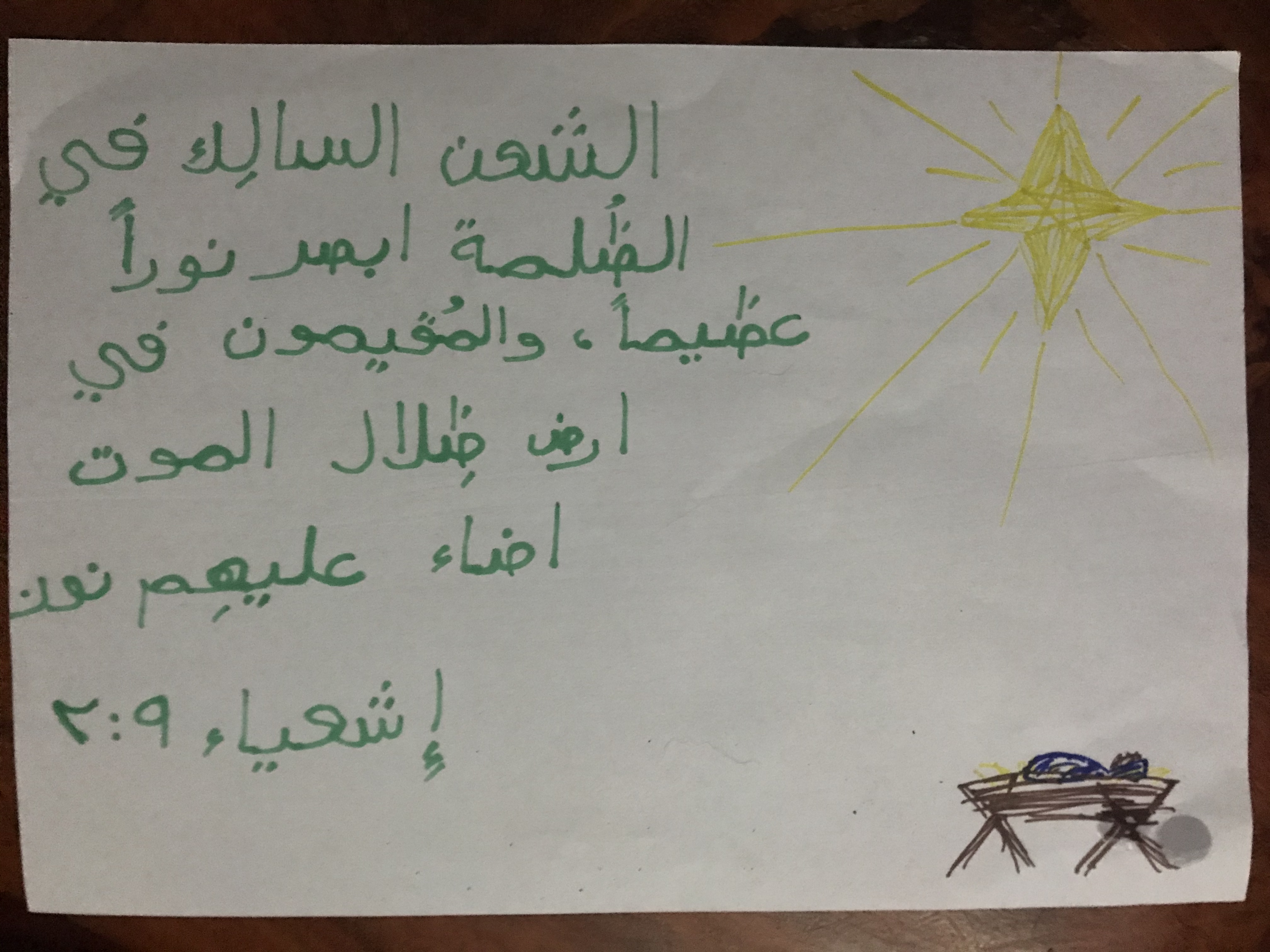
“The people walking in darkness have seen a great light; on those living in the land of deep darkness a light has dawned.” — Isaiah 9:2

Christ followers around the world celebrate advent because it teaches us to wait. As we wait for Christmas and imagine what it must have been like to live before our savior was born, we understand that the Christian does not wait passively. We hope. We prepare. We lament. We pray. We continue in daily faithfulness.

And this waiting—this numbering our days—teaches us holy habits. This season of anticipation for our savior’s birth trains our spiritual muscle memory to wait for our savior’s second coming in the same way.


This Christmas season has been a different one for me. I’ve spent Christmas overseas before: once for a brief visit in Cambodia and twice while I lived in Bulgaria. But my hot-climate Christmas was quickly followed by a return to the States and a wintry celebration back home with family. And my Bulgarian Christmases still surrounded me with snow, Christmas trees, carols, hot cocoa, and sweaters.

Christmas this year is on the equator, and the thriving palm tree just outside the front door dwarfs the fake Christmas tree just inside it. The only Christmas carols I’ve heard are the ones I played myself on the piano or from Spotify. I knew properly celebrating Christmas would take an extra effort when things feel so different, so I over-decorated and picked advent Bible readings to add to my normal quiet times. Little did I know how much my African context and regular readings in Kings would prepare my heart for advent all on their own.


I interact with refugees every day. Their heartbreaking situations are often normalized and mundane for me, but the heaviness slowly wears on you. It bows your back and puts a damper on your spirit. We talk about the hope of Christmas. I’ve shared my favorite Christmas verse from Isaiah about how a people walking in darkness will see a great light. But the reality is that I live in a land of lament among a people greatly acquainted with suffering. They carry with them an infectious ache for healing and a world made new. Deep in their spirits they yearn for great tidings of comfort and joy, and peace on earth to all mankind. Their longing for advent—for the savior’s coming—is not artificial or put on in any way.


Early in December I read 2 Kings chapter 7, which is a story from the siege of Israel. With Syrians at the gate and the last of the food gone days ago, the people were desperate. They ate donkeys’ heads, doves’ dung, even their own children. In that hopeless hour, God gave the people a sign to remind them he was with them: the next morning not only would the city have food staples they hadn’t seen in days, this food would sell for fractions of its normal price.

Sure enough, two outcasts with nothing to lose left the city that night to seek out the enemy camp. What they found was a ghost town. Provisions scattered, tents left standing, not a soul to be found. The Lord had frightened off the enemies with sounds of heavenly chariots. The men who found the camp gorged themselves on food and hid valuables they found free for the taking. But in the midst of their delirious joy, one had the presence of mind to say to the other, “What we’re doing is not right. This is a day of good news and we are keeping it to ourselves. If we wait until daylight, punishment will overtake us. Let’s go at once and report this to the royal palace.”

Those lines hit me like sack of flour. I decorate and celebrate Christmas in the midst of great darkness. I have good news! Great news of a savior born and a lost world saved, of comfort and joy, of hope for all mankind. Am I keeping it to myself? When the sun dawns and our savior comes back the second time, will I have shared this life-saving hope with the same conviction and urgency the men from the story shared their happy news with a starving people?

The truth is, refugees understand the waiting of advent, just like the men from the story did. They know what it feels like to wait for hope to come, straining their eyes to see from when or where help will arrive. They feel the world-weariness of the Israelites waiting for their savior, the Messiah, the Son of God.


An Arabic Christmas song I learned this year is about Emmanuel, God with us. We know our slow and haunting song, “O Come, O Come, Emmanuel,” and its words remind us of the pain and suffering God’s people endured while they waited, and the monumental task it was to keep their faith and hope alive in the prophecies God gave them to hold on to. But this Arabic song beautifully turns that idea to our African context.

Beautiful news on the earth,

It was the day He was born!

The Son of God, Emmanuel, the Lord’s redemption.

The sound of drums!

And angels cheering in the heavens!

And we below, full of need,

We wait for it…

The new covenant!


The song slowly builds and reminds us; now that our God has come, he will not leave us til the end. It expresses the ache with which we wait, the ache for the new covenant, for our God to be WITH us.

I have felt that ache this Christmas season. I’ve been reading 1 and 2 Kings, through seemingly endless cycles of kings who “did evil in the sight of the Lord” and “led Israel astray” or “caused Israel to sin.” As I read a collapsed version, generations of oppression, sin, and waiting pass in the turn of a page. The people dig themselves deeper and deeper into disobedience and suffering. As this horrible period spirals to its end, the people suffer each and every one of the covenant curses the Lord promised them should they stop following him and break his commands.

At the very end, a weary writer pens very matter-of-factly that the cities were captured. The people were carried off into exile away from their homeland. And all of this occurred because the people sinned against the Lord their God who had rescued them from Egypt. He had led them to the promised land and commanded them not to follow the religions of the people he drove out before them. But even so, the people built altars, temples, high places, and they worshipped the pagan gods and spirits. They broke the first covenant, turned away from God, and suffered their consequences.

I’ve simmered in these verses, these cycles of disobedience all December, just like a good Christmas apple cider simmers to take in all the flavors. I’ve felt the ache from the outside, the ache my refugee friends know so well. But I’ve also felt the ache from inside, from the inevitable brokenness sin leaves in its wake. Whether we live in exile or under oppression or just enslaved to sin in our lives, every human knows what it feels like to long for a new day, and new hope, a savior to swoop in out of nowhere to pull us out of the pit we’re in.

That is why we wait. Those are the emotions and the longing we feel leading up to Christmas as we wait not only to celebrate our savior’s birth, but for the righting of all wrongs that will happen when he comes a second time. As my heart yearned for a savior to lead us out of our mess, my advent readings led me to Luke 4:

[Jesus] went to Nazareth, where he had been brought up, and on the Sabbath day he went into the synagogue, as was his custom. He stood up to read, and the scroll of the prophet Isaiah was handed to him. Unrolling it, he found the place where it was written: “The Spirit of the Lord is on me, because he has anointed me to proclaim good news to the poor. He has sent me to proclaim freedom for the prisoners and recovery of sight for the blind, to set the oppressed free, to proclaim the year of the Lord’s favor.”

Then he rolled up the scroll, gave it back to the attendant and sat down. The eyes of everyone in the synagogue were fastened on him. He began by saying to them, “Today this scripture is fulfilled in your hearing.”

Those words of hope must have echoed in the silence of years of aching and waiting. This was good news indeed.

Thoughts Addressed to the Gecko on my Wall

It’s been 6 months. Six looooong months, of adjusting to heat and new diseases and inconsistent electricity. But it’s also been six short months, of learning a beautiful language, building relationships, making new friends, loving the sunshine and the rain and the growing things, and making a home. I could give you an introspective blog on what life has been like these last few months, on how I’ve grown in my faith and the ways that I’ve changed. But I’ll save that blog for another day. 😉


Instead, I’ll give you a fun bullet-point blog, on the interesting and funny things these last six months have held. Hopefully these bite-sized stories will help you share a little bit in my unique sense of humor, in the shocks and the fascination, and in the joy of experiencing new things.


A gecko lives in my room, and another in the bedroom across the hall. I talk to him now and again to thank him for eating the mosquitos that eat me. Maybe Africa has messed with my brain a bit too much. 😉 The first gecko I met, I named Moki. The gecko in my room got the name Loki. So, naturally, his brother across the hall got the name Thor. Every once-in-a-while these geckos get to catch some of my musings as I’ve adjusted to life in Africa. I like to think they’re becoming a bit wiser from the things they hear, but perhaps more likely, they’re just entertained by my foibles. These are some of the events they have borne witness to.


  • When I first got lice in Bulgaria, I noticed by the eerie sensation of a creature crawling on my hairline. At first the sensation here gave me shivers down my spine and sent me rushing to the nearest mirror to check. But I’ve since learned that here it just means I somehow picked up a harmless stray ant from my house and he couldn’t find the way back home. They’re not as difficult to kill as lice, though… I have gotten used to the sensation because this is as much my house as the ants’. They live in the kitchen, in the bathroom, and even cross my bed on their own mysterious errands.


  • My water heater reminds me of a curmudgeonly old man. He’s quite persnickety. Turn him on just before your shower, and you get only cold water. Turn him on all night before a morning shower, ice cold again. Three hours prior to a shower, still no heat in sight. The sweet spot is 1-2 hours. He heats up the water just fine, but the trick is catching enough for a shower without giving it time to cool down.


  • Uganda has two types of mangoes. The bigger ones can be up to 8” tall, and they’re ripe when they’re green and red. The other smaller ones are ripe when they’re yellow. Regardless, don’t stand under a mango tree in ripe season. The trees carry hundreds of them, and those suckers are likely to smack you square on the noggin.


  • I arrived here during the hot dry season. We could go days without electricity at the worst of it, and when we did have electricity, it often wasn’t on during the night to run fans for noise or to keep off mosquitos. I also couldn’t master keeping mosquitos outside the net over my bed. You can hear that infernal buzzing before you can see the little buggers, so it was a nightly occurrence to wake up to the sound, flip on a flashlight, and hunt down as many as five of them before I could go back to sleep.


  • When rainy season came, and with it nightly electricity, the sound of the blessed fan drowned out the mosquito buzz, so I would be confounded to wake up in the morning to bites on any part of my body outside my covers. I spent a few weeks researching ants, gnats, and midges, to see if I could figure out what else might be biting me, since I couldn’t hear the mosquitos anymore and I was so sure it wasn’t them. I did enjoy pretending I was a hobbit getting eaten by midges. “What do they eat when they can’t get hobbit?” Best to make light of an annoying situation.


  • Personal hygiene is different here. Water is scarce during dry season, so is electricity to heat the water, and lukewarm showers with any kind of water pressure are few and far between. I used to wash my hair daily in the States. But now… The large bottle of Suave rosemary mint shampoo I brought with me is still going strong over six months later.


  • Life is much more holistic here. It involves body, mind and soul in unified ways North Americans can’t easily wrap their head around. For example, in church we praise the Lord with our whole bodies. From toddlers to grandmas, everybody able dances at least a little with worship. Some songs have you clap hands with someone next to you. Some songs you shuffle your feet in time and kick up dust. Some songs you touch your head, eyes, ears, crouch down slow and dance back up. Praise isn’t just mental or spiritual—it’s physical. Gratitude is too. It’s not uncommon to give an offering of a chicken to the church instead of money in the offering plate.


  • It’s funny how easily I flick the ants off of my bed, by body, my food. I have jokes with the ladies I teach to bake for the coffee shop. We knead and roll out lots of dough, and for some reason that’s like catnip for the ants. It summons them from near and far. So we call them fil-fil, which means pepper in Arabic. They’re just another ingredient to give it that real African flavor, because sometimes you just can’t catch them all. Extra protein, right?


  • We get to have fun pets here. Aside from loving, dumb, drooly dogs that “guard” our homes, several of our families has baby iguanas for pets. Ugandans are TER-RI-FIED of them. But they’re adorable little dudes! My favorite is the one named Darth Vader. All his buddies like a nice resting cool cucumber color with flecks of orange and blue and red speckled in. But not him. That’s too mainstream. He goes for the exact coloration of a rotten banana peel. He has to let everybody know about his angst so they don’t confuse him with “those other Iguanas.” Their lack of faith disturbs him.


  • It might be surprising to you like it was to me, but there are lots of ethnic Indians here in Uganda. They came with the British and stayed on when the British left. Many of them run grocery stores, and because of their impeccable tastes, we are blessed with a bounty of spices to season and cook with. It’s literally my dream. I can get just about any spice I’m looking for if I know who to ask. In fact, one of the markets run by an Indian family here is called Dream Shoppers. The stuff dreams are made of, people. Cinnamon and ginger and cardamom for dayyyyyyys. Want garlic powder? Done. Cumin? We sell it by the kilo. Spices you’ve never heard of? Why not give them a try?


  • Taxis don’t really exist here. People walk for long distances, or ride on a lorry or a bus. But to get around town you can ride a boda boda. They’re motorcycles, they drive recklessly and always think they have right of way. They’ll usually get you where you’re going for less than 5 dollars (or as little as 30¢). On my walks I always get beeped at, sometimes yelled at, to see if I want a ride. “Miss, boda?” “We go?” It does feel kind of fun and adventurous sometimes to ride through town with your hair and giant earrings billowing behind you. Even more fun to surprise some of the drivers by deciding to ride side-saddle behind them like a graceful, poised African woman. Just hold on tight around those corners!


  • Everything grows here, especially during rainy season. We keep a plastic trash bucket on our back porch for food scraps, leftovers, discarded bits of stems or peels or seed that might attract ants if put in the trash inside the house. We also have a friendly calico cat that likes to dig through our bucket sometimes. She must have knocked it over with some pepper seeds one time, because now a thriving pepper plant is growing beside our back porch. I have no clue what kind they are, but after sampling them in some of our cooking, I can tell you those trash peppers are delicious!


  • Most of you know I’m not a coffee person, under any circumstances. If I can taste coffee at all in any kind of desert or ice cream or anything I’m out. But coffee here is sometimes offered with hospitality during a visit. Sudanese make it with ground ginger and sometimes cardamom. Maybe it was the glow of visiting Sudanese friends but… you know…? It wasn’t half bad!


  • I’m slowly getting used to being an object of interest. As a single white lady I often have an audience for anything I’m doing. Most of these onlookers (at least they’re often really cute kids) rightly assume I’ll end up doing something foolish or wrong or funny, so they’re entertained. It can be helpful though! When everyone in the market knows the only white girl there is on the hunt for key limes, you’re likely to have a random stranger chase you down on your way out and touch you on the elbow to take you to the right stall. It’s also quite fun to surprise your impromptu audiences by carrying a heavy case of water on your shoulder, or working with a sledgehammer to knock down an old building.


  • We think Charlemagne once said, “To have another language is to possess a second soul.” I think I must’ve made horcruxes of my soul then. My first efforts to learn Spanish were stumbling and stilted, and in my young mind it sounded like what happened if you put English in a blender added a few ‘o’s to the ends of words. That soul of mine loves Mexican food, spice, futbol, and memories of my first mission trip. My Romanian soul existed only in the close context of family, learning to make salad in the kitchen, singing hymns in the living room, sharing communion in a house church. The small bit I knew was learned through and by family, in a home. My Bulgarian soul… it was a tough little white girl, hardened against living in a place by myself, chewing the Slavic syllables and consonants all crunched together, enjoying the forcefulness in the language when I had to order children around. I spoke it a pitch lower than I did English, with my lower jaw thrust a bit forward and a thick, loose tongue. But that part of my soul loves children and orphan care—it was learned and grown by telling Bible stories, playing Uno, or coloring in the slums. French held my mouth tight with pouty lips to get the vowels right. I mostly only used it to order food, ask directions, and find my way around Paris. It was a romantic language for me, flowing and rushing, exciting and adventurous. But Arabic… That part of my soul is still forming. It has Sudanese tea for its lifeblood and the private sisterhood in the company of refugee women to thank as its teachers. It reminds me of hospitality and working in the kitchen, of sitting in the shade and learning the names of common everyday things around us, of strength and dignity and the noble, modest power to make a welcoming home in unimaginably difficult situations.


So, now you know what my geckos know, and you can make up your own mind whether they’re entertained or confounded. Regardless of your evaluation, you can be sure these six months have been full of quite a few entertaining stories.

At the Border (between the old life and the new)

We stepped out of the car onto dirt packed hard by thousands of feet that should never have been there in the first place. Refugees are driven here in endless lines by war, and this was one of the first places their feet rested after fleeing Sudan and South Sudan. I had gotten in the car with little-to-no idea of where we were going or how far away it would be. We followed a UN car and listened the whole way to stories about Mama Salome, a Ugandan woman in the car ahead who cared fiercely for the refugees and often spent her days working with them here. They loved her. They unburdened themselves of their stories to her. The people respected her.

4BD6D455-652F-4ECA-A7B8-51B1550AD5FE

I knew we had arrived by the blue and white UNHCR tarps covering mud and stick structures. Those tarps are recognizable from a mile away. We hopped out of the car, steeling ourselves for what we were about to experience. This was a place on the border of Uganda and South Sudan, a place where thousands of refugees have been first received, processed, given identification cards and basic medical treatments, clothed, and sent on their way to live in the refugee settlements. This site was relatively new. It had been moved there from a location closer to the border. Sometimes stray bullets from the fighting had whizzed overhead. It wasn’t safe. But that word was relative to all the people crowded into this place—over a thousand people today, we were told. They had moved to a location farther than a stone’s throw from the border. And now they were here. I didn’t even know if ‘here’ had a name.


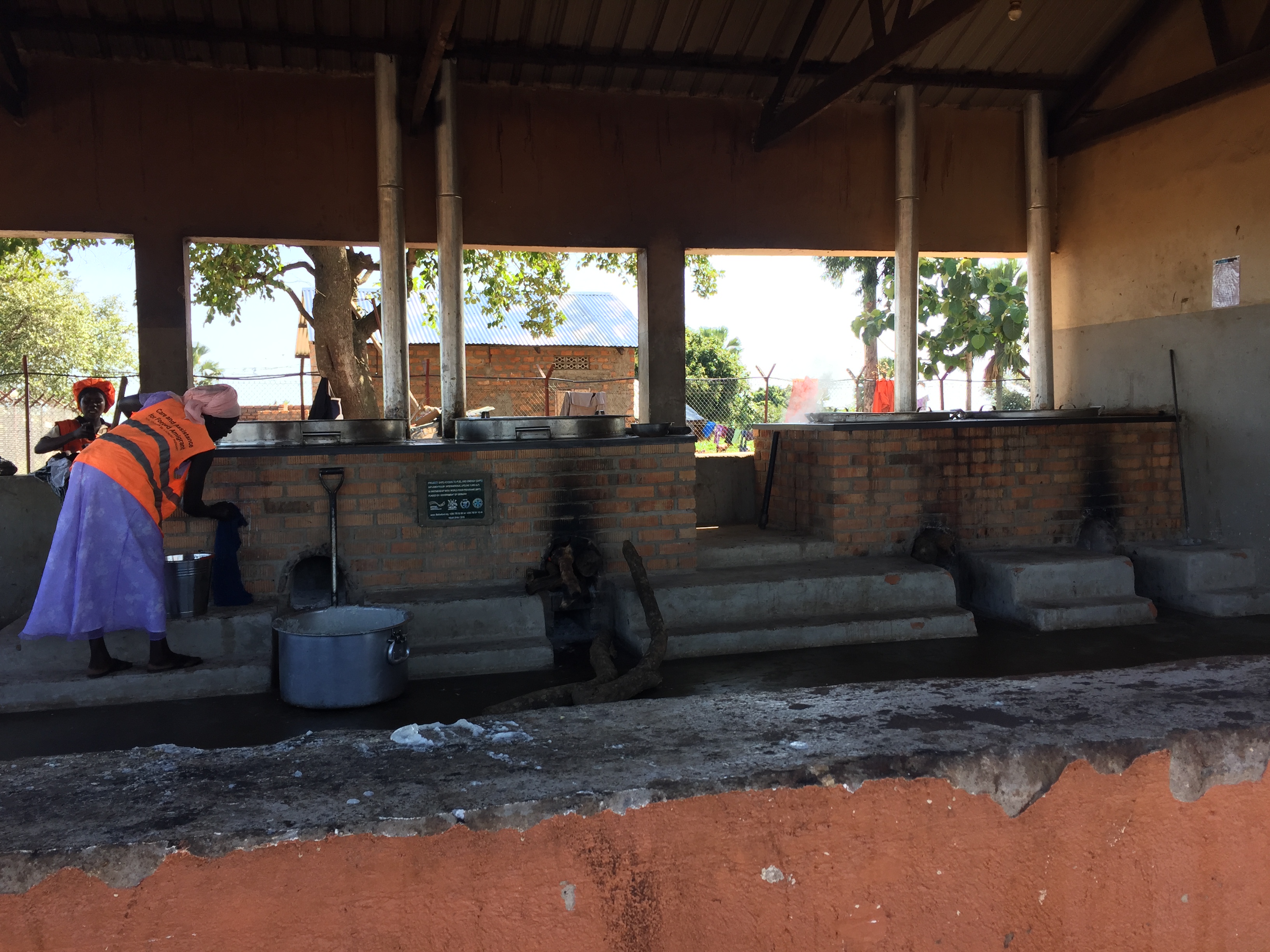
In some ways this place was nicer than the refugee camps themselves. There was a kitchen, with wood-fed brick ovens and gigantic pots for cooking huge quantities of rice, posho, or beans, to feed hundreds of starved figures. The water pump never ran dry, and it was only a few yards at most from anywhere on the compound, not miles like some of the water wells in the camps. Everyone was seen at least once by the medical staff. They were given clothing. Conditions can be harder for some once they are transported to their plots of land in the settlements.

24622115-9D12-4D33-9068-2257B7EE978445942124-1AE2-42F0-A0DC-918A4DBB8C9F

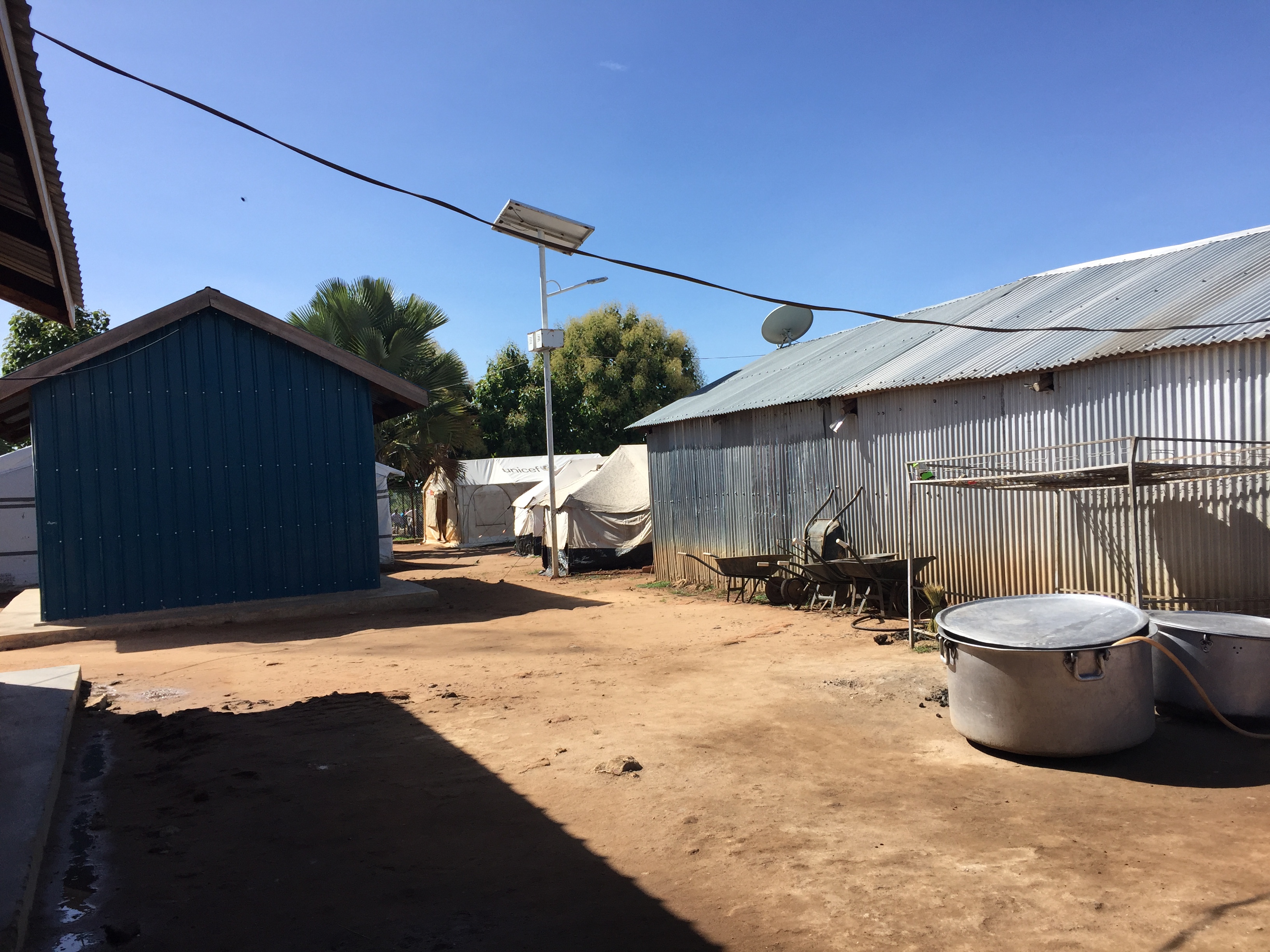
Next to the open-air industrial African kitchen, there was a protection house, completely walled up, floor to roof with sheet metal. That was odd for this area, where the roof usually sits a few inches above the walls to encourage a breeze to enter and bring some relief from the hot equator sun. Just recently, we were told, four Dinka women had to be hidden there. The Dinka are ethnically different from many of the other Sudanese refugees, and in their trauma and anger with no way to vent their emotions, the Dinka people can often become targets of aggression for the other Sudanese. The four Dinka women had to be locked into the protection house to keep them safe from the hundreds of new refugees who wanted to kill them. Police were called and they stood guard around the small building. But in calmer times, the protection house is a place for mothers to birth their babies. As if on cue a woman walked toward us from that direction, carefully holding a bundle of blankets. One of our people walked toward her with a smile, and at a returning smile from the mother, gently pulled back the bundle where a head should be. A days-old baby. The protection house had an apt name. It preserved life and brought it into the world, even here where lives had been treated so cheaply by the war that drove them away.


We walked deeper into the compound, toward a long, low building separated into three rooms. To enter the first, we squeezed past a line of people standing in the hot sun. They were all waiting to be sent inside, where they would receive small, yellow, crumpled pieces of paper. These papers were life and death. They had an identification number that registered a family and its members for basic human rights—healthcare, rations, water, a kit of items and tools to make a home in their new places at the camps.


We squeezed back out through the lines and this time I felt bold enough to look up at the faces around me. As I raised my head I noticed that my shoulders had unconsciously stooped in response to the sorrow of this place, and under the acknowledgement that the crowds parted for me without question because of the lack of color in my skin. But what really separated me from the people I brushed past? I had grown up in a different country, one not at war. It was the luck of the draw. These men, women, and children, they had lives before. Some had educations, they had homes and family traditions, they had all the members of their families at one time. And now here they were, with nothing to their name except the clothes on their backs. For some, even those clothes were alien. We knew that many times children who have been separated from their families would band together and come across the border in groups, naked and traumatized, after wandering through the bush. We’d brought two small bales of clothing with us today that we gathered in response to one such report of a thousand children coming across with no adult in sight. Today we learned that the men and the women would often come across naked too. Many had been forcibly stripped along the way, and they first came into Uganda without even the dignity of a shirt or a pair of pants.


Before I knew it, I’d followed our people into the second room. It had medical posters covering the walls, and the stench of illness in the air. Here everyone was checked for any records they may have of vaccinations and given what they lacked. They were tested for malnutrition or any other diseases they might be carrying and suffering under. Privacy screens hid the patients, and the room was quieter and felt more somber than any other we had been in. The next room in the row had only a waist-high wall on the side facing us. It was originally intended for a children’s play room, we were told. But because of the overflow of refugees, some slept in here. There were cartoonish posters on the wall, and bedrolls on the floor. My brain didn’t know what to make of what I was seeing, and at first impression the room reminded me of some bizarre, out-of-place church nursery.


After the last of the rooms in the low building bordering the lot, we came out not far from a large bus. It looked like a charter bus, out of place here. This was the bus that took new families to the camps when they had been processed, either to Imvepi or Omugo where the openings are at the moment. Families stay here at this way-station for anywhere from 3 days to two weeks before they take that bus out. Our guides pointed out a warehouse-like building diagonal from us and perpendicular to the building we had just left. This is where the women and children slept. The men slept separate, all males over the age of 15, at the far end of the lot. We had seen the UN tarps draped and stretched over what must have been their sleeping quarters on our way in.


We walked back toward the kitchen area and the water pump, at the opposite side of the rectangular compound. The shock was wearing off some, so we started to use our stumbling Arabic to speak to people and say anything we could—we are praying for you, God bless you, what is your name, I like your smile. The urge to say something, anything, to these people—to remind them that we saw them as humans with names and needs—was so strong. We were starting to feel so small in the face of such need.


We followed our bales of clothes over to a flat area. Some of the workers had already laid out plastic mats and started to unpack and sort the clothes. It looked like a big Goodwill bin from America. In fact, some of these clothes might just have come from somewhere like that. We ooh-ed and ahh-ed over a tiny lavender dress with a sparkly tutu attached at the waist. We laughed as the workers raised a little boy’s costume shirt—soft green back, pale tan belly, and a ridged dinosaur tail handing off the center of the back. As the clothes were sorted, tables were brought for them to be laid out on in stacks of size and gender. The people began gathering in a crowd to save a spot in line for their children to have some clothes. We stood around and tried to strike up conversations.

C640FB97-57ED-45BD-95E6-62DEE64D838B

Even in this place so much life was happening. Some of the smiles made you forget where you were or what some of the people had been through. But there were always reminders of the displacement and the transient, perpetually uprooted lives these people led. We heard the bus engine crank and several heads looked up in dismay. Several tongues clicked disapproval and frustration. These men and women couldn’t leave the clothing distribution or they’d risk not getting clothes for their children. But I wondered how many had friends on that bus, or fellow travelers that they might not get to see again. And how many got to say goodbye before the bus left?


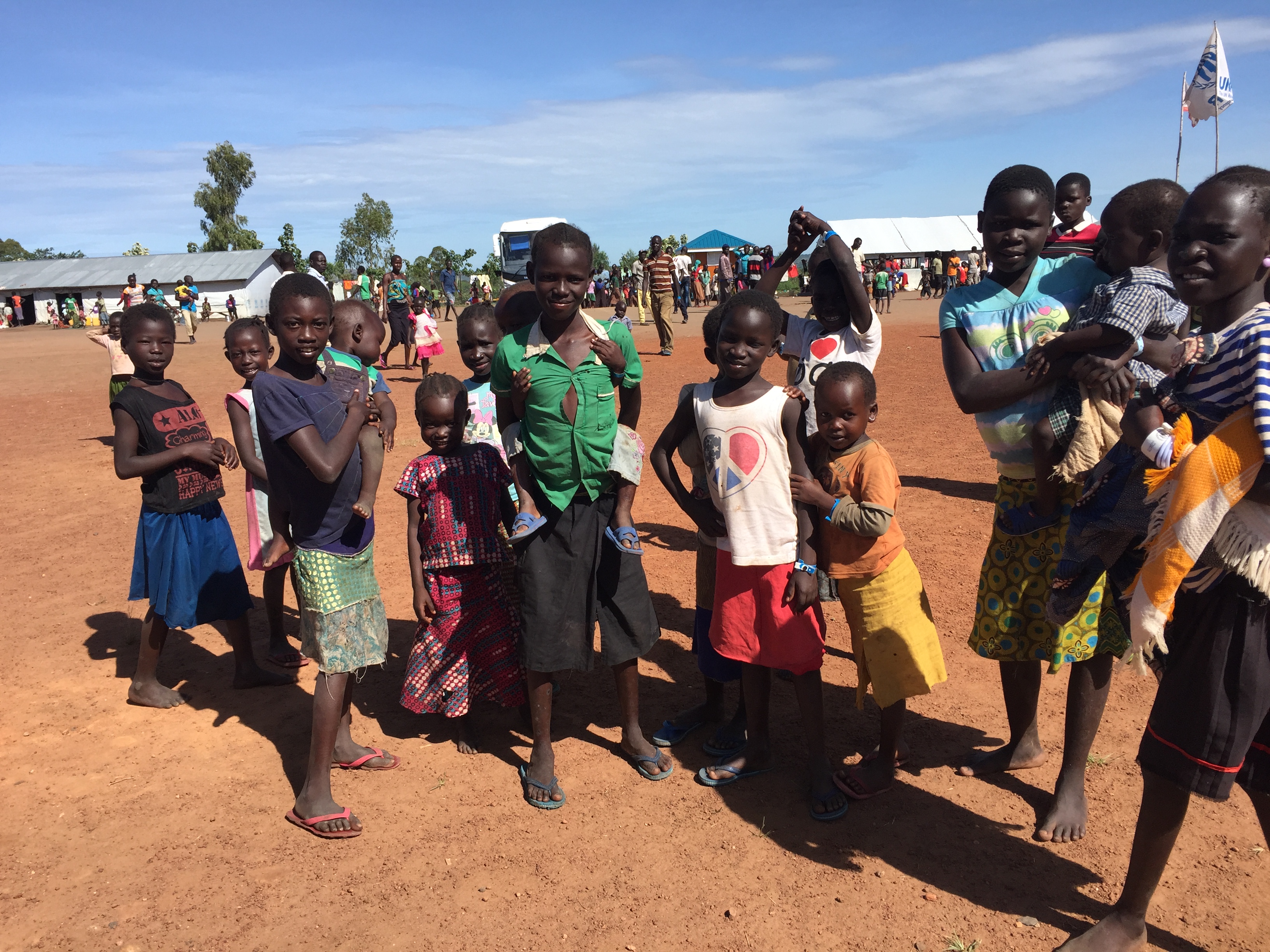
Some of the pairs of eyes were doggedly fixed on the ground, thinking of far-off events in far-off places. Many heads swiveled to look in our direction. They wanted to observe, to touch, to smile. Some of the braver tried out their English to greet us or ask us how we were. I found myself most of the time squatted down and talking to children, or smiling and tentatively sticking out my hand to greet them. The smallest ones are often afraid of our skin and don’t know how to respond. One little boy waved at me and flashed wide grin. I made my way over to him and his siblings to clasp his hand but his face immediately froze in fear and he hid behind big brother’s leg. I raised my gaze to the older siblings, “He’s afraid,” I said in Arabic. They giggled to confirm, and smiled at the familiar sounds in the words.


One lady sat on the ground embroidering one of the beautiful Sudanese sheets that are used for everything from bedspreads to seat throws to curtains. Hers was an elephant with gleaming white tusks, surrounded by abstract leaves and flowers, with maybe a few birds begun on the outer edges of the design. I tried to imagine how far that one piece of home had come with her, and where she’d managed to get the needle and embroidery floss. The bright lime green sheet somehow made even this clustered mass of people seem more homely. It was a piece of settled life. She proudly unknotted the edges to show us and model for a picture.

E2D81D92-4EA9-4950-ACEA-6E2EDDE7CCDE

I wandered off to another part of the mass of people. A small baby was crying hard. His head looked too big for his malnourished body. “He’s hot,” someone said with a knowing smile. No, “He’s sick,” said his mother. Rubbing his back turned into the back of a hand to his forehead, rubbing his head. His mother nursed him to calm him and his eyes closed for an untroubled second. He raised his tiny had to rest it on the arm rubbing his head.


I wandered off again, this time finding a mother with a welcoming smile. She held a baby and had two little ones circling her feet. Babies usually cry the loudest at my pale skin, but this one reached out for me. I offered my hand and he was fascinated with it. He held the fingers one at a time and would reach for it again if I ever thoughtlessly dropped it while trying to talk to his mother. The white skin on my palm looked almost luminous in that light, up next to his richly colored fingers. “What is that?” I asked in a high baby voice. “It’s white!” I said in Arabic, to the giggles of those clustered around. The crowd shifted and I said goodbye to this mother so she could move with them and not lose her place in line.


A man introduced himself to me, desperately trying to tell his story in English. He had a toddler boy with him, and his said his wife had a five-day old baby. It was hard to understand whether she was here in the camp, if she had passed, or if she was still in Sudan. As the man broke off the conversation to follow the shifting crowd, he said they were making it little by little. “Little by little,” I repeated in Arabic. His eyes brightened and his wiry body almost bounced with energy. “You speak Arabic?” he asked in his heart language. “Little by little,” I said with a sly smile. Later I saw him trying out his English on another of our group. The little toddler was escaping behind him toward the latrines. He was so intent on his conversation he hadn’t noticed until a group of mommas were almost yelling to get his attention. He sprang off after the little one as I turned my head with a smile.


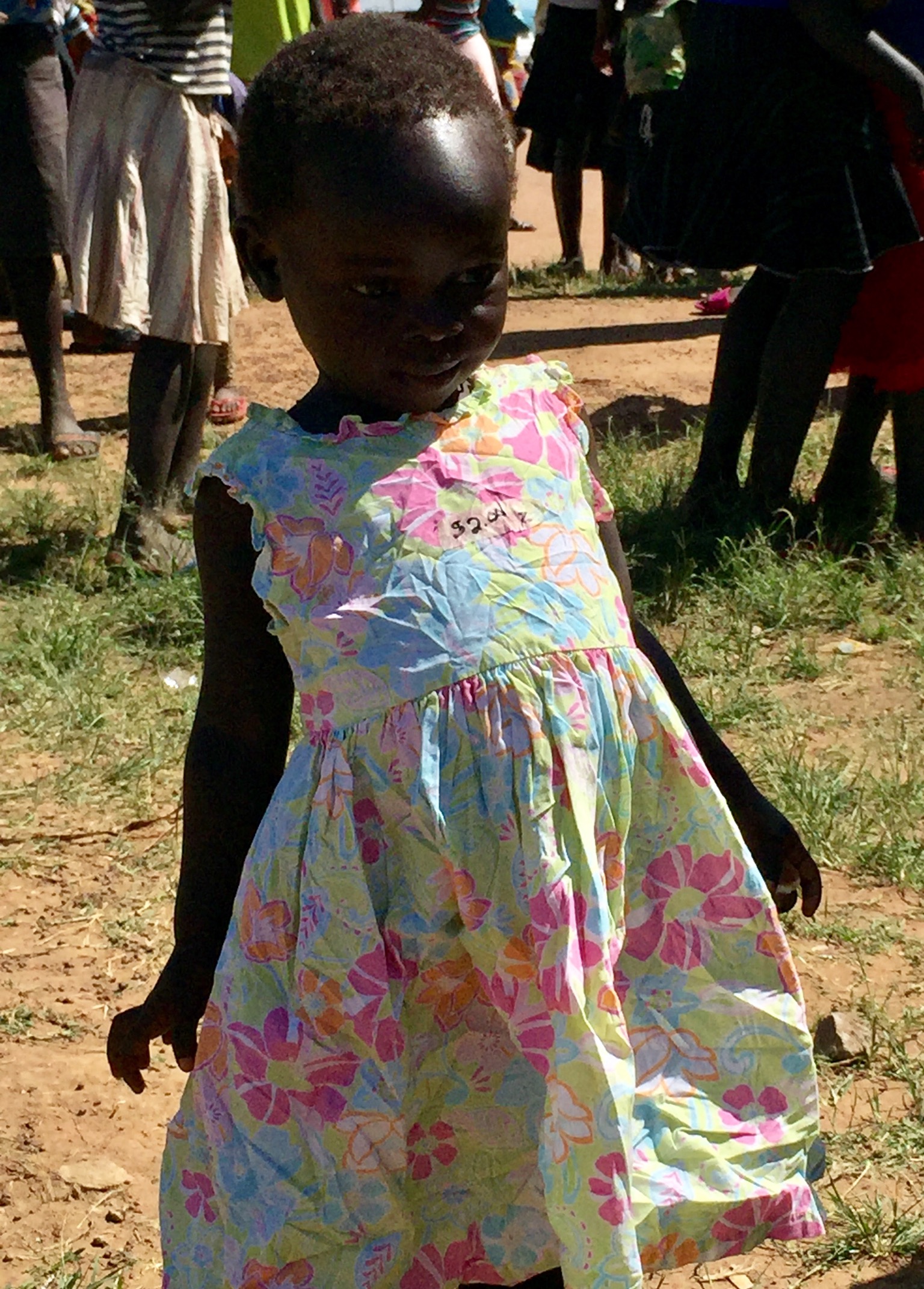
We waited around as some of the clothes were handed out. The mass of children who’d been pushed right in front of the tables by their parents was overwhelming. So many and so much need. My Arabic felt so insufficient, but I don’t think I would have had the words in any language to know what to say, how to comfort, how best to listen. As we were leaving one mother pushed her way through the crowd to show us her daughter, beaming in a new dress, posing for us. He mother looked on in pride and thanked us for the clothes. The little one let us take her picture before we said goodbye and walked to the car.

5EA9904C-701F-456D-AC80-52537E9EF372

We all crammed into the car and someone asked to pray before we left. I couldn’t. I couldn’t speak for a while. I’d kept the tears in until we were behind the closed doors of the car, but they came silently in waves for most of the trip home. Thoughts raced through my head quicker than I could sort them out. What can be done in the face of such deep, dehumanizing need? How can you help or encourage? Who was I to even think I had anything to offer to help, or that I could make a difference at all? Pray for my team and me in the coming days as we sort through what we experienced and brainstorm what to do and how to help in situations like these. Pray especially for Casey and me as we consider how to find a way to help, work with, or minister to some of the separated children that come through check-in stations like these and can be sent to the refugee camps without family to speak of, in prime positions for exploitation in many different forms.

The Dress

So, how is Africa, really? Do I live in a mud hut? Do I sweat miserably all the time? Have I ridden a rhino? Have I gotten a weave yet? How am I doing? Really?

I bought a dress recently that brought on some good, old-fashioned introspection. And for those of you who want to know how I’m doing here—surviving or thriving—this is post is for you.

Recently I went to the fabric market, one of my favorite places here, and I spent the $15-ish for a favorite piece of fabric and a tailor-made dress to match the style here. I LOVE the bright orange and yellow and the crazy pattern. I love the colors and the shape and how much it makes me feel in my element. As I took some pictures for family and friends to see the finished product, the dress reminded me somehow of a chrysalis, my entrée into ownership of my new life here.

My first three months in Africa have tanned my skin, slimmed my waist, strengthened my endurance, made me treasure my laugh. Life is hard here in some ways. But it’s beautiful in so many more. And I love it. Some quality of life here refines things and chips away at the rough edges to help you find a beauty and a wildness underneath. Looking at my dress and my wide smile in the only mirror in our house that I can see myself in, the thought occurred to me that through the sometimes difficult adjustment, I’m becoming more of the Caroline I was meant to be.

I always feel that way when I’m overseas because I love being immersed in new cultures. Something in this crazy nomad life makes me feel more alive because I think it’s what I was created to do. But that feeling is somehow stronger here in Africa than it was in Bulgaria, where I lived before for two years.


To help explain, let me give you some pictures, photos and narratives, of what I mean.

Like I said before, life can be hard here, and the adjustment did not come naturally.

IMG_5768

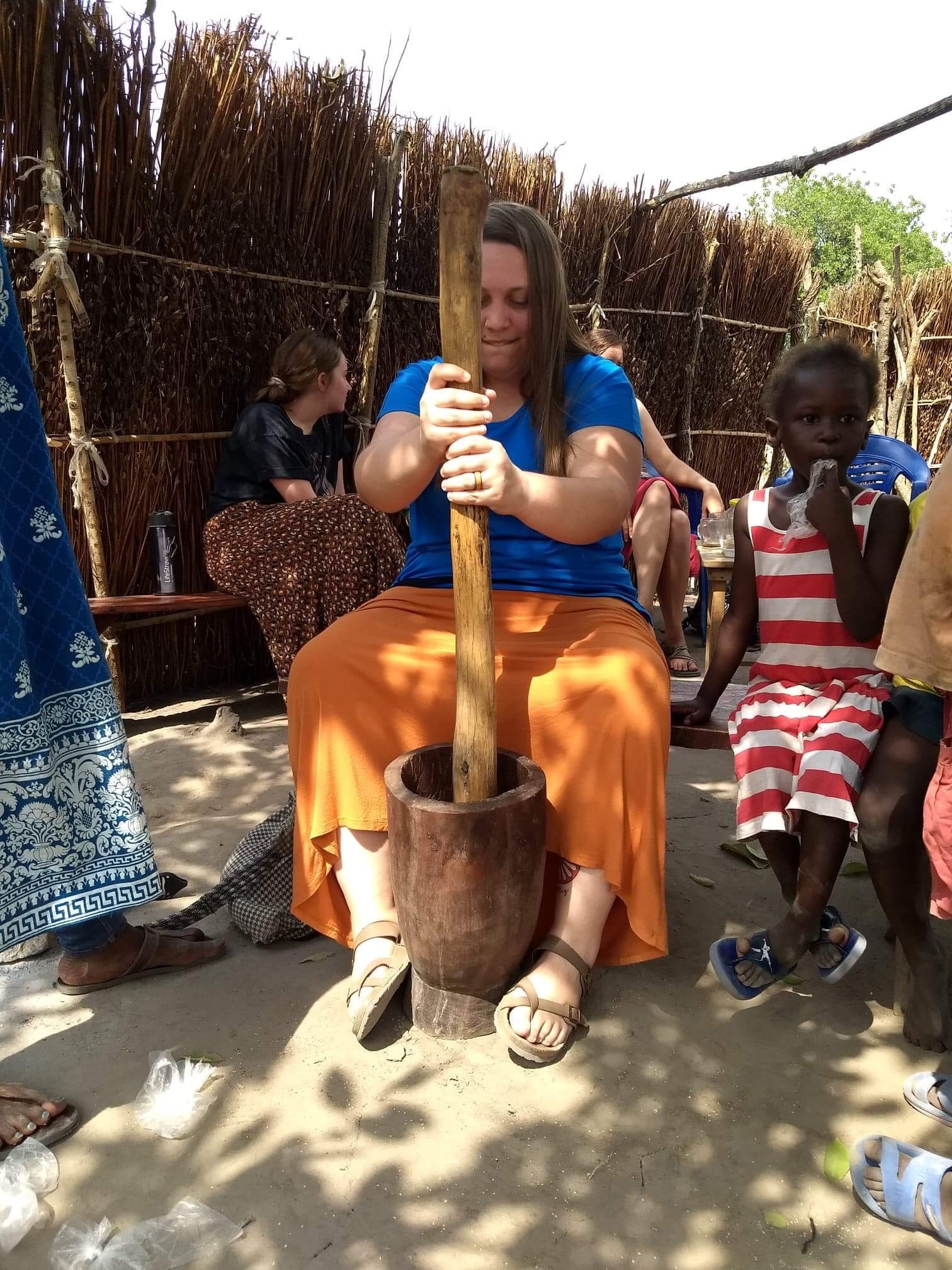
While I’ll never have to pound grains like my African friends, or have arm muscles as defined as theirs, my life still isn’t very ‘cushioned’ here. It’s taken work to become comfortable making nearly every meal completely from scratch, to learn which ingredients I can and can’t find here, to become a pro at kitchen substitutions and same-day market trips so I know how to navigate my way in a world without steady refrigeration, a world that laughs at the suggestion of a freezer.

I arrived in my new Ugandan hometown as dry season escalated to its peak, when the winds that would bring rain instead dry and crack the ground and slowly burn away at our water sources. I live hours from the nearest AC unit, and our hydro-electric power grid gives us an average of 2-5 hours of electricity out of every 24. Sometimes during worse dry spells we can go without power for nearly a week. Fans are often out of the question, so I’ve grown familiar with dripping sweat from more places than I knew possible. On particularly hot days the butter at our market and in our homes sloshes around in its containers, more liquid than solid. The nice, imported chocolate bars are more like chocolate sauce.

IMG_6440

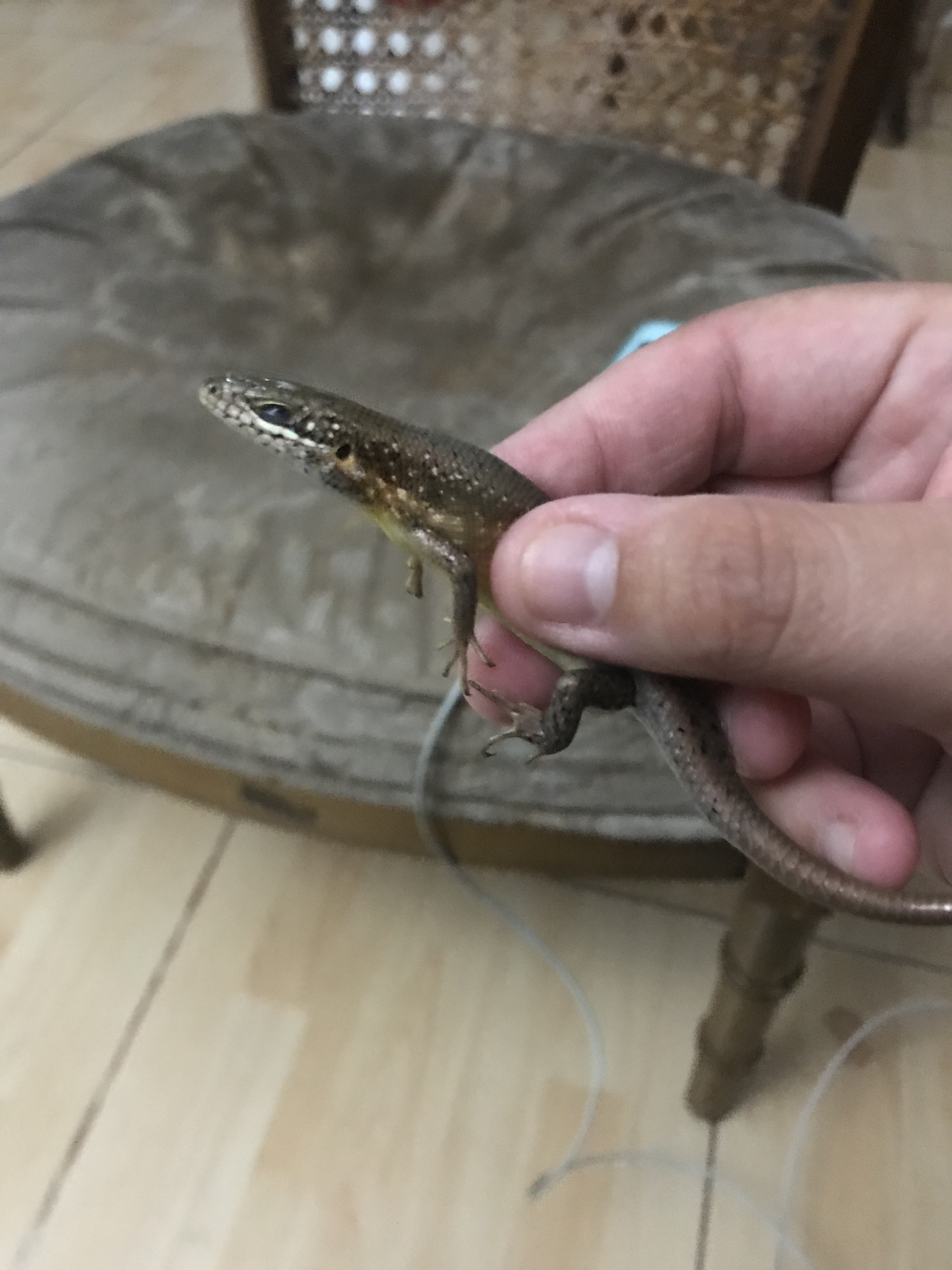
I have a home with screened windows and a mosquito net for every bed frame, but we aren’t completely critter-proof. Colonies of ants and I are at war, battling to claim the house as our territory. We fight over rights to our food, for clear food preparation spaces, for a floor to sit or lay on without fear of being crawled-upon. I also harbor strong murderous feelings toward mosquitos, especially after my first (false alarm) malaria scare. The number of mosquitos killed from inside the net around my bed is frankly alarming, but not nearly as high as the amount of bites I’ve received. The geckos are my allies in this war, and I happily rent them residence in my house for the price of eating their weight in the little blood-suckers. I’ve become an avid lizard-rescuer, doing my best to save them from mop buckets, shoes, and ant swarms.

I don’t, by any stretch of the imagination, actually live in The Bush of Africa. I can go to restaurants in town when I can’t bring myself to cook. During rainy season I’m told we’ll have electricity more often than not. The freezer now sitting dormant in my pantry will stay always below room temperature instead of above. But these small ‘hardships’ of life—now or in rainy season—more than pay for themselves.

IMG_5618

Living so simply has made me immensely grateful for basic needs that so often before I overlooked. A simple breeze or the cool of a shade tree cracks a smile wide across my face. Sure, I grumble when the water tanks for my house are empty, but I am grateful for every cup of water, recognizing it for the luxury that it is. In a life like this that pushes me to limits of heat, dehydration, patience, and ingenuity so often, I am thriving. I am living my best life now.

IMG_6203IMG_5641IMG_1573

The heat and dust and sweltering sun are so extreme they are beautiful. Every fresh sunrise or sunset I see strikes me with its fierce, undomesticated beauty. Something in the harsh extremes and severe intensities is perfectly home for my wild spirit—the same wild spirit that found itself at home among the loud and dramatic Roma people in Bulgaria, or in the blazing, miles-long sunsets of Oklahoma grasslands, or hidden forests and rivers of North Carolina.

The wildness in me that loves to decorate with zebra stripes or wear purple lipstick is perfectly at home here. I wear giant earrings that orbit my head like small moons. I love the freedom of wind in my hair when I travel through town on a motorcycle taxi. The thrill of driving our 4×4 across the ruts and holes and boulders in our roads awakens my sense of adventure. Safari in the bush is one of the quickest ways to make me feel like myself again. I find it impossible to imagine that I could ever lose my awe over the flight of some of the world’s largest bats across the sunset in the evenings.

But my lack of domestication has not only found a home here; it has made one. Finding new and different ways to bake from scratch stokes my creativity and keeps me on my toes. I love to share what I have and to build friendships scattered with muffin crumbs and dusted with flour. I feel my ramshackle house to be a home most fervently when it is full of the smell of fresh yeast rising. But I also feel satisfied and contented in those full, quiet moments walking through the fabric market and soaking in all the colors and the steady clicking of manually powered sewing machines. I feel at home in this untamed landscape whenever I get the chance to look out over the Nile at sunset and silently meditate on its power, steadiness, and lifeblood for the land. I have already grown to love calling everyone ‘sister’ in the market as I barter for fresh produce so full of color, texture, and smell that I can’t help but touch everything to soak in the vitality of the place.

The community here, the incredible hospitality, the food and smiles and vibrant worship on Sundays that kicks up clouds of dust—these make me feel comfortably at home here, even if the heat or the bugs are anything but comfortable. The inconveniences of life here make me cherish its joys all the more. This strangely incongruous life is so unique, spirited, dynamic, and vivid. Its hardships make it all the more dear. Its inconveniences make it all the more precious to me. It is a life of extremes and ironies, of charging your smartphone by a solar panel, of introducing your African friends to the Lion King, of white skin truly belonging in an African dress.

So no, I don’t live in a mud hut. But I do quite enjoy swinging in my hammock in the grass hut in our yard. And no, I haven’t ridden a rhino or gotten a weave or fulfilled my promise to get a pet zebra for my backyard. Yet.

But I do feel undeniably good here: healthy, whole, home.