We stepped out of the car onto dirt packed hard by thousands of feet that should never have been there in the first place. Refugees are driven here in endless lines by war, and this was one of the first places their feet rested after fleeing Sudan and South Sudan. I had gotten in the car with little-to-no idea of where we were going or how far away it would be. We followed a UN car and listened the whole way to stories about Mama Salome, a Ugandan woman in the car ahead who cared fiercely for the refugees and often spent her days working with them here. They loved her. They unburdened themselves of their stories to her. The people respected her.

I knew we had arrived by the blue and white UNHCR tarps covering mud and stick structures. Those tarps are recognizable from a mile away. We hopped out of the car, steeling ourselves for what we were about to experience. This was a place on the border of Uganda and South Sudan, a place where thousands of refugees have been first received, processed, given identification cards and basic medical treatments, clothed, and sent on their way to live in the refugee settlements. This site was relatively new. It had been moved there from a location closer to the border. Sometimes stray bullets from the fighting had whizzed overhead. It wasn’t safe. But that word was relative to all the people crowded into this place—over a thousand people today, we were told. They had moved to a location farther than a stone’s throw from the border. And now they were here. I didn’t even know if ‘here’ had a name.
In some ways this place was nicer than the refugee camps themselves. There was a kitchen, with wood-fed brick ovens and gigantic pots for cooking huge quantities of rice, posho, or beans, to feed hundreds of starved figures. The water pump never ran dry, and it was only a few yards at most from anywhere on the compound, not miles like some of the water wells in the camps. Everyone was seen at least once by the medical staff. They were given clothing. Conditions can be harder for some once they are transported to their plots of land in the settlements.
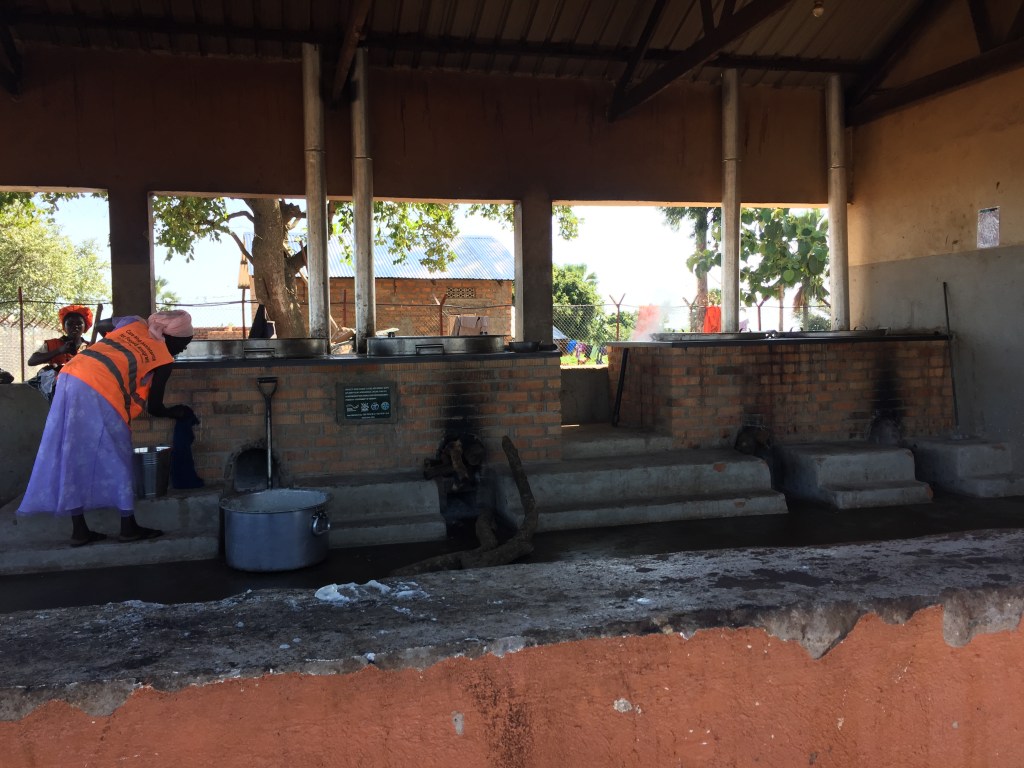

Next to the open-air industrial African kitchen, there was a protection house, completely walled up, floor to roof with sheet metal. That was odd for this area, where the roof usually sits a few inches above the walls to encourage a breeze to enter and bring some relief from the hot equator sun. Just recently, we were told, four Dinka women had to be hidden there. The Dinka are ethnically different from many of the other Sudanese refugees, and in their trauma and anger with no way to vent their emotions, the Dinka people can often become targets of aggression for the other Sudanese. The four Dinka women had to be locked into the protection house to keep them safe from the hundreds of new refugees who wanted to kill them. Police were called and they stood guard around the small building. But in calmer times, the protection house is a place for mothers to birth their babies. As if on cue a woman walked toward us from that direction, carefully holding a bundle of blankets. One of our people walked toward her with a smile, and at a returning smile from the mother, gently pulled back the bundle where a head should be. A days-old baby. The protection house had an apt name. It preserved life and brought it into the world, even here where lives had been treated so cheaply by the war that drove them away.
We walked deeper into the compound, toward a long, low building separated into three rooms. To enter the first, we squeezed past a line of people standing in the hot sun. They were all waiting to be sent inside, where they would receive small, yellow, crumpled pieces of paper. These papers were life and death. They had an identification number that registered a family and its members for basic human rights—healthcare, rations, water, a kit of items and tools to make a home in their new places at the camps.
We squeezed back out through the lines and this time I felt bold enough to look up at the faces around me. As I raised my head I noticed that my shoulders had unconsciously stooped in response to the sorrow of this place, and under the acknowledgement that the crowds parted for me without question because of the lack of color in my skin. But what really separated me from the people I brushed past? I had grown up in a different country, one not at war. It was the luck of the draw. These men, women, and children, they had lives before. Some had educations, they had homes and family traditions, they had all the members of their families at one time. And now here they were, with nothing to their name except the clothes on their backs. For some, even those clothes were alien. We knew that many times children who have been separated from their families would band together and come across the border in groups, naked and traumatized, after wandering through the bush. We’d brought two small bales of clothing with us today that we gathered in response to one such report of a thousand children coming across with no adult in sight. Today we learned that the men and the women would often come across naked too. Many had been forcibly stripped along the way, and they first came into Uganda without even the dignity of a shirt or a pair of pants.
Before I knew it, I’d followed our people into the second room. It had medical posters covering the walls, and the stench of illness in the air. Here everyone was checked for any records they may have of vaccinations and given what they lacked. They were tested for malnutrition or any other diseases they might be carrying and suffering under. Privacy screens hid the patients, and the room was quieter and felt more somber than any other we had been in. The next room in the row had only a waist-high wall on the side facing us. It was originally intended for a children’s play room, we were told. But because of the overflow of refugees, some slept in here. There were cartoonish posters on the wall, and bedrolls on the floor. My brain didn’t know what to make of what I was seeing, and at first impression the room reminded me of some bizarre, out-of-place church nursery.
After the last of the rooms in the low building bordering the lot, we came out not far from a large bus. It looked like a charter bus, out of place here. This was the bus that took new families to the camps when they had been processed, either to Imvepi or Omugo where the openings are at the moment. Families stay here at this way-station for anywhere from 3 days to two weeks before they take that bus out. Our guides pointed out a warehouse-like building diagonal from us and perpendicular to the building we had just left. This is where the women and children slept. The men slept separate, all males over the age of 15, at the far end of the lot. We had seen the UN tarps draped and stretched over what must have been their sleeping quarters on our way in.
We walked back toward the kitchen area and the water pump, at the opposite side of the rectangular compound. The shock was wearing off some, so we started to use our stumbling Arabic to speak to people and say anything we could—we are praying for you, God bless you, what is your name, I like your smile. The urge to say something, anything, to these people—to remind them that we saw them as humans with names and needs—was so strong. We were starting to feel so small in the face of such need.
We followed our bales of clothes over to a flat area. Some of the workers had already laid out plastic mats and started to unpack and sort the clothes. It looked like a big Goodwill bin from America. In fact, some of these clothes might just have come from somewhere like that. We ooh-ed and ahh-ed over a tiny lavender dress with a sparkly tutu attached at the waist. We laughed as the workers raised a little boy’s costume shirt—soft green back, pale tan belly, and a ridged dinosaur tail handing off the center of the back. As the clothes were sorted, tables were brought for them to be laid out on in stacks of size and gender. The people began gathering in a crowd to save a spot in line for their children to have some clothes. We stood around and tried to strike up conversations.

Even in this place so much life was happening. Some of the smiles made you forget where you were or what some of the people had been through. But there were always reminders of the displacement and the transient, perpetually uprooted lives these people led. We heard the bus engine crank and several heads looked up in dismay. Several tongues clicked disapproval and frustration. These men and women couldn’t leave the clothing distribution or they’d risk not getting clothes for their children. But I wondered how many had friends on that bus, or fellow travelers that they might not get to see again. And how many got to say goodbye before the bus left?
Some of the pairs of eyes were doggedly fixed on the ground, thinking of far-off events in far-off places. Many heads swiveled to look in our direction. They wanted to observe, to touch, to smile. Some of the braver tried out their English to greet us or ask us how we were. I found myself most of the time squatted down and talking to children, or smiling and tentatively sticking out my hand to greet them. The smallest ones are often afraid of our skin and don’t know how to respond. One little boy waved at me and flashed wide grin. I made my way over to him and his siblings to clasp his hand but his face immediately froze in fear and he hid behind big brother’s leg. I raised my gaze to the older siblings, “He’s afraid,” I said in Arabic. They giggled to confirm, and smiled at the familiar sounds in the words.
One lady sat on the ground embroidering one of the beautiful Sudanese sheets that are used for everything from bedspreads to seat throws to curtains. Hers was an elephant with gleaming white tusks, surrounded by abstract leaves and flowers, with maybe a few birds begun on the outer edges of the design. I tried to imagine how far that one piece of home had come with her, and where she’d managed to get the needle and embroidery floss. The bright lime green sheet somehow made even this clustered mass of people seem more homely. It was a piece of settled life. She proudly unknotted the edges to show us and model for a picture.

I wandered off to another part of the mass of people. A small baby was crying hard. His head looked too big for his malnourished body. “He’s hot,” someone said with a knowing smile. No, “He’s sick,” said his mother. Rubbing his back turned into the back of a hand to his forehead, rubbing his head. His mother nursed him to calm him and his eyes closed for an untroubled second. He raised his tiny had to rest it on the arm rubbing his head.
I wandered off again, this time finding a mother with a welcoming smile. She held a baby and had two little ones circling her feet. Babies usually cry the loudest at my pale skin, but this one reached out for me. I offered my hand and he was fascinated with it. He held the fingers one at a time and would reach for it again if I ever thoughtlessly dropped it while trying to talk to his mother. The white skin on my palm looked almost luminous in that light, up next to his richly colored fingers. “What is that?” I asked in a high baby voice. “It’s white!” I said in Arabic, to the giggles of those clustered around. The crowd shifted and I said goodbye to this mother so she could move with them and not lose her place in line.
A man introduced himself to me, desperately trying to tell his story in English. He had a toddler boy with him, and his said his wife had a five-day old baby. It was hard to understand whether she was here in the camp, if she had passed, or if she was still in Sudan. As the man broke off the conversation to follow the shifting crowd, he said they were making it little by little. “Little by little,” I repeated in Arabic. His eyes brightened and his wiry body almost bounced with energy. “You speak Arabic?” he asked in his heart language. “Little by little,” I said with a sly smile. Later I saw him trying out his English on another of our group. The little toddler was escaping behind him toward the latrines. He was so intent on his conversation he hadn’t noticed until a group of mommas were almost yelling to get his attention. He sprang off after the little one as I turned my head with a smile.
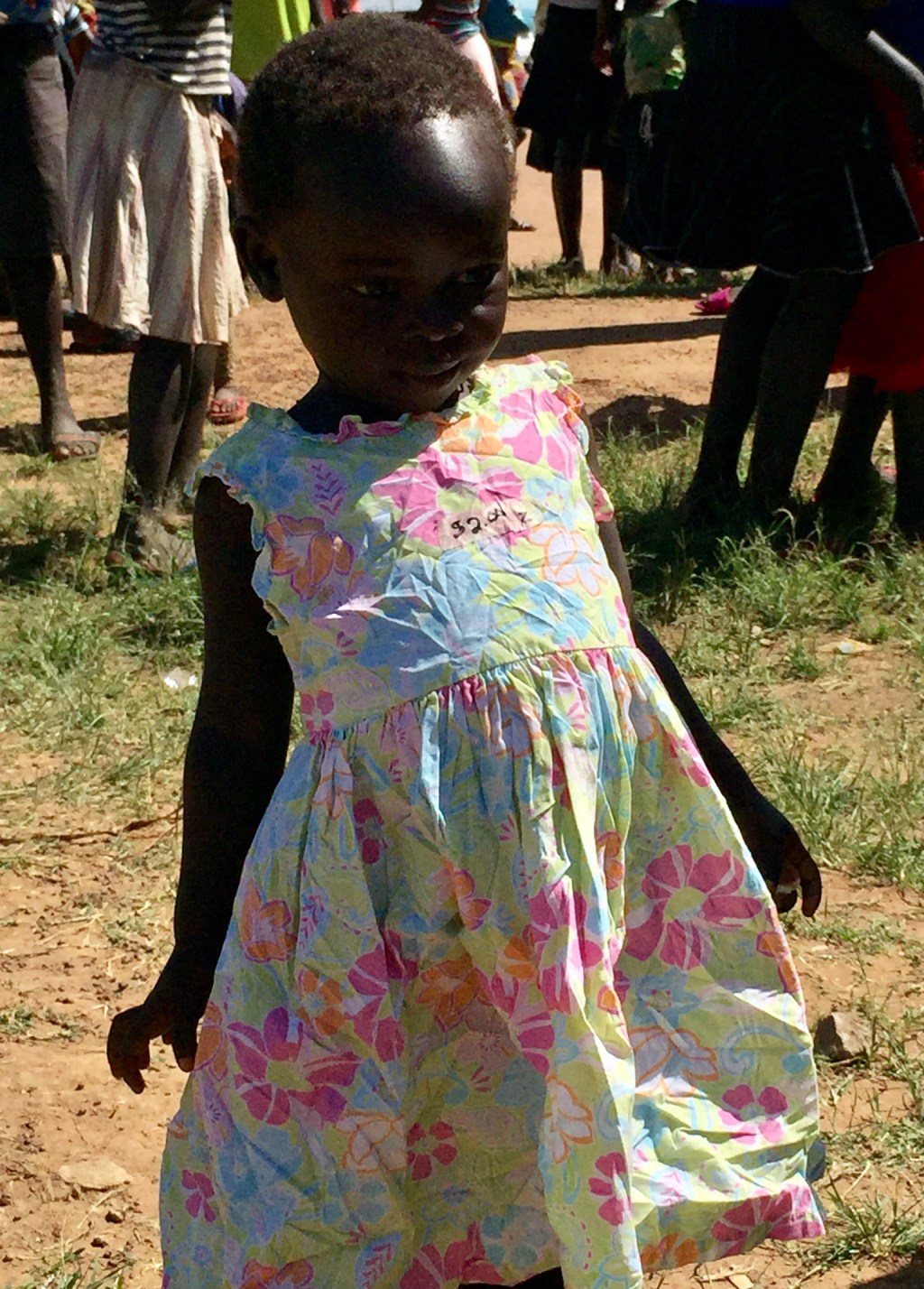
We waited around as some of the clothes were handed out. The mass of children who’d been pushed right in front of the tables by their parents was overwhelming. So many and so much need. My Arabic felt so insufficient, but I don’t think I would have had the words in any language to know what to say, how to comfort, how best to listen. As we were leaving one mother pushed her way through the crowd to show us her daughter, beaming in a new dress, posing for us. He mother looked on in pride and thanked us for the clothes. The little one let us take her picture before we said goodbye and walked to the car.
We all crammed into the car and someone asked to pray before we left. I couldn’t. I couldn’t speak for a while. I’d kept the tears in until we were behind the closed doors of the car, but they came silently in waves for most of the trip home. Thoughts raced through my head quicker than I could sort them out. What can be done in the face of such deep, dehumanizing need? How can you help or encourage? Who was I to even think I had anything to offer to help, or that I could make a difference at all? Pray for my team and me in the coming days as we sort through what we experienced and brainstorm what to do and how to help in situations like these. Pray especially for Casey and me as we consider how to find a way to help, work with, or minister to some of the separated children that come through check-in stations like these and can be sent to the refugee camps without family to speak of, in prime positions for exploitation in many different forms.

